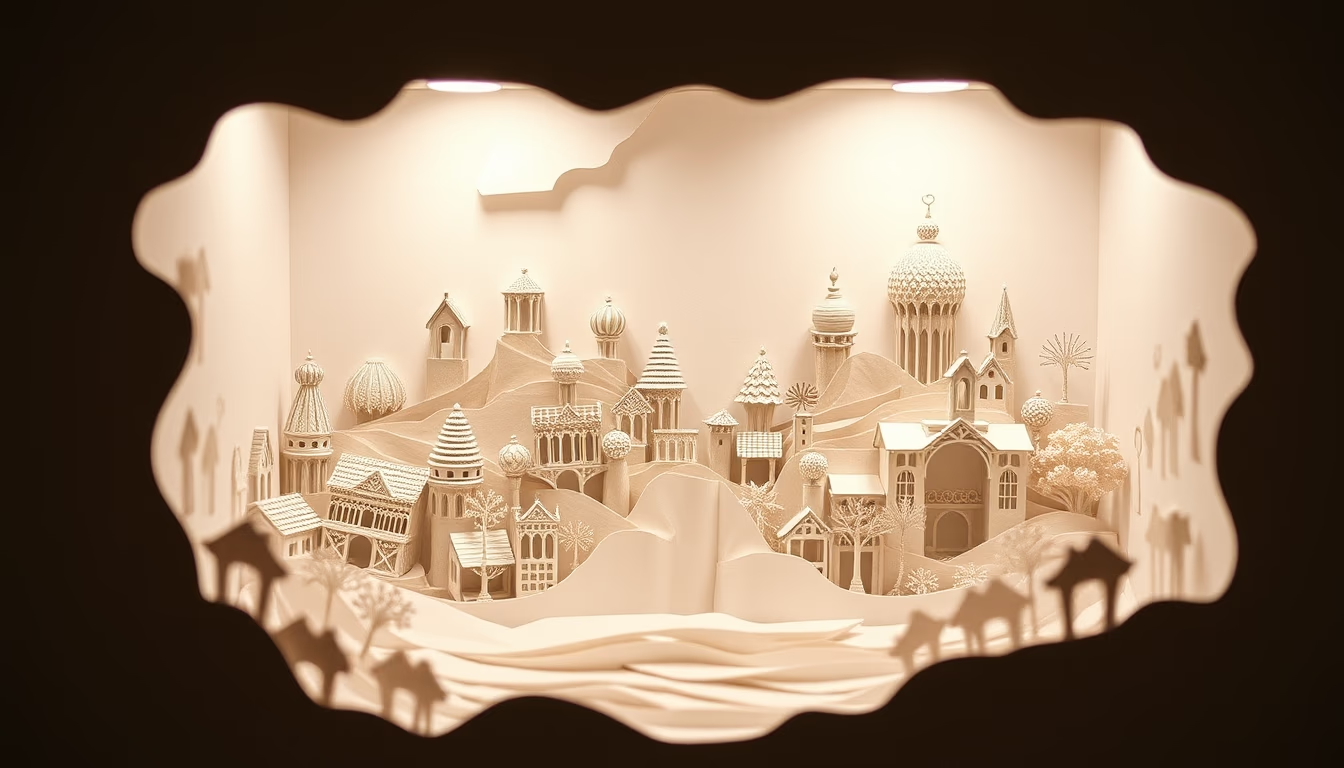
Origami crane paper white
1344×768 · AVIF · CC BY 4.0

The tsuru, a paper bird from Japanese tradition, symbolizes peace, health, and longevity, and its folding requires precision and patience.
About this subject
Origami, the ancient Japanese art of paper folding, has the crane (tsuru) as one of its most iconic figures. The legend of a thousand cranes, or senbazuru, holds that anyone who folds a thousand paper cranes will have a wish granted. This belief gained global recognition through the story of Sadako Sasaki, a young victim of the Hiroshima bombing who attempted to fold a thousand cranes in hopes of recovering from leukemia. Today, the crane is an international symbol of peace and hope, often displayed at peace memorials such as the Hiroshima Peace Park.
The folding technique for the classic crane is relatively beginner-friendly but requires precise folds and sharp creases. Traditionally, square paper is used, often with vibrant colors or washi patterns. White, as in the image, evokes purity and simplicity, commonly used in wedding ceremonies and funeral rites. White paper is also chosen for prayer origami, where the lack of color signifies neutrality and universality of the wish.
Interestingly, origami did not originate in Japan but in China around the 1st or 2nd century AD, arriving in Japan along with paper. However, it was in Japan that the practice was refined and became part of the culture. The crane specifically gained popularity during the Edo period (1603-1868), when paper became more accessible. Today, there are hundreds of crane variations, including the flapping crane that moves when its tail is pulled.
For origami practitioners, the crane is often the first model learned, but achieving perfect folds can take years. Materials like washi paper, handmade with long fibers, offer greater durability and sharper creases. Beyond a hobby, origami is used in occupational therapy and education to develop fine motor skills and focus. Events like World Origami Day (November 11) celebrate the art, and the crane remains the centerpiece of exhibitions and workshops.
Frequently Asked Questions
What is the origin of the origami crane?
Origami originated in China around the 1st century AD, reached Japan with paper, and the crane became popular during the Edo period. The 1,000 cranes legend solidified in Japan, gaining pacifist meaning after WWII through Sadako Sasaki's story.
How many folds does it take to make an origami crane?
A classic crane requires about 20 to 30 folds, depending on the variation. The basic sequence includes valley folds, mountain folds, and reverses, forming the bird base. It typically takes 5 to 15 minutes for a beginner.
What does the crane symbolize in Japanese culture?
The crane represents good luck, health, and longevity. It is used in weddings, healing ceremonies, and peace memorials. Folding 1,000 cranes (senbazuru) is a gesture of prayer or wish, often gifted to sick individuals.
Direct URL
https://pub-c7d6a6ea828543ac903a74a341ccb2e1.r2.dev/imagens/origami-crane-paper-white-documentary-photography-fresh7.avifHow to credit
Include a visible link back to UtilizAí. Copy one of the snippets below:
<a href="https://xn--utiliza-eza.com/en/midia/imagens/origami-crane-paper-white-documentary-photography-fresh7">Origami crane paper white</a> by <a href="https://xn--utiliza-eza.com">UtilizAí</a>, licensed under <a href="https://creativecommons.org/licenses/by/4.0/">CC BY 4.0</a>.
[Origami crane paper white](https://xn--utiliza-eza.com/en/midia/imagens/origami-crane-paper-white-documentary-photography-fresh7) by [UtilizAí](https://xn--utiliza-eza.com), CC BY 4.0
License: CC-BY-4.0