Organic compost bin
1344×768 · AVIF · CC BY 4.0
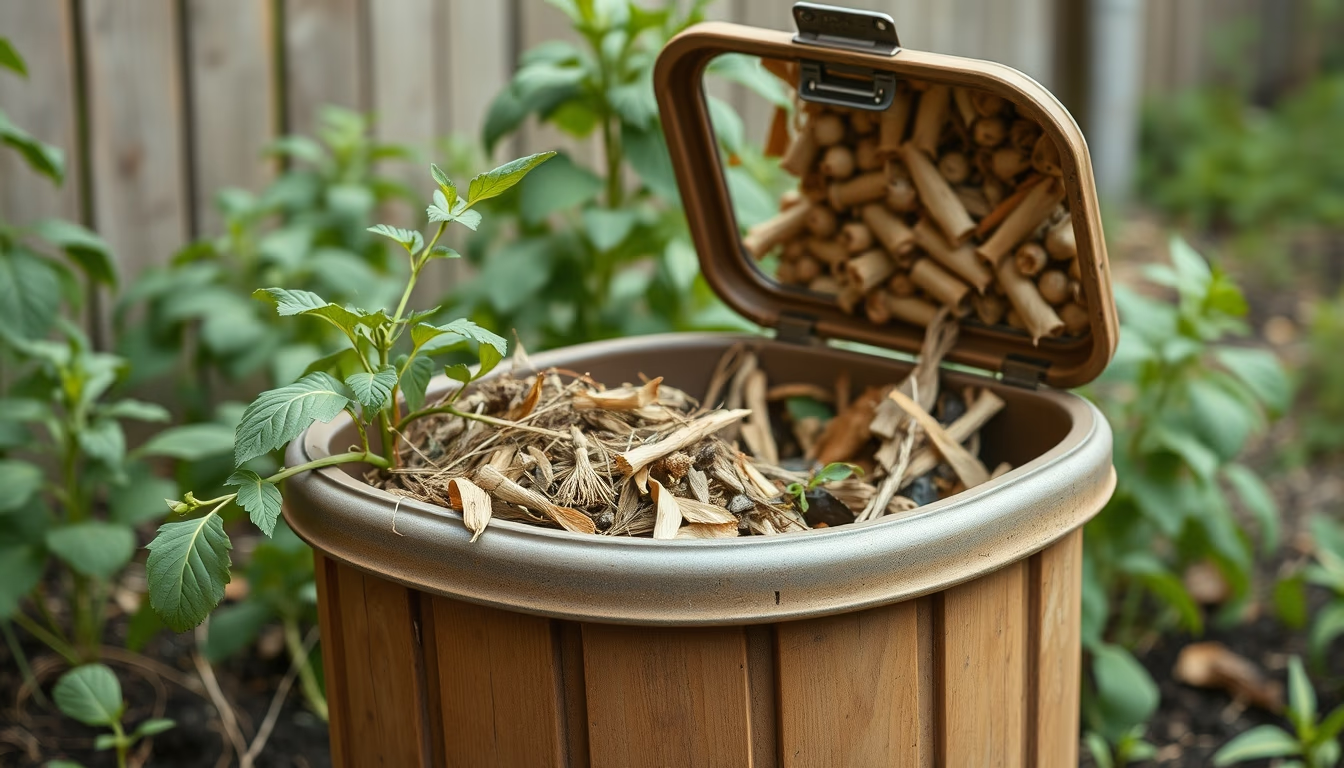
An organic compost bin converts household waste into nutrient-rich fertilizer, reducing landfill volume and promoting sustainable gardening.
About this subject
Composting is an aerobic biological process that recycles organic matter, such as fruit and vegetable scraps, eggshells, and dry leaves, converting it into natural fertilizer. Inside a compost bin, microorganisms, worms, and other decomposers break down these materials, producing humus and liquid fertilizer rich in nutrients. This cycle mimics natural decomposition but in a faster and controlled manner.
Using organic compost bins brings significant environmental benefits. Globally, food waste accounts for about 8% of total greenhouse gas emissions. When organic waste ends up in landfills, it decomposes anaerobically, releasing methane, a potent greenhouse gas. Home composting reduces these emissions and provides a free, nutrient-dense soil amendment. Compost improves soil structure, water retention, and supplies essential nutrients for plants, reducing the need for chemical fertilizers.
Starting a home compost bin requires minimal space. Models range from simple outdoor piles to compact worm bins suitable for apartments. The key is balancing carbon-rich materials (browns: dry leaves, cardboard) with nitrogen-rich materials (greens: kitchen scraps). Maintaining proper moisture and aeration prevents odors and speeds up decomposition. On average, compost is ready in 2 to 4 months, depending on conditions.
Beyond waste reduction, composting fosters a deeper connection to the food cycle. Many communities around the world offer curbside organic collection or subsidize compost bins. As environmental awareness grows, home composting is becoming a mainstream practice, supporting circular economy principles and lowering ecological footprints.
Frequently Asked Questions
What is an organic compost bin?
It is a system that accelerates natural decomposition of organic waste (kitchen scraps, leaves) by microorganisms, turning it into humus and liquid fertilizer.
How long does it take for compost to be ready?
Under ideal conditions (moisture, aeration), 2 to 4 months. With worm bins (vermicomposting), it can take 30 to 60 days.
What waste should not be placed in a compost bin?
Avoid meat, dairy, oils, and heavily salted foods, as they attract pests and hinder decomposition.
Direct URL
https://pub-c7d6a6ea828543ac903a74a341ccb2e1.r2.dev/imagens/organic-compost-bin-lo-fi-disposable-camera-p0.avifHow to credit
Include a visible link back to UtilizAí. Copy one of the snippets below:
<a href="https://xn--utiliza-eza.com/en/midia/imagens/organic-compost-bin-lo-fi-disposable-camera-p0">Organic compost bin</a> by <a href="https://xn--utiliza-eza.com">UtilizAí</a>, licensed under <a href="https://creativecommons.org/licenses/by/4.0/">CC BY 4.0</a>.
[Organic compost bin](https://xn--utiliza-eza.com/en/midia/imagens/organic-compost-bin-lo-fi-disposable-camera-p0) by [UtilizAí](https://xn--utiliza-eza.com), CC BY 4.0
License: CC-BY-4.0