Organic compost bin
1344×768 · AVIF · CC BY 4.0
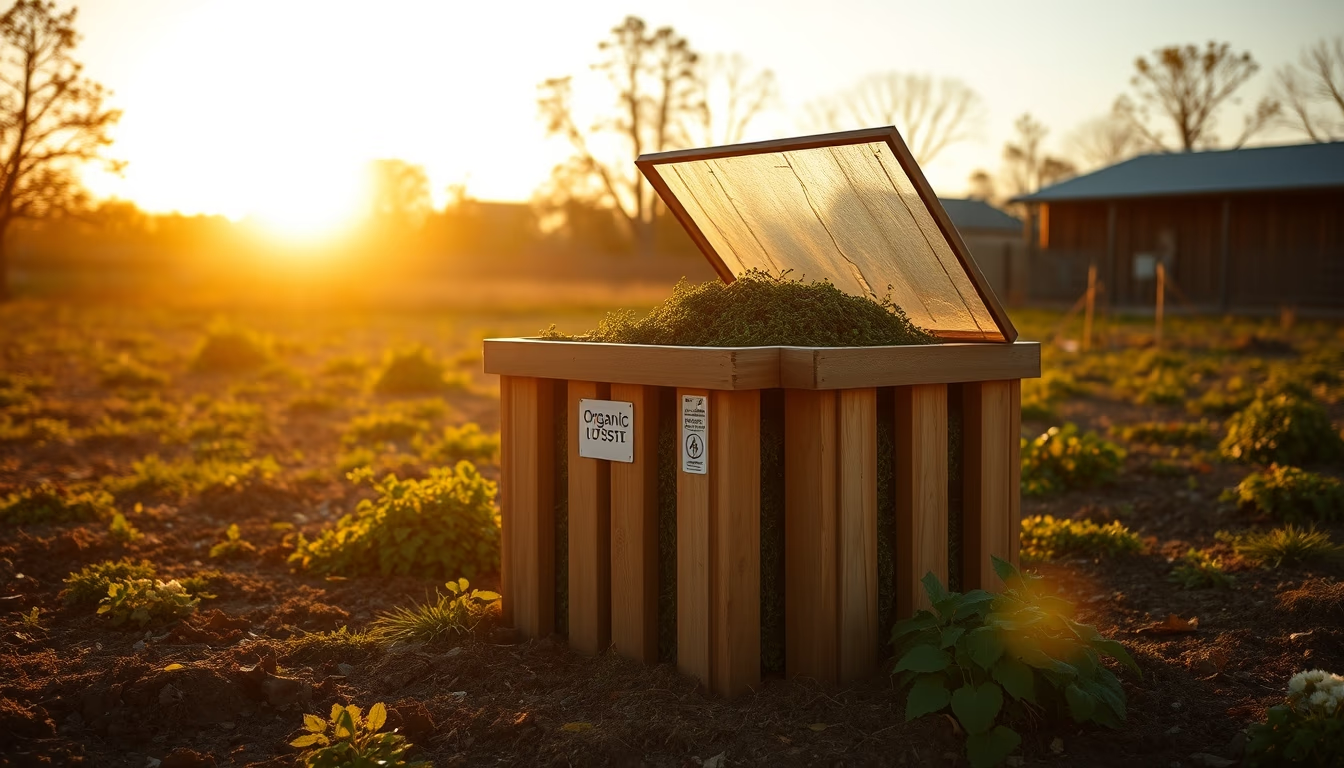
An organic compost bin converts household waste into nutrient-rich fertilizer, reducing landfill trash and enriching garden soil.
About this subject
Organic compost bins are essential tools for sustainable waste management and soil enrichment. They facilitate aerobic decomposition of kitchen scraps, yard waste, and other organic materials into compost, a dark, earthy material rich in nutrients. This process reduces the amount of waste sent to landfills, where it would otherwise produce methane, a potent greenhouse gas. Compost improves soil structure, water retention, and provides essential nutrients to plants, reducing reliance on synthetic fertilizers. In countries like Brazil, urban agriculture and community gardens increasingly rely on homemade compost to boost soil health in limited spaces.
There are various designs of compost bins, ranging from simple open piles to enclosed tumblers and worm bins. For effective composting, a balance of green (nitrogen-rich materials like food scraps and grass clippings) and brown (carbon-rich materials like dry leaves and cardboard) is necessary, along with proper aeration and moisture. Vermicomposting, using red wiggler worms, is popular for smaller household systems and produces high-quality castings. The resulting compost can be applied directly to gardens, potted plants, and lawns, closing the loop between waste and food production.
Composting also plays a significant educational role. Many schools and community centers use compost bins to teach children and adults about natural cycles, waste reduction, and environmental stewardship. Governments increasingly support composting through subsidies, workshops, and curbside collection programs. Modern compost bins are designed to be odor-free, pest-resistant, and easy to operate, making organic recycling accessible to urban dwellers. By turning organic waste into a resource, composting contributes to climate change mitigation, soil conservation, and local food security.
Frequently Asked Questions
What can be placed in an organic compost bin?
Fruit and vegetable scraps, eggshells, coffee grounds, dry leaves, grass clippings, cardboard, and shredded paper. Avoid meat, dairy, and oily foods to prevent pests.
How long does it take for compost to be ready?
Under optimal moisture and aeration, it takes 2 to 4 months. With vermicomposting, worm castings can be ready in 1 to 2 months.
Does a home compost bin attract pests?
If properly managed with a balanced carbon-to-nitrogen ratio and covered with a layer of dry leaves or sawdust, it should not attract flies or rodents. Avoid adding cooked leftovers and keep the bin aerated.
Direct URL
https://pub-c7d6a6ea828543ac903a74a341ccb2e1.r2.dev/imagens/organic-compost-bin-cinematic-wide-shot-p2.avifHow to credit
Include a visible link back to UtilizAí. Copy one of the snippets below:
<a href="https://xn--utiliza-eza.com/en/midia/imagens/organic-compost-bin-cinematic-wide-shot-p2">Organic compost bin</a> by <a href="https://xn--utiliza-eza.com">UtilizAí</a>, licensed under <a href="https://creativecommons.org/licenses/by/4.0/">CC BY 4.0</a>.
[Organic compost bin](https://xn--utiliza-eza.com/en/midia/imagens/organic-compost-bin-cinematic-wide-shot-p2) by [UtilizAí](https://xn--utiliza-eza.com), CC BY 4.0
License: CC-BY-4.0