Organ on chip device
1344×768 · AVIF · CC BY 4.0
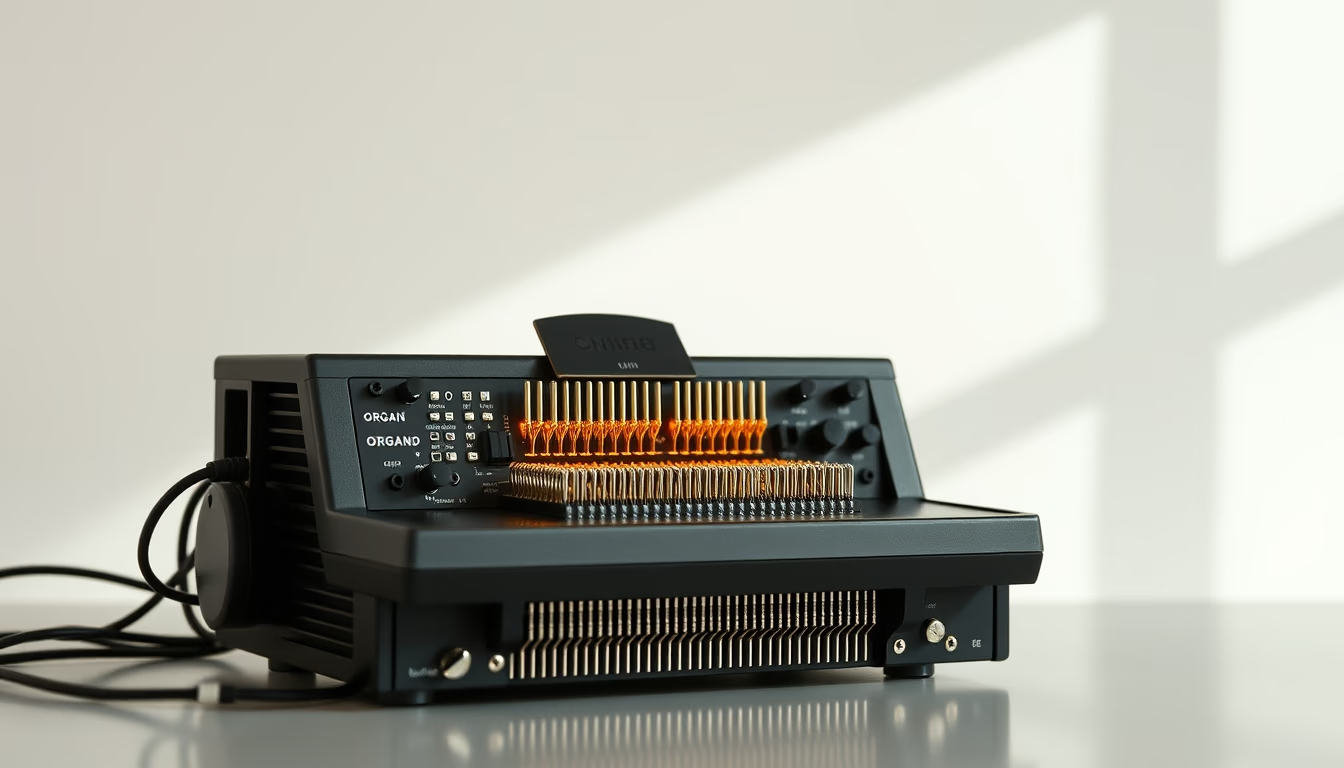
Organ-on-chip device is a microplatform that recreates human organ functions at micrometer scale for drug testing and biological studies.
About this subject
The organ-on-chip is an innovative technology combining microfluidics, tissue engineering, and cell biology to simulate human organ physiology on a credit-card-sized device. Initially developed at Harvard's Wyss Institute, these chips contain microscopic channels lined with living human cells, through which nutrients and oxygen flow, mimicking blood flow and cellular interactions of organs such as lung, liver, heart, and kidney.
This technology promises to drastically reduce dependence on animal testing and accelerate drug development. Estimates indicate that about 90% of drugs that pass animal tests fail in humans, resulting in billions of dollars in costs. With organ-on-chip, it is possible to observe cellular responses in real time, assess toxicity and efficacy of compounds with greater accuracy. For instance, the lung chip has been used to study COVID-19 and test antiviral therapies, recreating the alveolar barrier and inflammatory response.
Currently, companies like Emulate, Mimetas, and TissUse commercialize organ-on-chip platforms for the pharmaceutical industry. Challenges include standardization of models, multi-organ integration (body-on-chip), and regulatory validation by FDA and EMA. Researchers are working on versions with electrical and optical sensors for continuous monitoring, as well as 3D printing of more complex vascular structures. The expectation is that, within a decade, these devices will replace part of the preclinical animal tests, offering more ethical and predictive models for personalized medicine.
Frequently Asked Questions
How does an organ-on-chip device work?
It uses microchannels lined with living human cells through which fluids mimicking blood flow circulate, allowing simulation of organ functions at a microscopic scale.
What are the main advantages of organ-on-chip over animal testing?
It offers greater accuracy in predicting human responses, reduces research costs and time, and eliminates ethical issues associated with animal use. About 90% of drugs that pass animal tests fail in humans.
Which organs have been recreated on chips?
Lung, liver, heart, kidney, intestine, skin, and blood-brain barrier. Multi-organ models are under development to study systemic interactions.
Direct URL
https://pub-c7d6a6ea828543ac903a74a341ccb2e1.r2.dev/imagens/organ-on-chip-device-minimalist-composition-p9.avifHow to credit
Include a visible link back to UtilizAí. Copy one of the snippets below:
<a href="https://xn--utiliza-eza.com/en/midia/imagens/organ-on-chip-device-minimalist-composition-p9">Organ on chip device</a> by <a href="https://xn--utiliza-eza.com">UtilizAí</a>, licensed under <a href="https://creativecommons.org/licenses/by/4.0/">CC BY 4.0</a>.
[Organ on chip device](https://xn--utiliza-eza.com/en/midia/imagens/organ-on-chip-device-minimalist-composition-p9) by [UtilizAí](https://xn--utiliza-eza.com), CC BY 4.0
License: CC-BY-4.0