Organ on chip device
1344×768 · AVIF · CC BY 4.0
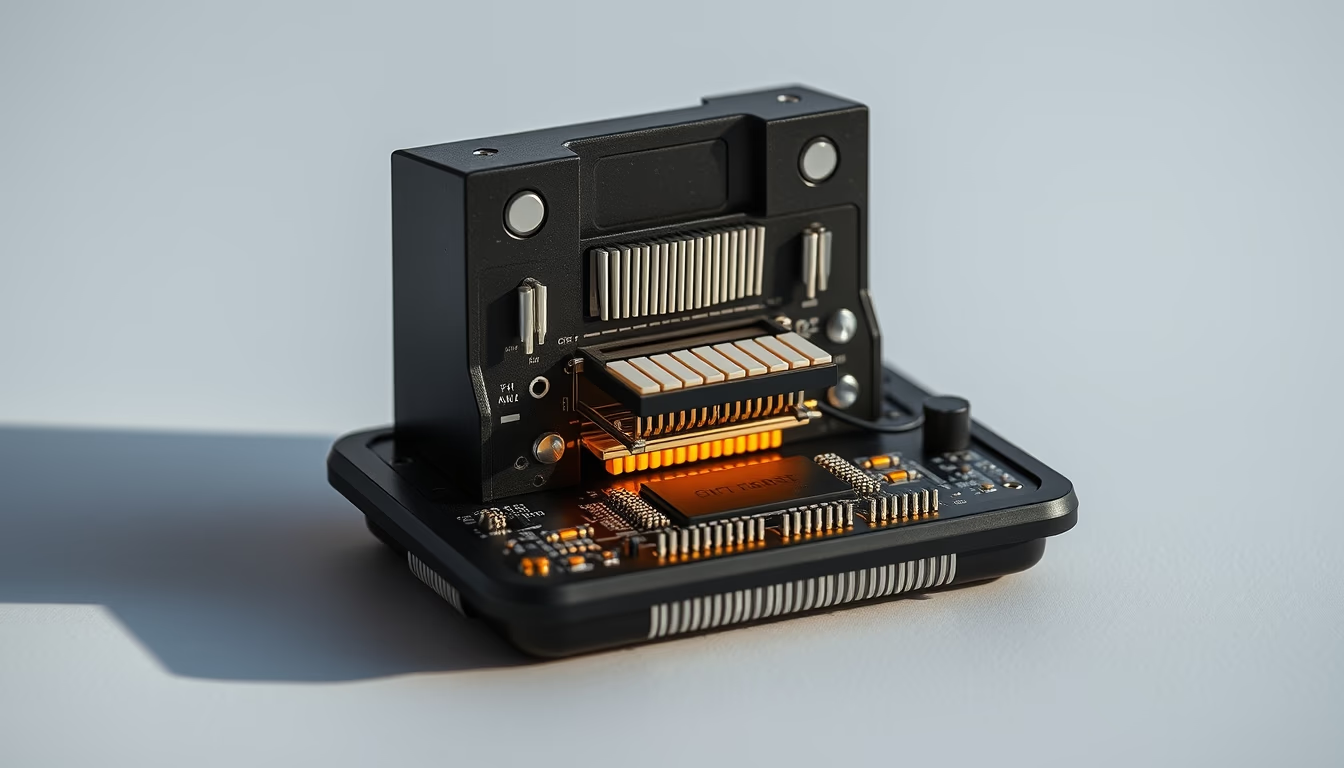
Organ-on-chip device: a microfluidic lab that mimics human organ functions for drug testing without animal use.
About this subject
Organ-on-chip devices are microfluidic systems that recreate the functions and microenvironments of human organs on a miniature scale. Made from biocompatible materials such as PDMS (polydimethylsiloxane), these chips contain channels lined with living human cells that mimic physiological processes like lung respiration, heartbeats, or liver metabolism. The technology was pioneered by the Wyss Institute at Harvard University under researcher Donald Ingber and has since been refined by institutions worldwide.
In practice, organ-on-chips enable studying diseases, testing drugs, and evaluating toxicity with greater accuracy than traditional animal models. For example, a lung chip can simulate breathing motions and response to pollutants, while a liver chip replicates drug metabolism. This approach reduces research costs and time while addressing ethical concerns of animal testing. Companies like Emulate, Mimetas, and CN Bio currently commercialize these chips for pharmaceutical and cosmetics industries.
A significant advancement is the development of multi-organ chips that connect different models (heart, liver, kidney) to simulate systemic interactions, crucial for understanding adverse drug effects. In 2023, the U.S. FDA began accepting organ-on-chip data as supplementary evidence in preclinical trials. Despite potential, challenges such as manufacturing standardization and fully replicating immune complexity still limit widespread adoption.
Organ-on-chips relevance extends beyond industry: they can personalize treatments using individual patient cells, paving the way for personalized medicine. Combinations with artificial intelligence and 3D bioprinting promise even more realistic models. In Brazil, groups like the National Nanotechnology Laboratory (LNNano) explore applications in tropical diseases. This technology bridges traditional cell cultures and animal models with transformative potential in biomedical research.
Frequently Asked Questions
How does an organ-on-chip device work?
A chip contains microfluidic channels lined with living human cells that receive nutrients and mechanical stimuli to mimic the functions of a real organ, such as breathing or heartbeat.
What are the advantages of organ-on-chips over animal testing?
They offer higher human physiological accuracy, reduce research costs and time, and eliminate ethical concerns related to animal use.
Are organ-on-chips already used by the pharmaceutical industry?
Yes, companies like Emulate and Mimetas commercialize these chips for drug and toxicity testing, and the FDA accepts their data as supplementary evidence.
Direct URL
https://pub-c7d6a6ea828543ac903a74a341ccb2e1.r2.dev/imagens/organ-on-chip-device-magazine-editorial-p11.avifHow to credit
Include a visible link back to UtilizAí. Copy one of the snippets below:
<a href="https://xn--utiliza-eza.com/en/midia/imagens/organ-on-chip-device-magazine-editorial-p11">Organ on chip device</a> by <a href="https://xn--utiliza-eza.com">UtilizAí</a>, licensed under <a href="https://creativecommons.org/licenses/by/4.0/">CC BY 4.0</a>.
[Organ on chip device](https://xn--utiliza-eza.com/en/midia/imagens/organ-on-chip-device-magazine-editorial-p11) by [UtilizAí](https://xn--utiliza-eza.com), CC BY 4.0
License: CC-BY-4.0