Organ on chip device
1344×768 · AVIF · CC BY 4.0
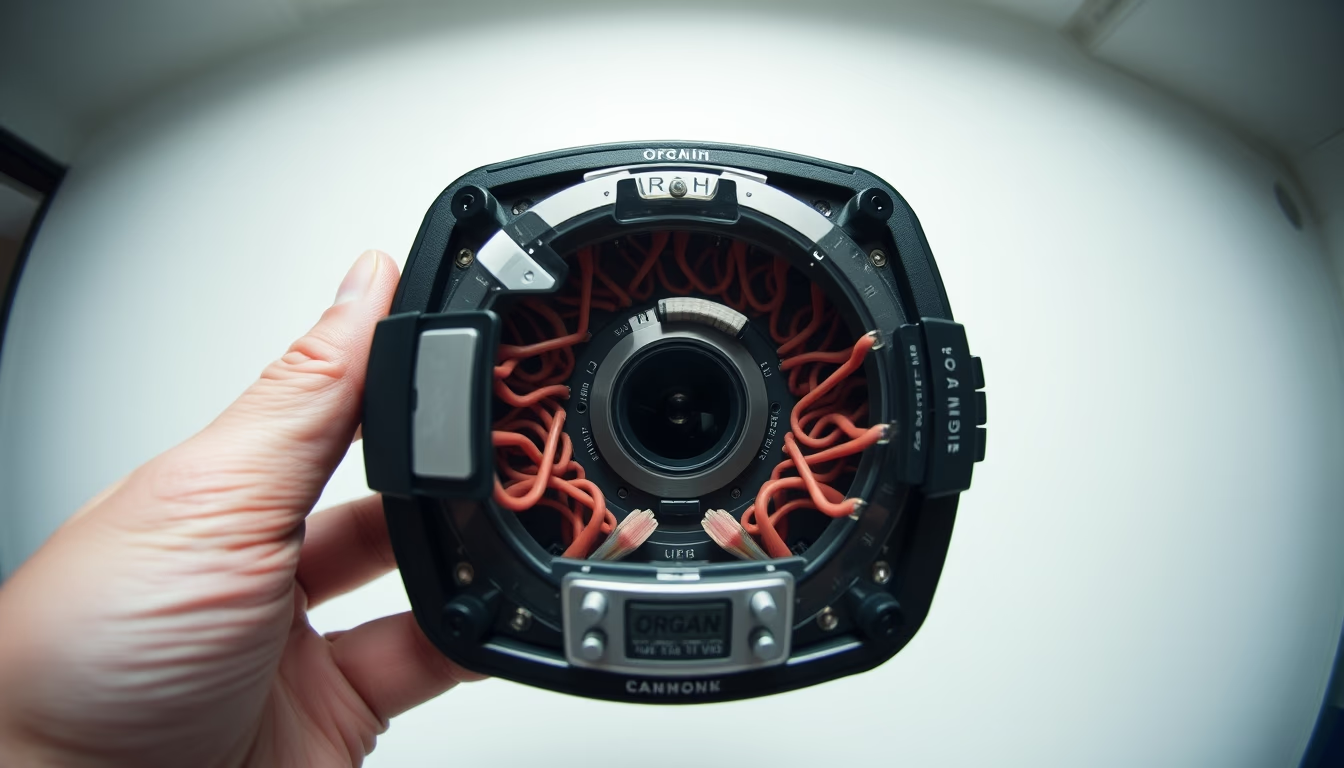
Organ-on-a-chip device mimics human organ functions on a microscale, revolutionizing drug testing and reducing animal use.
About this subject
The organ-on-a-chip is a microfluidic technology that recreates physiological microenvironments of human organs on a chip the size of a coin. It integrates microscopic channels, living cells, and sensors to simulate functions such as breathing, circulation, and metabolism. These devices are fabricated with biocompatible materials like PDMS (polydimethylsiloxane) and can mimic organs from lungs and liver to blood-brain barriers.
The main advantage of this technology is the dramatic reduction in the need for animal testing, while enabling more precise experiments with human cells. Pharmaceutical companies use organ-on-a-chip to assess toxicity and efficacy of new compounds, accelerating drug development. In 2023, the FDA approved the use of data generated by these chips as a complement to clinical trials, an important regulatory milestone.
Interestingly, the concept emerged in the early 2000s with research from the Wyss Institute at Harvard. Today, multi-organ versions connect liver, heart, and kidney chips to study systemic interactions. The technology is also advancing toward personalized models, using patient-derived stem cells to test individualized therapies.
Although promising, organ-on-a-chip still faces challenges such as three-dimensional vascularization and longevity of cell cultures. Current research explores integrated electronic sensors for real-time monitoring, which could enable body-on-a-chip systems for high-throughput screening.
Frequently Asked Questions
How does an organ-on-a-chip work?
The device contains microscopic channels through which nutrients and oxygen flow, feeding human cells cultured in architectures that mimic tissues. Sensors monitor parameters like pH, temperature, and pressure, allowing real-time observation of physiological reactions.
Which organs can currently be simulated?
Chips exist for lung, liver, kidney, heart, intestine, and blood-brain barrier. Multi-organ versions connect several chips to study interactions between different body systems.
What is the impact on the pharmaceutical industry?
It reduces costs and time for new drug development, while decreasing reliance on animal testing. In 2023, the FDA accepted organ-on-a-chip data as support for clinical trials, paving the way for faster approvals.
Direct URL
https://pub-c7d6a6ea828543ac903a74a341ccb2e1.r2.dev/imagens/organ-on-chip-device-fish-eye-wide-angle-p2.avifHow to credit
Include a visible link back to UtilizAí. Copy one of the snippets below:
<a href="https://xn--utiliza-eza.com/en/midia/imagens/organ-on-chip-device-fish-eye-wide-angle-p2">Organ on chip device</a> by <a href="https://xn--utiliza-eza.com">UtilizAí</a>, licensed under <a href="https://creativecommons.org/licenses/by/4.0/">CC BY 4.0</a>.
[Organ on chip device](https://xn--utiliza-eza.com/en/midia/imagens/organ-on-chip-device-fish-eye-wide-angle-p2) by [UtilizAí](https://xn--utiliza-eza.com), CC BY 4.0
License: CC-BY-4.0