Orange grove with truck collecting fresh fruit
1344×768 · AVIF · CC BY 4.0
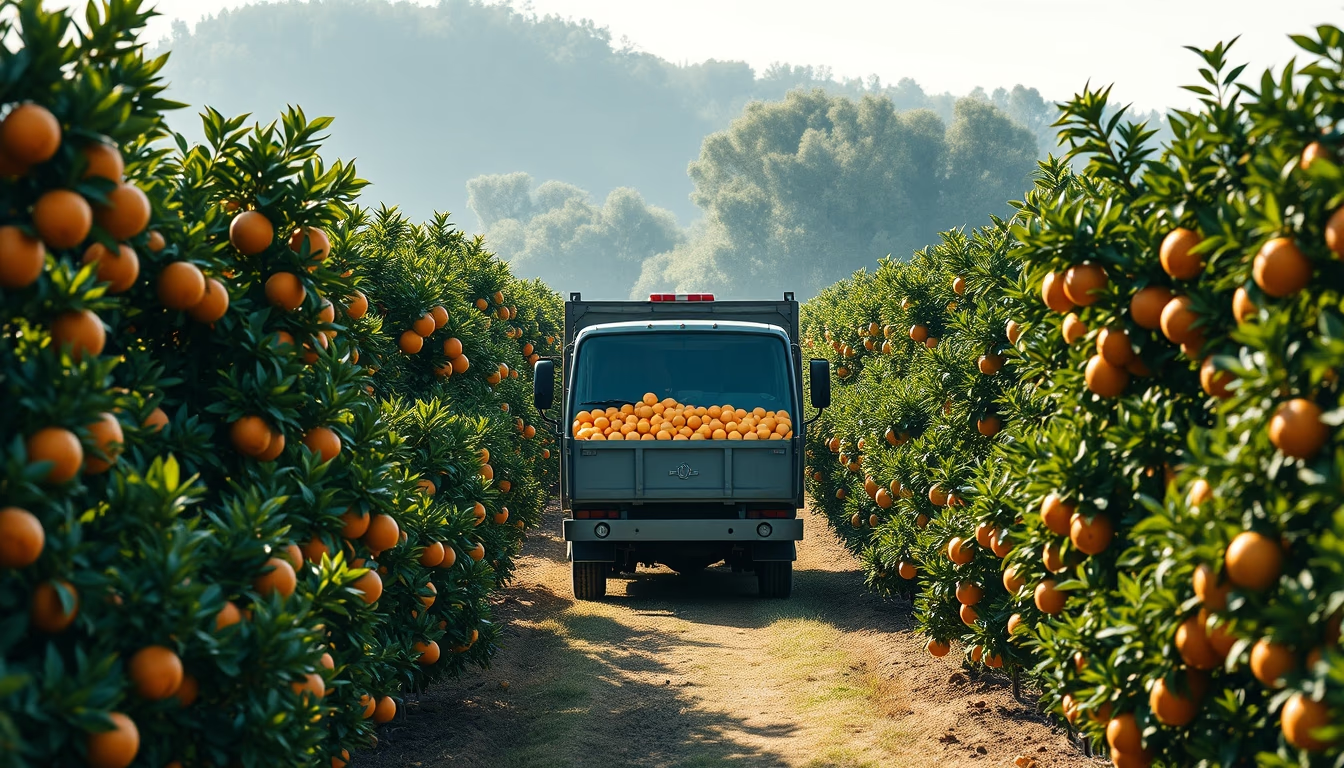
Orange groves in Brazil, such as those in the São Paulo citrus belt, supply the global market with fresh fruit, harvested by trucks that travel down symmetric rows.
About this subject
Brazil is the world's largest orange producer, accounting for about 30% of global output and 80% of the frozen concentrated orange juice market. The São Paulo citrus belt, spanning over 500 municipalities, holds most of this production. Orange trees are planted in symmetric rows to optimize mechanization, such as manual harvesting aided by trucks that transport the fruit to juice industries.
Harvesting occurs between May and January, depending on the variety. Pera orange is the most cultivated, representing about 70% of São Paulo's production. Trucks, often fitted with cages or crates, travel between tree rows during cooler times, like midday, to preserve fruit quality. Row symmetry is not merely aesthetic: it facilitates drip irrigation, spraying, and machinery passage.
The orange supply chain generates about 200,000 direct jobs in Brazil. The country exports orange juice to over 100 countries, mainly the European Union, the United States, and Japan. Besides juice, the peel is used for animal feed and the pulp for essential oils. Cultivation faces challenges like greening (HLB), a disease that reduced production in some areas, but genetic research and integrated management have maintained productivity.
The image of an orange grove with symmetric rows under the midday sun reflects the industrial scale of Brazilian citrus farming. The intense light at that time is common in inland São Paulo, where average annual sunshine exceeds 2,500 hours. This combination of tropical climate, fertile soil, and advanced agricultural techniques makes Brazil a global benchmark in the sector.
Frequently Asked Questions
Why are orange tree rows so symmetric?
Symmetry facilitates mechanization, such as harvesting, drip irrigation, spraying, and truck/tractor passage, optimizing plantation management.
What is the main orange variety grown in Brazil?
Pera orange is the most cultivated, representing about 70% of São Paulo's production, ideal for juice and fresh consumption.
What are the main challenges of Brazilian citrus farming?
The main challenge is greening (HLB), a bacterial disease that reduces productivity. Genetic research and integrated management help control it.
Direct URL
https://pub-c7d6a6ea828543ac903a74a341ccb2e1.r2.dev/imagens/orange-grove-with-truck-collecting-fresh-fruit-symmetric-bright-midday.avifHow to credit
Include a visible link back to UtilizAí. Copy one of the snippets below:
<a href="https://xn--utiliza-eza.com/en/midia/imagens/orange-grove-with-truck-collecting-fresh-fruit-symmetric-bright-midday">Orange grove with truck collecting fresh fruit</a> by <a href="https://xn--utiliza-eza.com">UtilizAí</a>, licensed under <a href="https://creativecommons.org/licenses/by/4.0/">CC BY 4.0</a>.
[Orange grove with truck collecting fresh fruit](https://xn--utiliza-eza.com/en/midia/imagens/orange-grove-with-truck-collecting-fresh-fruit-symmetric-bright-midday) by [UtilizAí](https://xn--utiliza-eza.com), CC BY 4.0
License: CC-BY-4.0