Opal play of color
1344×768 · AVIF · CC BY 4.0
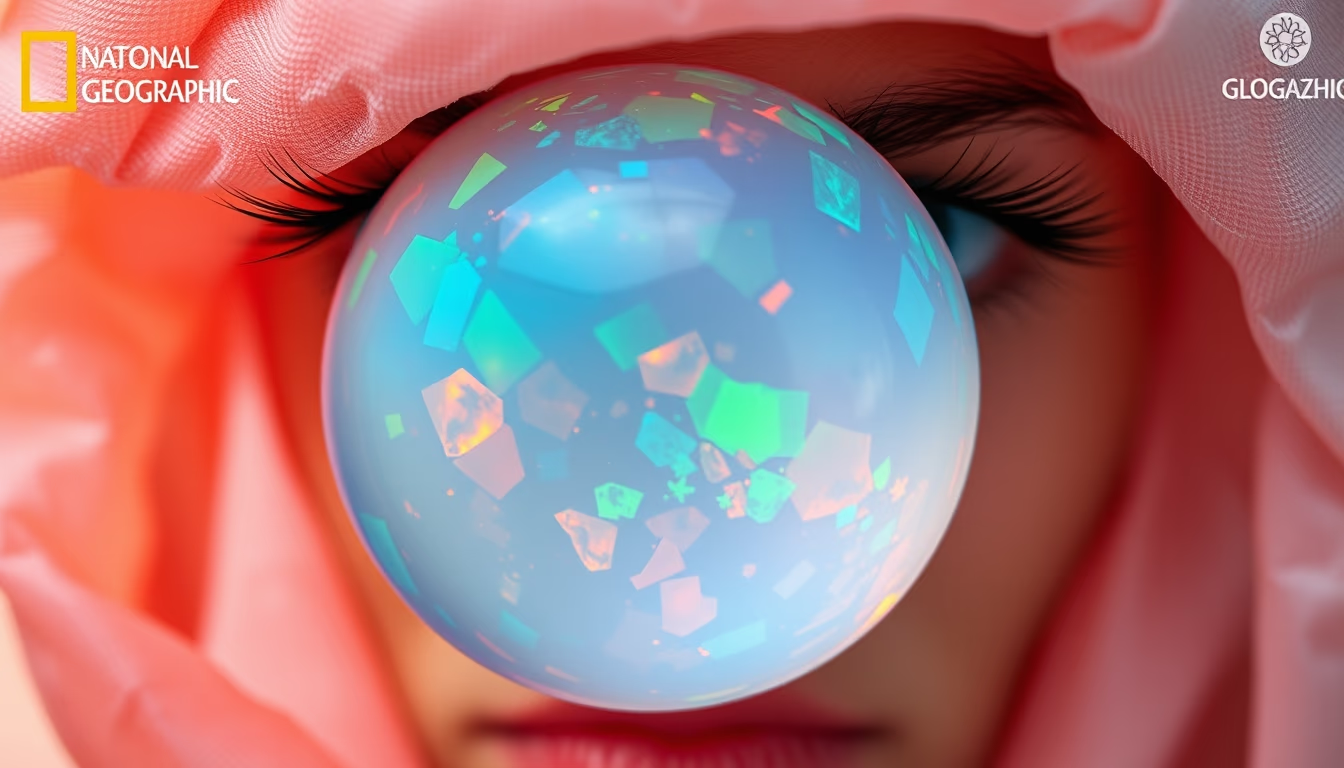
Opals display a unique optical phenomenon called play of color, where flashes of iridescent light dance as the angle of view changes.
About this subject
The play of color in opals is a natural spectacle caused by the diffraction of light through tiny silica spheres arranged in a three-dimensional grid. When white light passes through these spheres, it splits into spectral colors, creating shifting patterns that depend on the size and spacing of the particles. This phenomenon, known as opalescence, is unique to precious opals and sets them apart from other gemstones.
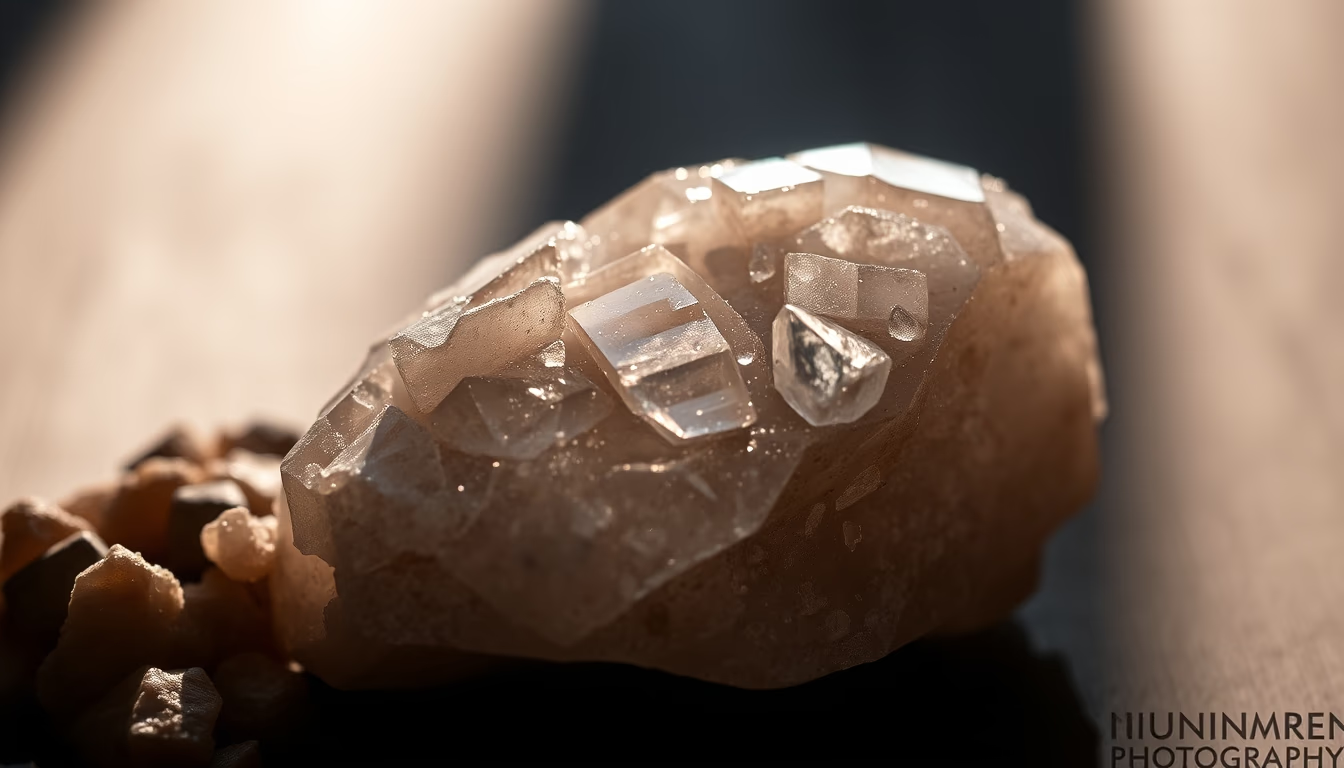
Opals form from silica solutions that fill cavities in sedimentary rocks such as sandstone and basalt. Major global sources include Australia, which produces about 95% of the world's supply, notably in Coober Pedy, Lightning Ridge, and Andamooka. Other significant deposits exist in Mexico, Ethiopia, Brazil, and the United States. Australian opals can be up to 100 million years old, dating back to the Cretaceous period.
Culturally, opals have been associated with hope and purity in many traditions. In ancient Rome, they were considered symbols of love and good fortune. However, during the Victorian era, an unfounded superstition labeled them as unlucky, a belief that persisted for decades. Today, they are prized by collectors and jewelers for their ephemeral beauty and uniqueness. Opals have a relatively low hardness (5.5 to 6.5 on the Mohs scale), requiring careful handling to avoid scratches.
Scientifically, play of color is categorized into types: fire (vivid colors on a dark background), water (soft, translucent hues), and harlequin (mosaic pattern). Opals with intense, multicolored play of color are most valued, fetching high prices in the gem market. Microscopic analysis shows silica spheres ranging from 150 to 300 nanometers in diameter, with the regularity of packing determining the quality of the effect.
Frequently Asked Questions
How can you tell a real opal from a synthetic one?
Synthetic opals often display a very regular, repetitive color pattern, whereas natural opals have random variations. Additionally, natural opals usually contain inclusions or internal fractures visible under magnification.
Why do some opals lack play of color?
Common opals, or potch, lack the ordered structure of silica spheres needed for light diffraction. The arrangement of these spheres is what creates the phenomenon; without it, the gem is opaque or milky.
What type of opal is best for investment?
Black opals from Lightning Ridge, Australia, with intense, multicolored play of color are the most valuable. Crystal and fire opals can also be good investments, depending on rarity and quality.
Direct URL
https://pub-c7d6a6ea828543ac903a74a341ccb2e1.r2.dev/imagens/opal-play-of-color-national-geographic-style-p10.avifHow to credit
Include a visible link back to UtilizAí. Copy one of the snippets below:
<a href="https://xn--utiliza-eza.com/en/midia/imagens/opal-play-of-color-national-geographic-style-p10">Opal play of color</a> by <a href="https://xn--utiliza-eza.com">UtilizAí</a>, licensed under <a href="https://creativecommons.org/licenses/by/4.0/">CC BY 4.0</a>.
[Opal play of color](https://xn--utiliza-eza.com/en/midia/imagens/opal-play-of-color-national-geographic-style-p10) by [UtilizAí](https://xn--utiliza-eza.com), CC BY 4.0
License: CC-BY-4.0