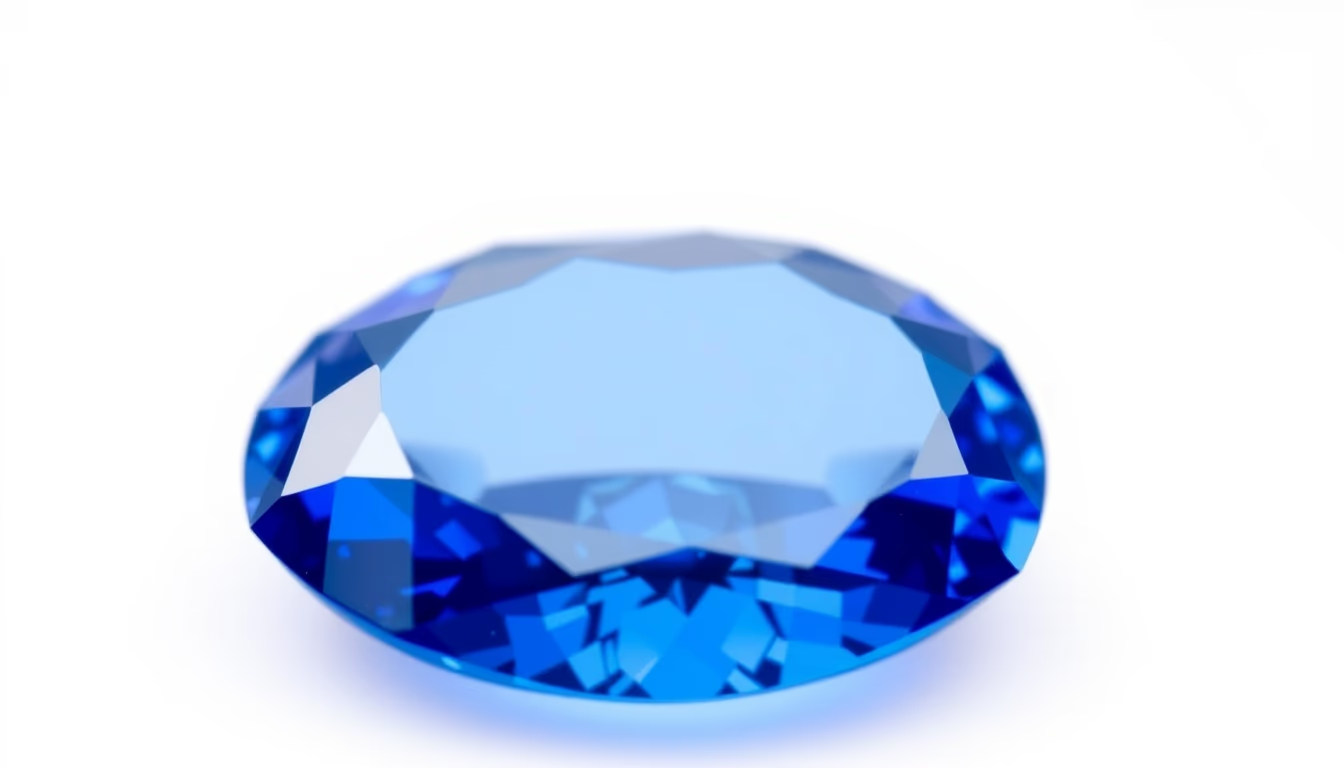
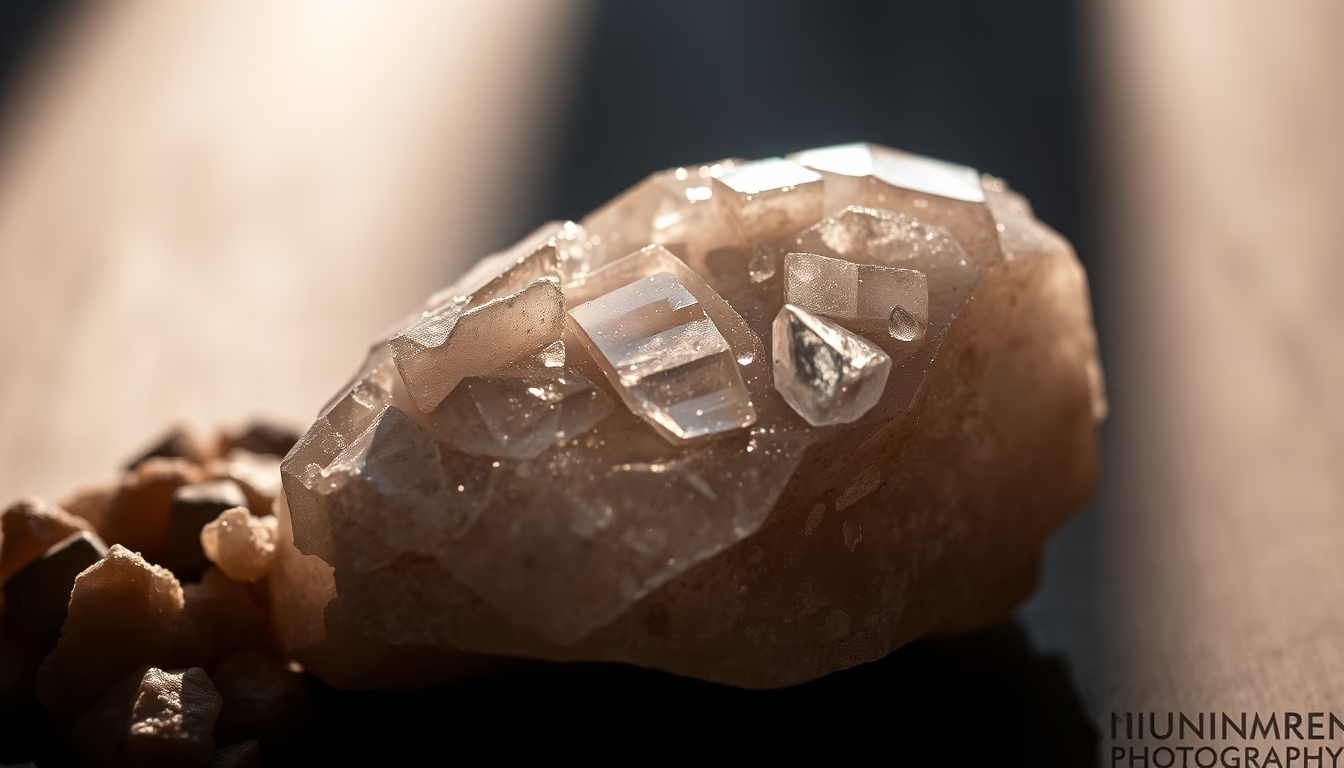
Opal play of color
1344×768 · AVIF · CC BY 4.0

Opal's play-of-color is a unique optical phenomenon caused by light diffraction through silica microspheres. Learn how it forms and why it is highly prized.
About this subject
Opal is a gemstone renowned for its stunning play-of-color, an optical phenomenon that occurs when white light enters the stone and interacts with its internal structure. This structure consists of silica microspheres arranged in a regular lattice, which diffract light into different wavelengths, producing a spectrum of colors that shift with the viewing angle. The more uniform the size and packing of the spheres, the more vivid and complete the displayed spectrum.
Opal forms from silica-rich water that seeps into cavities in sedimentary or volcanic rocks and solidifies over time. The most famous deposits are in Australia, particularly Coober Pedy, which supplies about 95% of the world's precious opal. Mining is largely artisanal, with shafts dug by hand to reach opal-bearing layers. Other notable sources include Oregon in the USA, Mexico (fire opal), and Ethiopia, which has become a significant producer since the 1990s.
In popular culture, opal is often associated with creativity and good luck, though it also carried negative superstitions in some 19th-century European societies, where it was wrongly linked to misfortune. Today, it is the official birthstone for October. In contemporary jewelry, opal is used in both classic and avant-garde designs, its iridescent appearance suits high-fashion editorial contexts, creating dramatic contrasts with dark fabrics or polished metals.
The value of an opal is determined by the intensity, variety, and distribution of colors, as well as the absence of visible inclusions. Opals displaying a full play-of-color with vibrant reds and blues can command exorbitant prices. Interestingly, opal contains 3% to 21% water, making it more fragile than other gemstones and requiring special care to avoid cracking or drying out.
Frequently Asked Questions
What causes the play-of-color in opal?
The play-of-color is caused by light diffracting through orderly arranged silica microspheres within the gem. The spheres act as a diffraction grating, separating white light into its component colors.
Where are the best opals found?
The finest precious opals come from Australia, especially Coober Pedy in South Australia. Other significant sources include Ethiopia, Mexico (fire opals), and Oregon, USA.
Why is opal considered fragile?
Opal contains 3% to 21% water in its structure, making it prone to dehydration and cracking if exposed to sudden temperature changes or low humidity. Therefore, it requires special storage care.
Direct URL
https://pub-c7d6a6ea828543ac903a74a341ccb2e1.r2.dev/imagens/opal-play-of-color-high-fashion-editorial-p11.avifHow to credit
Include a visible link back to UtilizAí. Copy one of the snippets below:
<a href="https://xn--utiliza-eza.com/en/midia/imagens/opal-play-of-color-high-fashion-editorial-p11">Opal play of color</a> by <a href="https://xn--utiliza-eza.com">UtilizAí</a>, licensed under <a href="https://creativecommons.org/licenses/by/4.0/">CC BY 4.0</a>.
[Opal play of color](https://xn--utiliza-eza.com/en/midia/imagens/opal-play-of-color-high-fashion-editorial-p11) by [UtilizAí](https://xn--utiliza-eza.com), CC BY 4.0
License: CC-BY-4.0