Opal play of color
1344×768 · AVIF · CC BY 4.0
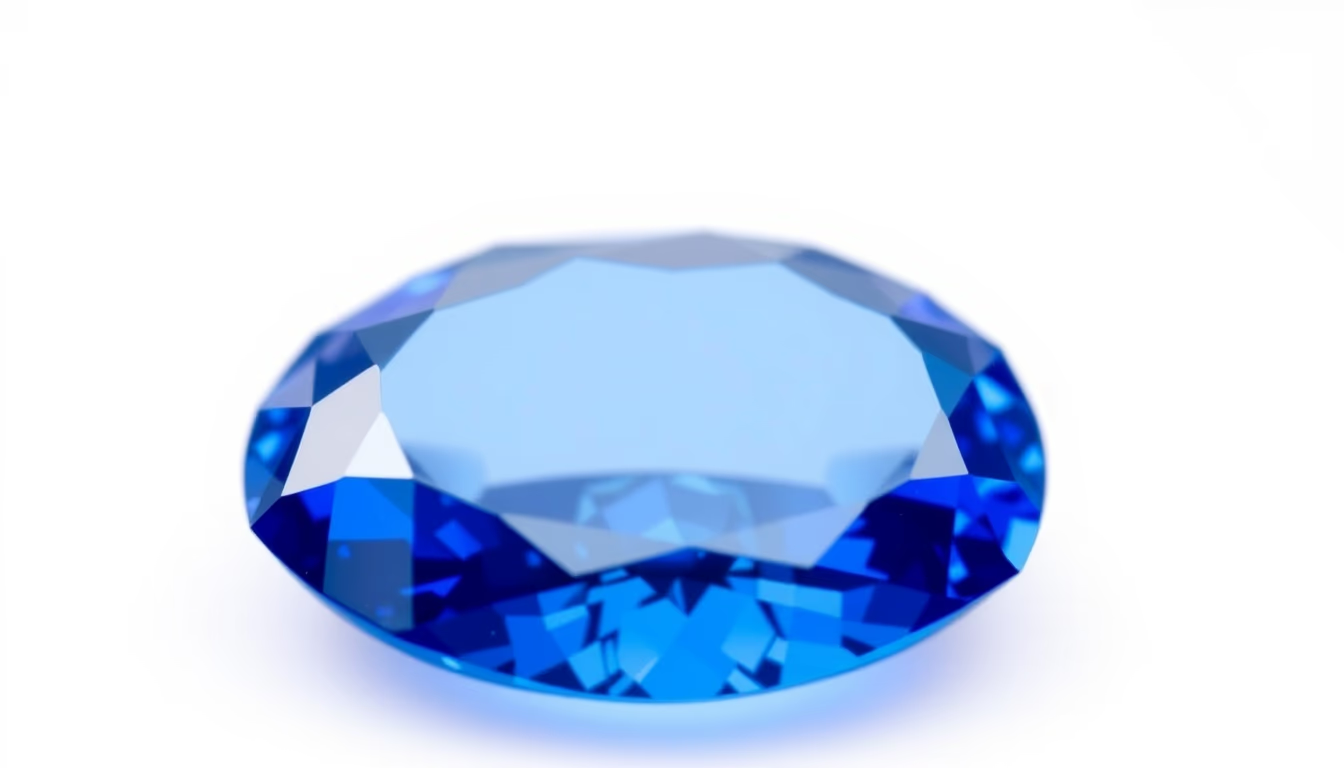
Opal is renowned for its play of color, an optical phenomenon that displays iridescent flashes due to light diffraction within its internal structure.
About this subject
The play of color in opal is a unique optical phenomenon that occurs in precious opals. This effect results from the diffraction of light as it passes through microscopic spheres of hydrated silica arranged in a regular three-dimensional structure. The size and arrangement of these spheres determine which wavelengths of light are refracted, producing the observed colors. Opals with larger spheres tend to display red and orange hues, while smaller spheres yield blue and violet. This process is analogous to that in photonic crystals, materials that manipulate light at the nanoscale.
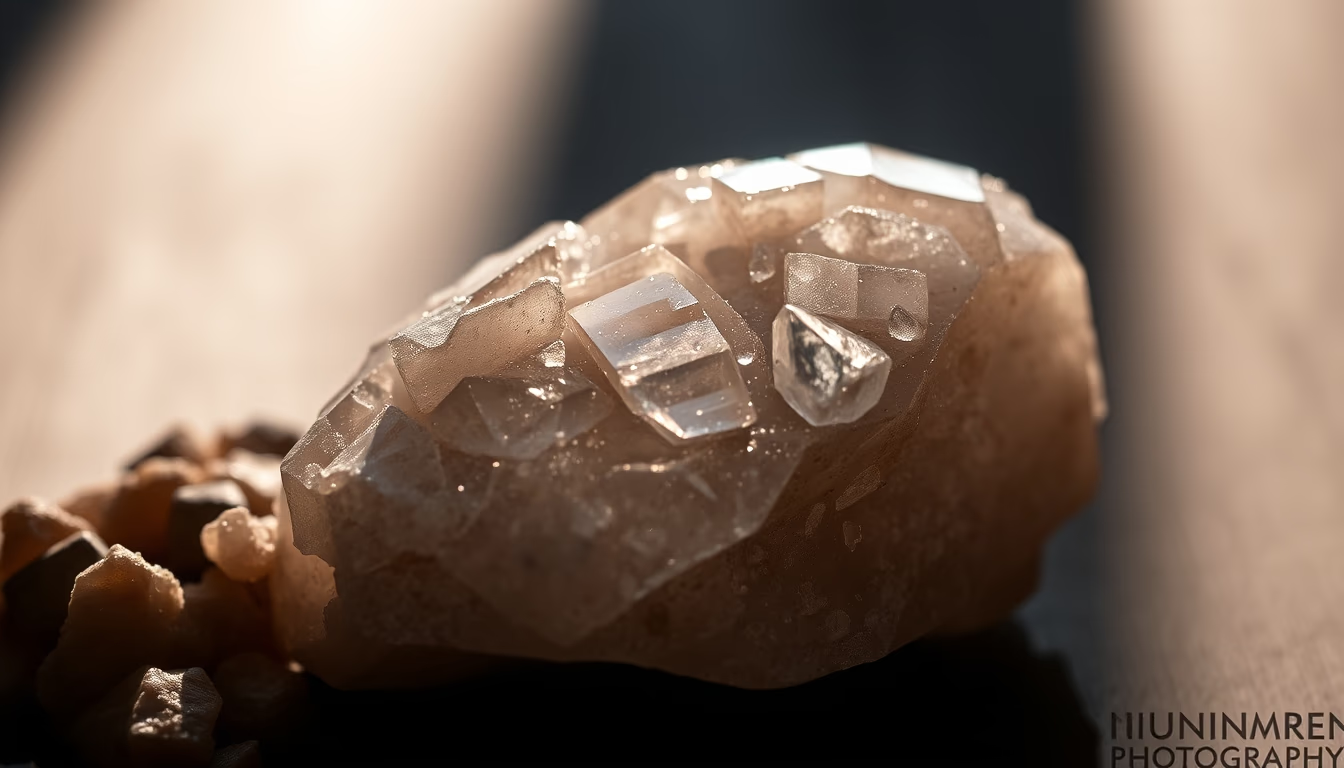
Opal forms from silica-rich solutions that fill cavities in sedimentary or volcanic rocks. Over millions of years, water evaporates and silica deposits in layers, creating the spheres that give rise to the play of color. Major sources worldwide include Australia, which produces about 95% of global supply, notably from mines in Coober Pedy, Lightning Ridge, and Andamooka. Other significant deposits are in Mexico, Ethiopia, and Brazil.
The value of an opal is heavily influenced by the intensity, variety, and pattern of its play of color. Opals displaying a wide range of vibrant colors, especially red, are the most prized. Patterns can be described as "pinfire," "harlequin," or "flame," among others. Opal is the national gemstone of Australia and is associated with creativity and emotion in some cultures. Due to its fragility and water content (up to 20%), it requires special care to avoid cracking or loss of luster.
Frequently Asked Questions
What causes the play of color in opals?
The play of color is caused by light diffraction through microscopic spheres of hydrated silica arranged in a regular structure. The sphere size determines the observed colors.
Where are the world's main opal deposits?
About 95% of opals come from Australia, especially Coober Pedy, Lightning Ridge, and Andamooka. Other producers include Mexico, Ethiopia, and Brazil.
How should opals be cared for to preserve their shine?
Opals should be kept moist to prevent cracking, as they contain up to 20% water. Avoid extreme temperatures, chemicals, and impacts. Clean with a soft cloth and warm water.
Direct URL
https://pub-c7d6a6ea828543ac903a74a341ccb2e1.r2.dev/imagens/opal-play-of-color-cinematic-wide-shot-p1.avifHow to credit
Include a visible link back to UtilizAí. Copy one of the snippets below:
<a href="https://xn--utiliza-eza.com/en/midia/imagens/opal-play-of-color-cinematic-wide-shot-p1">Opal play of color</a> by <a href="https://xn--utiliza-eza.com">UtilizAí</a>, licensed under <a href="https://creativecommons.org/licenses/by/4.0/">CC BY 4.0</a>.
[Opal play of color](https://xn--utiliza-eza.com/en/midia/imagens/opal-play-of-color-cinematic-wide-shot-p1) by [UtilizAí](https://xn--utiliza-eza.com), CC BY 4.0
License: CC-BY-4.0