Olympic flags stadium
1344×768 · AVIF · CC BY 4.0
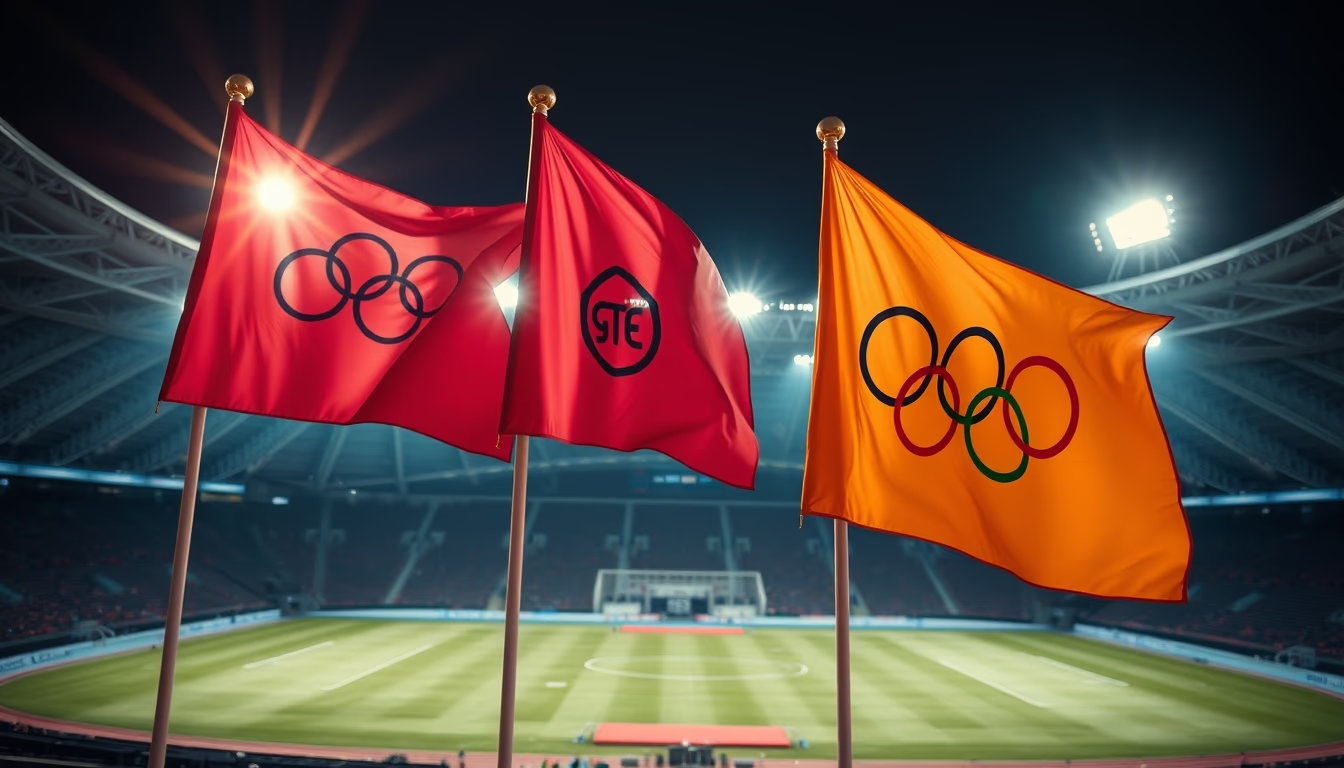
Olympic flags hoisted in stadiums symbolize global unity through sport, with each flag representing a participating nation.
About this subject
Olympic flags in stadiums are among the most iconic symbols of the Olympic Games. During the opening ceremony, all participating nations parade with their national flags, and throughout the games, the flags of competing countries are hoisted on flagpoles around the main stadium. This tradition dates back to the modern Olympic Games, which began in 1896, but the constant presence of flags in stadiums became a striking visual element starting with the Los Angeles Games in 1932, when the first Olympic village was built.
Flags not only identify countries but also carry a strong meaning of peace and friendly competition. In each edition, the number of flags increases: at Tokyo 2020, more than 200 nations were represented despite the challenges of the pandemic. The flags are often accompanied by the Olympic flag with its five interlocking rings, which represent the five continents and the gathering of athletes from around the world.
In the Brazilian context, the country's participation in the Games is marked by moments of great national pride, such as when the Brazilian flag is hoisted after victories and during the opening and closing ceremonies. Brazil hosted the Olympic Games in 2016 in Rio de Janeiro, where the Maracanã stadium was the stage for a spectacle of flags from all nations. This historic event reinforced the importance of flags as symbols of identity and unity.
Interestingly, the tradition of hoisting all participating flags in the Olympic stadium began at the London 1948 Games, after World War II, as a gesture of reconciliation and peace. Since then, it has become one of the most photographed and shared moments, representing the diversity and hope that the Olympic Games inspire.
Frequently Asked Questions
How many flags are hoisted in an Olympic stadium during the Games?
The exact number varies each edition, but it generally corresponds to the number of participating National Olympic Committees. In Tokyo 2020, for example, there were 206 delegations, each with its flag hoisted at the main stadium.
What is the origin of the tradition of hoisting flags in Olympic stadiums?
The tradition began at the London 1948 Games after World War II, as a symbol of peace and reconciliation. Since then, all participating nations have their flags displayed during the games.
What do the rings on the Olympic flag, which is always present alongside national flags, represent?
The five interlocking rings represent the five continents (America, Europe, Asia, Africa, and Oceania) and the unity of athletes from around the world at the Olympic Games. They are colored (blue, yellow, black, green, and red) on a white background.
Direct URL
https://pub-c7d6a6ea828543ac903a74a341ccb2e1.r2.dev/imagens/olympic-flags-stadium-fine-art-photography-fresh3.avifHow to credit
Include a visible link back to UtilizAí. Copy one of the snippets below:
<a href="https://xn--utiliza-eza.com/en/midia/imagens/olympic-flags-stadium-fine-art-photography-fresh3">Olympic flags stadium</a> by <a href="https://xn--utiliza-eza.com">UtilizAí</a>, licensed under <a href="https://creativecommons.org/licenses/by/4.0/">CC BY 4.0</a>.
[Olympic flags stadium](https://xn--utiliza-eza.com/en/midia/imagens/olympic-flags-stadium-fine-art-photography-fresh3) by [UtilizAí](https://xn--utiliza-eza.com), CC BY 4.0
License: CC-BY-4.0