Olives in clay jar
1344×768 · AVIF · CC BY 4.0
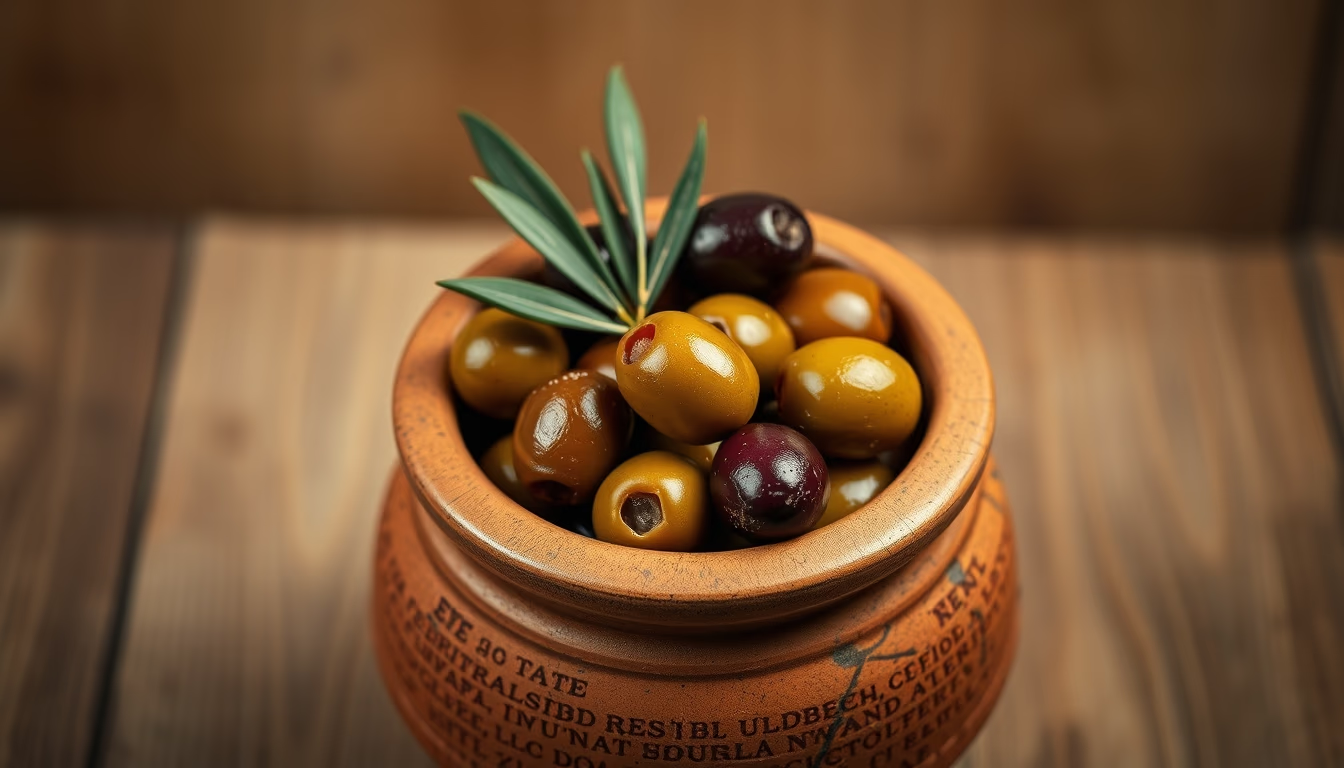
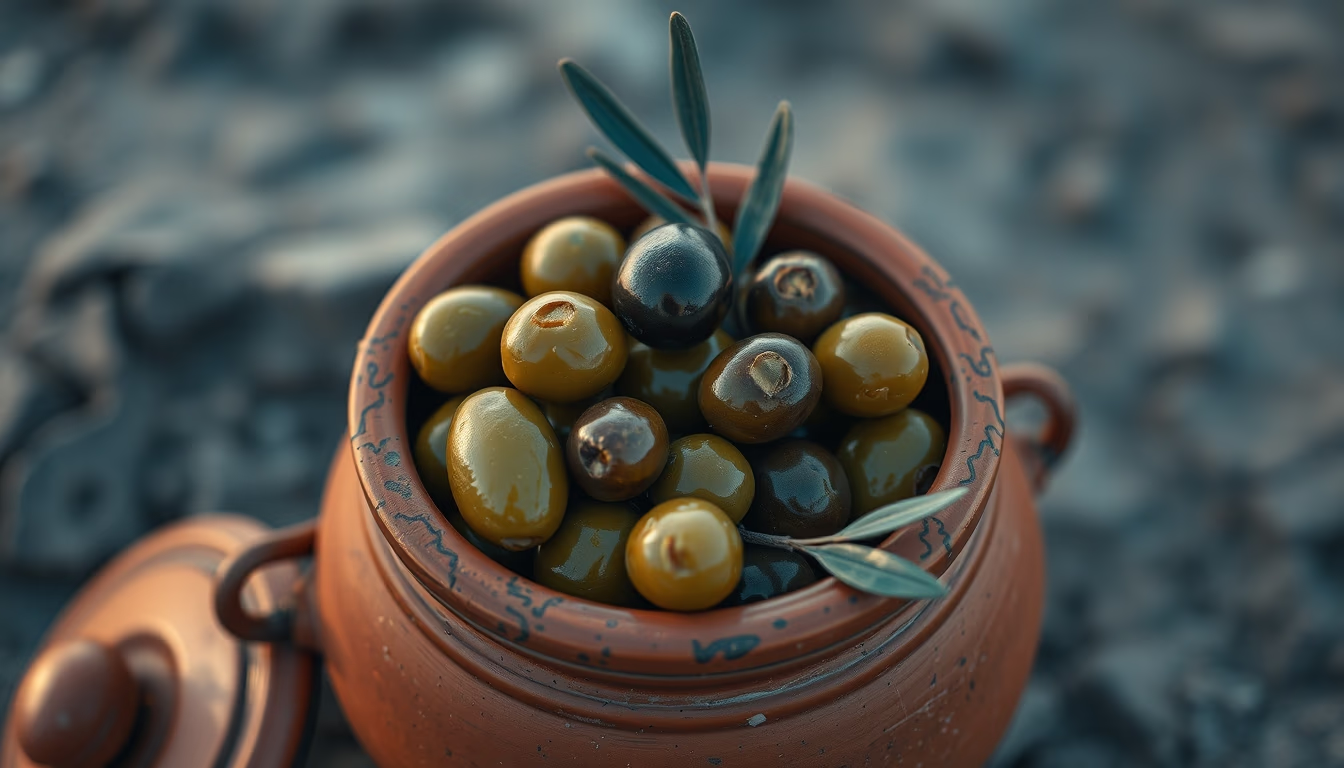
Olives cured in clay jars: a millennia-old Mediterranean tradition that enhances flavor and texture.
About this subject
Storing olives in clay jars is an ancient practice dating back over 3,000 years to Eastern Mediterranean civilizations such as the Phoenicians and Greeks. The porous nature of clay allows gradual gas exchange, creating a microclimate ideal for lactic fermentation, which reduces the fruit's natural bitterness and develops complex flavors. Unlike metal or plastic containers, ceramics maintain stable temperatures and do not chemically interact with the product. Today, artisan producers in Greece, Italy, Morocco, and Turkey still prefer clay vessels.
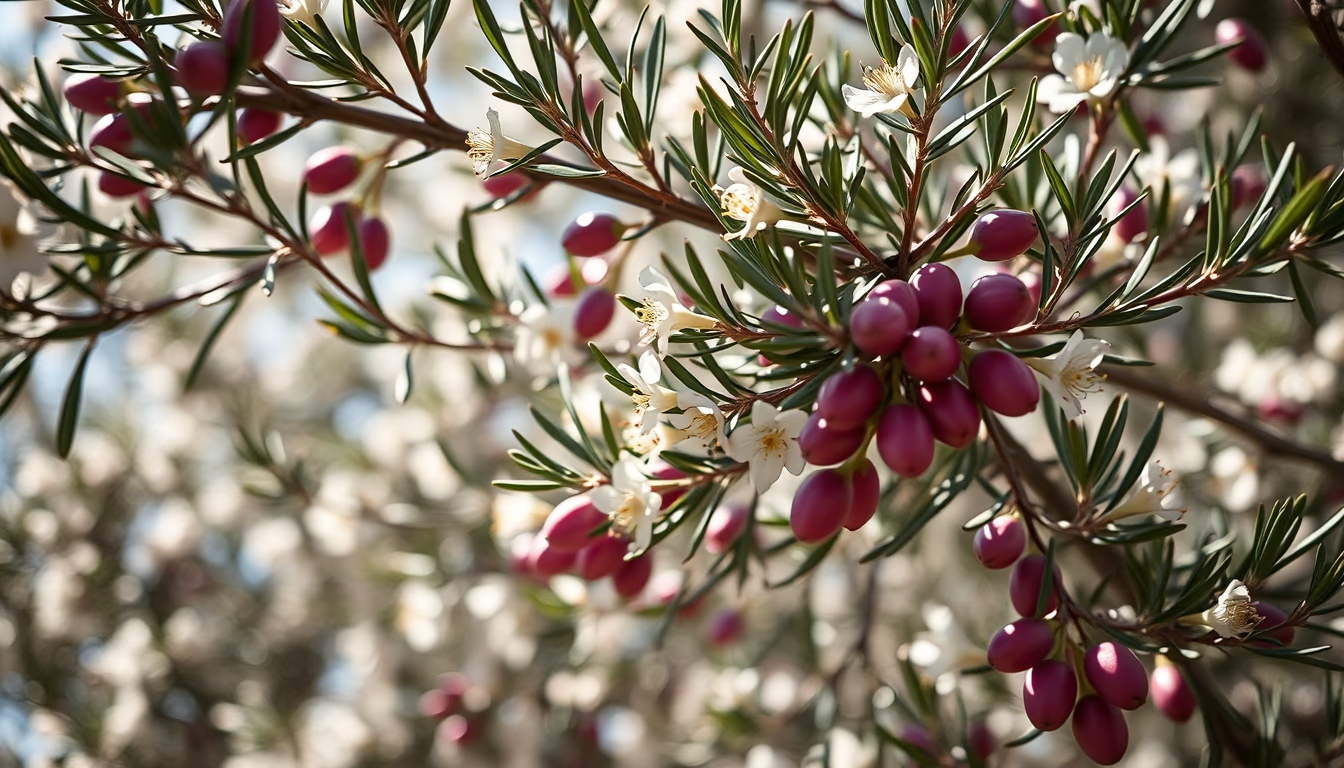
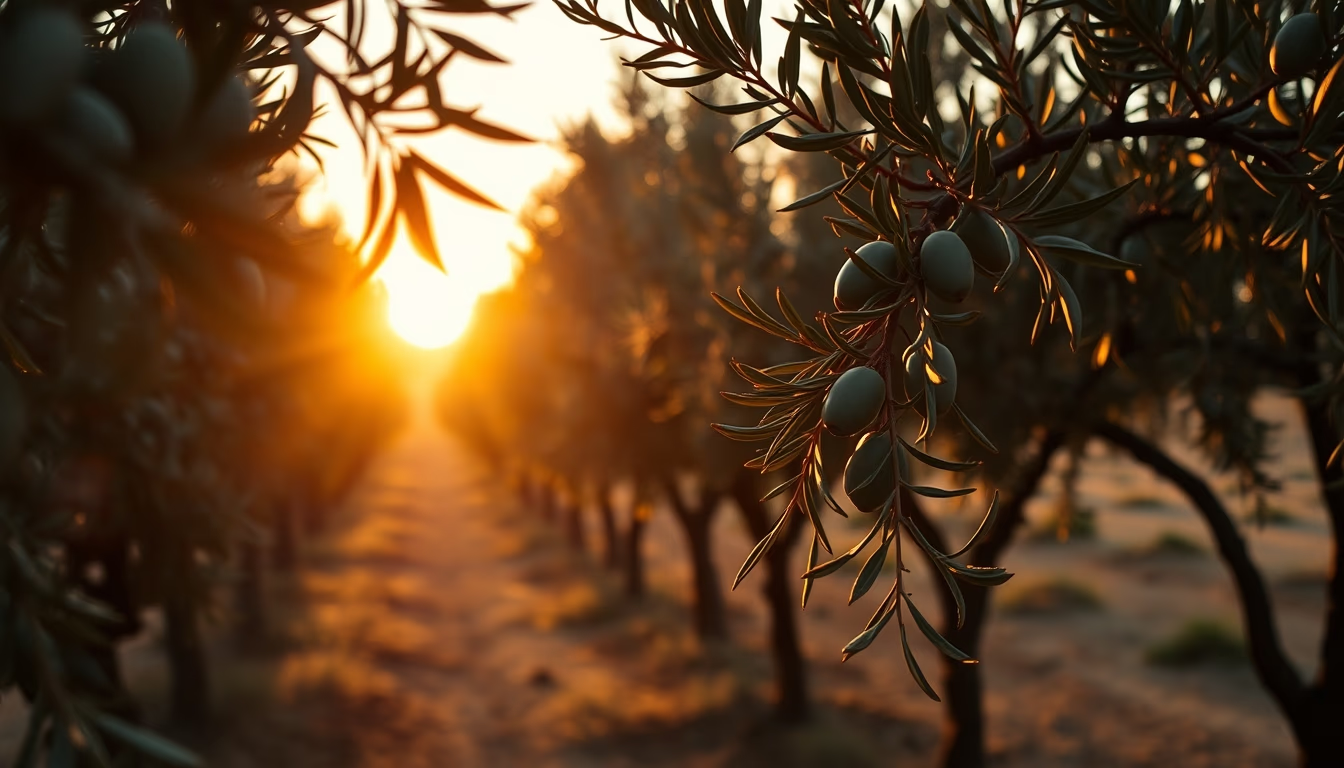
The olive (Olea europaea) is native to the Mediterranean Basin but was spread by colonists to the Americas, South Africa, and Australia. Hundreds of cultivars exist, including Kalamata (Greece), Manzanilla (Spain), Gaeta (Italy), and Picholine (France), each with distinct size, color, and flavor profiles that influence the curing method. Green olives are harvested before ripening and tend to be firmer and more bitter; black olives are ripe, oilier, and sweeter. Clay jars are especially common for cracked or split olives, which absorb brine and aromatics better.
Curing in clay typically involves immersion in brine (salt water) with herbs such as thyme, rosemary, garlic, and lemon zest. The duration ranges from weeks to months depending on variety and size. During this time, pH drops to around 4.0, inhibiting unwanted microorganisms. Oleuropein, the phenolic compound responsible for bitterness, is hydrolyzed. Beyond preservation, the clay imparts a subtle earthy note. Some producers still use buried clay amphorae, a technique known as “buried pot,” which maintains a constant temperature of 15, 18°C.
Interestingly, the clay jar tradition is linked to olive oil production. In Greek mythology, the goddess Athena gifted Athens with the first olive tree, and the fruits were stored in amphorae. Archaeological digs in Crete and Sicily have found pots with olive residues dating to 1500 BC. Today, the global table olive trade exceeds US$3 billion annually, and artisan clay-cured products command premium prices in gourmet markets. The choice of container is not merely aesthetic; it reflects empirical preservation knowledge that modern science confirms as effective.
Frequently Asked Questions
How long should olives stay in the clay jar?
Curing time varies by size and variety, usually 4 to 12 weeks. Smaller green olives cure faster; larger black olives may take months. Tasting periodically is the best way to gauge readiness.
Which olive varieties are best for clay jar curing?
Firm-fleshed varieties like Kalamata, Manzanilla, and Taggiasca work well. Cracked or split olives absorb brine and aromatics more effectively. Avoid overly ripe or soft fruits as they may disintegrate.
Can I reuse the clay jar for new batches?
Yes, but clean it thoroughly. Wash with hot water (no soap to avoid residues), dry in the sun, and sterilize with boiling water. The clay's porosity may retain flavors, some like that, but if you want neutral, rinse with diluted vinegar.
Direct URL
https://pub-c7d6a6ea828543ac903a74a341ccb2e1.r2.dev/imagens/olives-in-clay-jar-studio-editorial-portrait-p11.avifHow to credit
Include a visible link back to UtilizAí. Copy one of the snippets below:
<a href="https://xn--utiliza-eza.com/en/midia/imagens/olives-in-clay-jar-studio-editorial-portrait-p11">Olives in clay jar</a> by <a href="https://xn--utiliza-eza.com">UtilizAí</a>, licensed under <a href="https://creativecommons.org/licenses/by/4.0/">CC BY 4.0</a>.
[Olives in clay jar](https://xn--utiliza-eza.com/en/midia/imagens/olives-in-clay-jar-studio-editorial-portrait-p11) by [UtilizAí](https://xn--utiliza-eza.com), CC BY 4.0
License: CC-BY-4.0