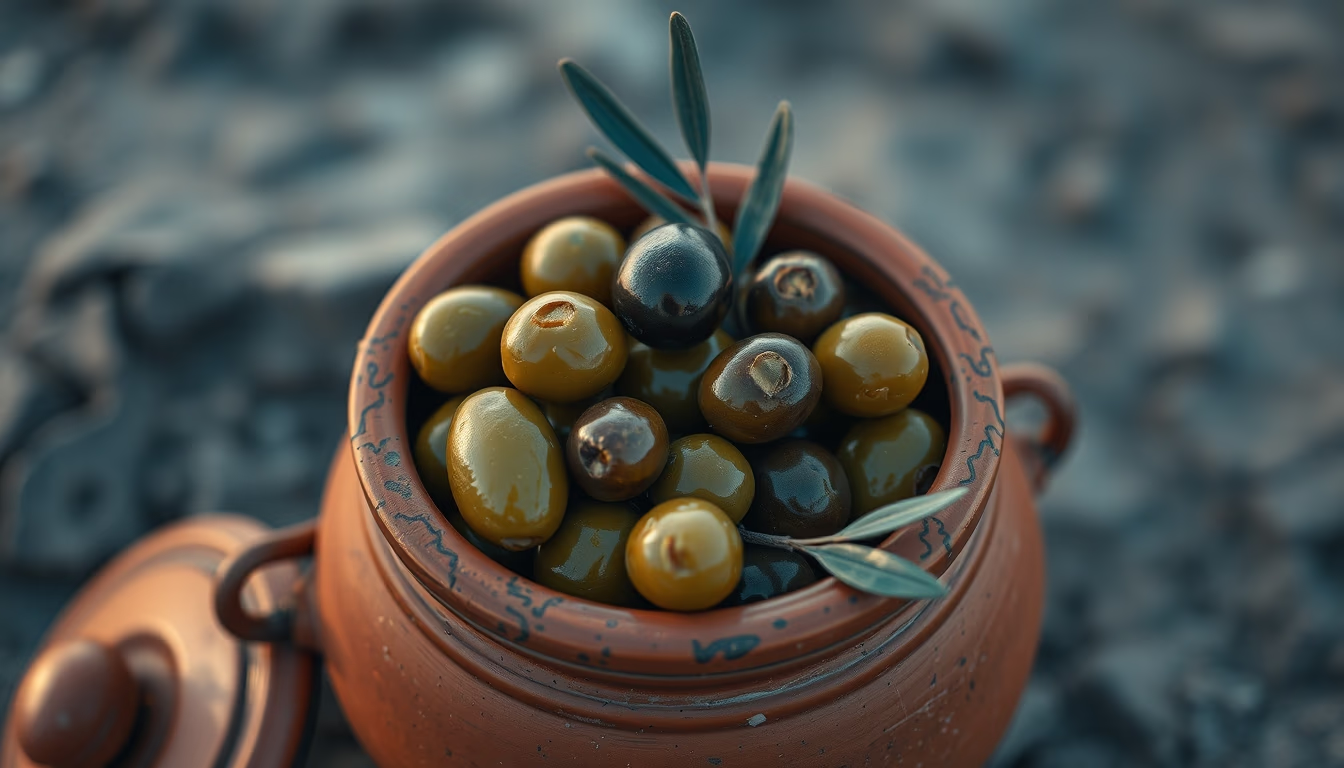
Olives in clay jar
1344×768 · AVIF · CC BY 4.0

Olives preserved in clay jars retain flavor and texture through ancient artisanal methods used since antiquity in the Mediterranean.
About this subject
Olives preserved in clay jars represent a tradition spanning millennia. In the Mediterranean, ceramic amphorae were used to store olives cured in brine or fermented, a technique spread across Portugal, Spain, Italy, and Greece. Clay, a porous and breathable material, allows subtle gas exchange, favoring lactic fermentation and flavor maturation without refrigeration.
In Brazil, olive production is modest, concentrated in Rio Grande do Sul and temperate regions, but imported preserved olives are widely consumed. Artisanal clay jars are used by small producers to offer olives with a more rustic profile, often seasoned with herbs like rosemary, bay leaf, and garlic. The technique emphasizes terroir and reduces chemical additives.
Studies indicate that fermentation in ceramics can increase the bioavailability of polyphenols, heart-healthy antioxidants. Moreover, storing in clay maintains the natural oiliness of olives, preventing drying. However, the process requires constant monitoring of salinity and pH to avoid undesirable microorganism growth.
Interestingly, the phrase "olive in clay jar" also appears in Brazilian country recipes, where clay pots are used to cure green olives directly from the tree. This practice, though less common, revives a craft that connects Brazil to Mediterranean heritage.
Frequently Asked Questions
Why are olives in clay jars considered more flavorful?
Clay allows microcirculation of air, promoting natural fermentation and flavor concentration. Additionally, the acidity and tannins in ceramics can enhance the taste profile of olives.
How long do olives preserved in clay jars last?
Under proper brine conditions and temperature (15°C, 20°C), they can last up to 12 months. Once opened, it is recommended to consume within 30 days and keep refrigerated.
Is it safe to use clay jars for preserving olives in Brazil?
Yes, provided the jar is glazed or has a food-grade inner seal. In Brazil, artisanal clay pots should be cured with water and salt before use to eliminate impurities.
Direct URL
https://pub-c7d6a6ea828543ac903a74a341ccb2e1.r2.dev/imagens/olives-in-clay-jar-long-exposure-p5.avifHow to credit
Include a visible link back to UtilizAí. Copy one of the snippets below:
<a href="https://xn--utiliza-eza.com/en/midia/imagens/olives-in-clay-jar-long-exposure-p5">Olives in clay jar</a> by <a href="https://xn--utiliza-eza.com">UtilizAí</a>, licensed under <a href="https://creativecommons.org/licenses/by/4.0/">CC BY 4.0</a>.
[Olives in clay jar](https://xn--utiliza-eza.com/en/midia/imagens/olives-in-clay-jar-long-exposure-p5) by [UtilizAí](https://xn--utiliza-eza.com), CC BY 4.0
License: CC-BY-4.0