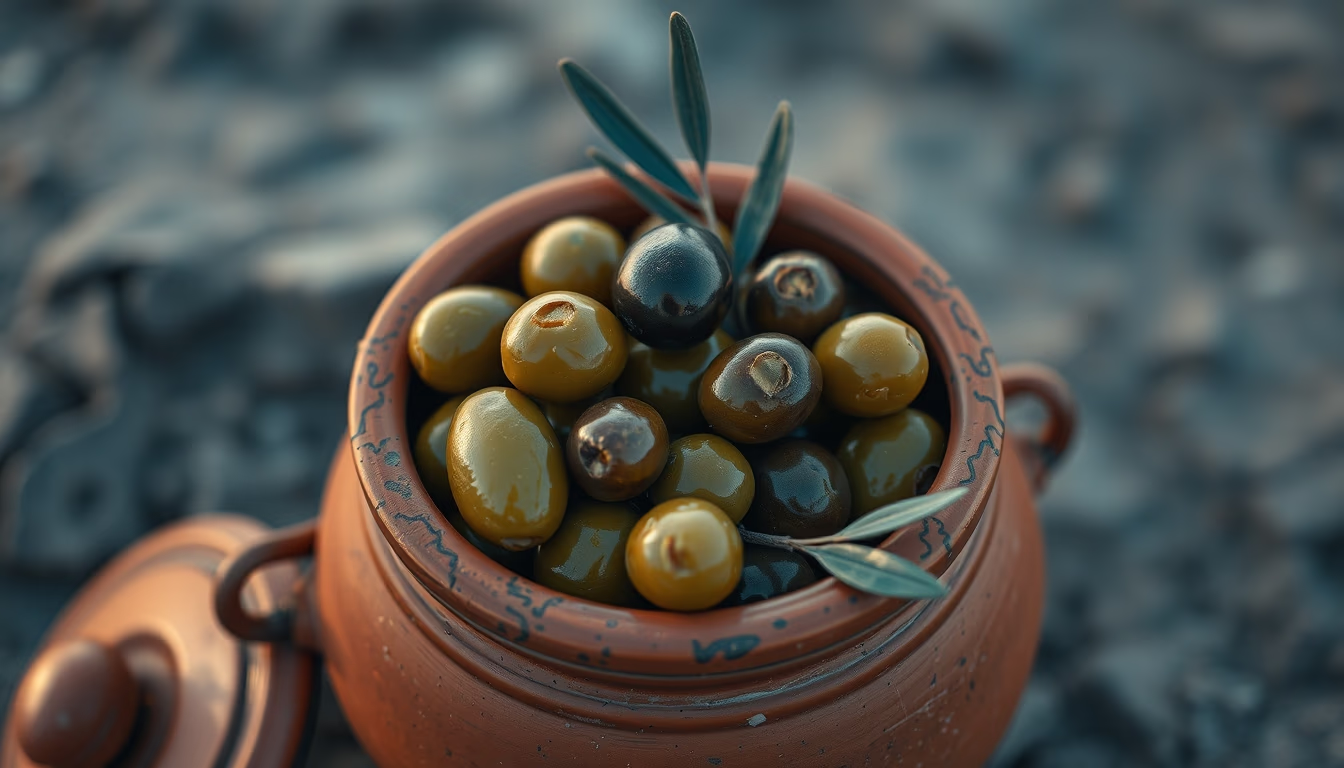
Olives in clay jar
1344×768 · AVIF · CC BY 4.0
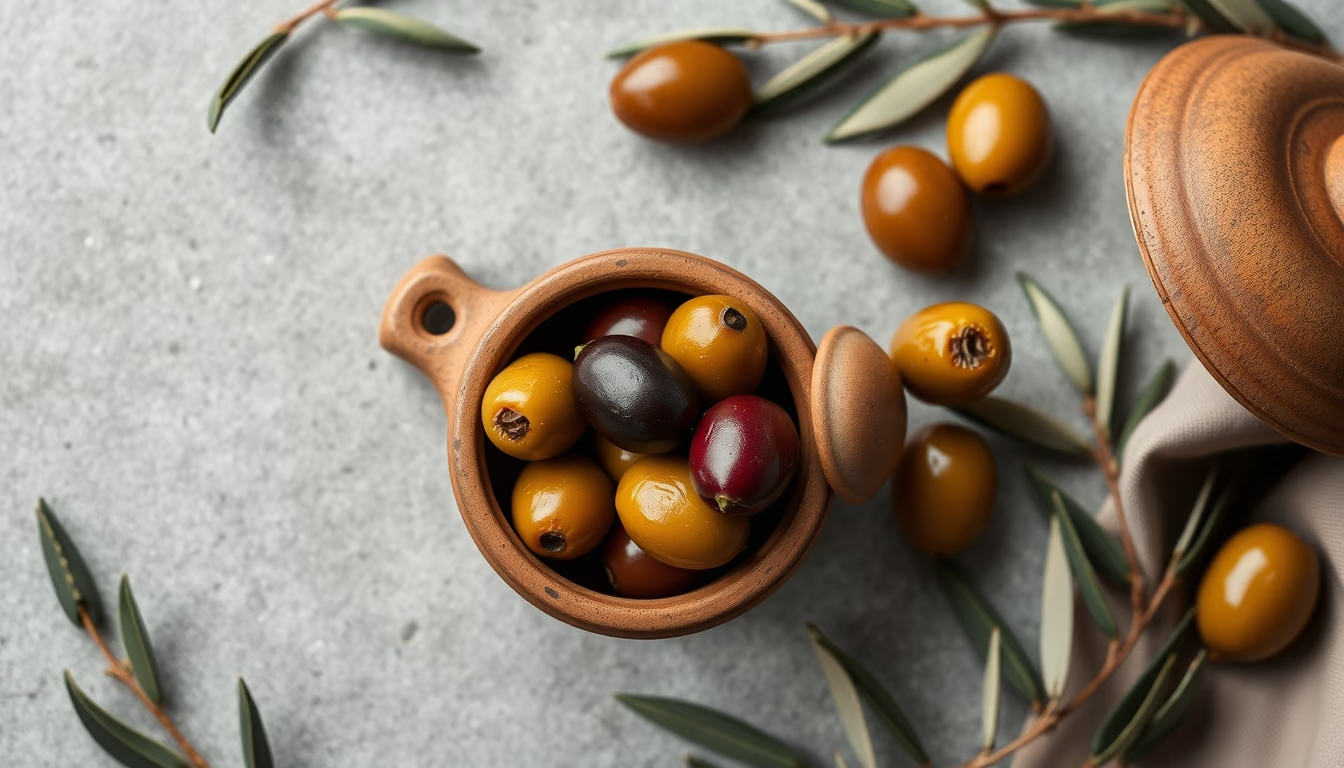
Olives preserved in clay jars: an age-old tradition that enhances flavor and texture.
About this subject
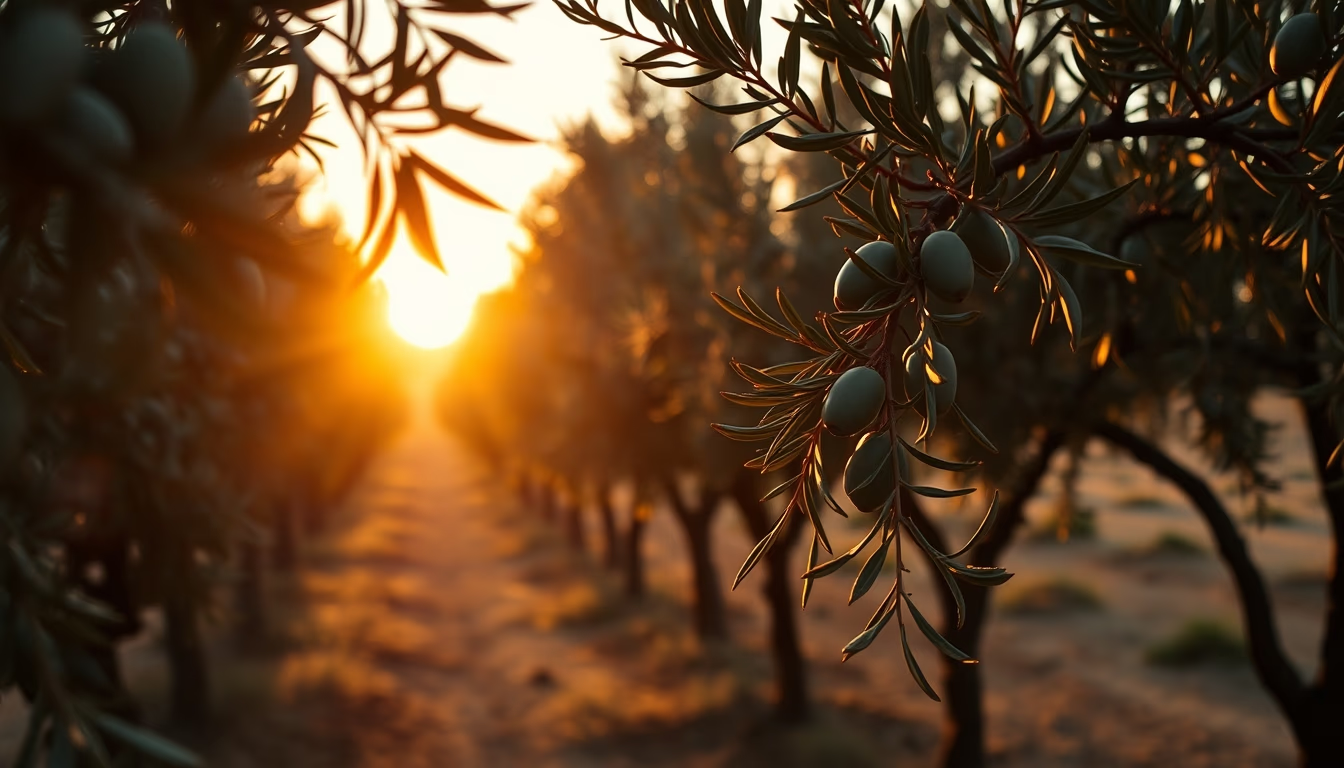
Olives are the fruit of the olive tree (Olea europaea), cultivated for over 5,000 years in the Mediterranean region. Curing them in clay jars is an ancient technique still used by artisan producers in Greece, Italy, Spain, and Portugal. The porous clay allows slight air and moisture exchange, promoting controlled fermentation. Green or black olives are immersed in brine or a water, salt mix, sometimes with herbs like rosemary, thyme, or garlic, and left for weeks or months. This method not only preserves the fruit but also develops a complex flavor and firm texture, quite different from industrially pasteurized olives. In Brazil, Italian and Portuguese immigration brought this tradition, making clay jars common at street fairs and municipal markets. Beyond gastronomic value, the clay jar is a cultural symbol, linked to rustic cuisine and natural storage. Studies indicate that clay fermentation can increase the bioavailability of polyphenols, beneficial antioxidants. Interestingly, olive farming in Brazil is expanding in Rio Grande do Sul, Minas Gerais, and São Paulo, with producers reviving traditional preservation methods. Olives in clay jars are not just food; they are a testament to sustainable practices that connect flavor, history, and culture.
Frequently Asked Questions
How long can olives be preserved in a clay jar?
Under proper conditions, with brine and correct sealing, olives can last up to 12 months. They should be kept in a cool, dark place.
What is the difference between clay-cured and industrially processed olives?
Clay-cured olives undergo natural fermentation, developing complex flavors and firm texture. Industrial ones use sodium hydroxide to speed up curing and are often pasteurized, losing some flavor.
Is it safe to use any type of clay for preserving olives?
No. The clay must be food-grade, either glazed or unglazed, but free of lead or other contaminants. Traditional handmade clay jars are usually safe, but it's good to check their source.
Direct URL
https://pub-c7d6a6ea828543ac903a74a341ccb2e1.r2.dev/imagens/olives-in-clay-jar-isometric-flat-lay-p6.avifHow to credit
Include a visible link back to UtilizAí. Copy one of the snippets below:
<a href="https://xn--utiliza-eza.com/en/midia/imagens/olives-in-clay-jar-isometric-flat-lay-p6">Olives in clay jar</a> by <a href="https://xn--utiliza-eza.com">UtilizAí</a>, licensed under <a href="https://creativecommons.org/licenses/by/4.0/">CC BY 4.0</a>.
[Olives in clay jar](https://xn--utiliza-eza.com/en/midia/imagens/olives-in-clay-jar-isometric-flat-lay-p6) by [UtilizAí](https://xn--utiliza-eza.com), CC BY 4.0
License: CC-BY-4.0