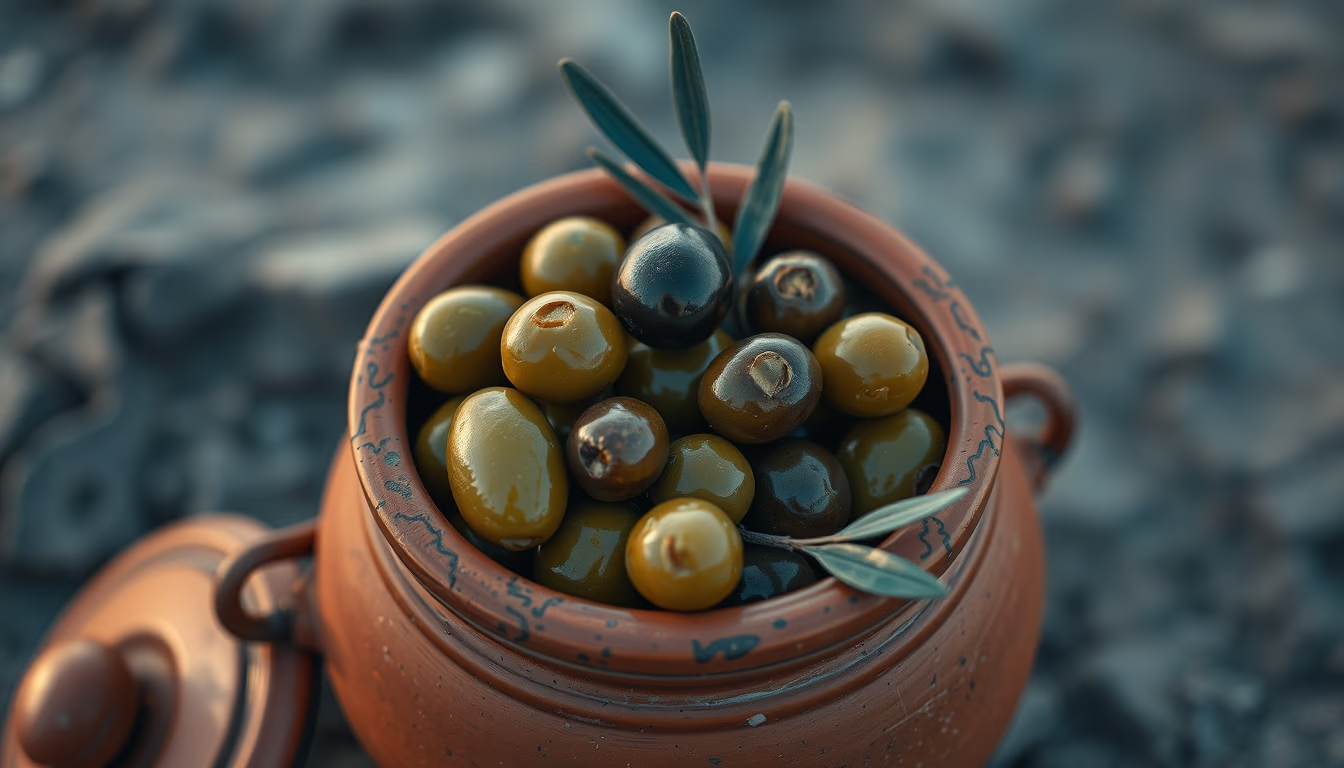
Olive press traditional stone
1344×768 · AVIF · CC BY 4.0

The traditional stone olive press is an ancient method used to extract olive oil, especially in the Mediterranean region.
About this subject
The traditional stone olive press, also known as a stone mill or stone olive crusher, is one of the oldest methods for extracting olive oil. Used by civilizations such as the Greeks and Romans, this technique involves a large stone wheel that rotates over a base, crushing olives into a paste. The process was often powered by animal or human labor, later replaced by more modern mechanisms. Even today, in regions of Italy, Greece, and Portugal, small producers maintain this artisanal method, valuing tradition and the quality of cold-pressed oil.
The operation of the stone press involves careful steps. After harvesting, olives are washed and taken to the mill, where the circular stone, weighing several tons, slowly grinds the fruit. This process prevents the mass from heating up, preserving aromatic and nutritional compounds. Subsequently, the paste is spread on fiber mats and pressed to separate the oil from water and solid residues. The resulting oil is filtered and stored in stainless steel tanks or glass barrels.
The cultural importance of this method is immense. In many communities, olive oil production was a social event, gathering families and neighbors. The stone press symbolizes the connection between humans and the land, and its continued use represents intangible heritage. Although less efficient than modern hydraulic presses, oil obtained through this process is valued for its more intense flavor and antioxidant properties. Currently, rural tourism initiatives and food fairs promote the preservation of these techniques, ensuring knowledge is not lost.
Interestingly, archaeological studies show that the first stone presses date back to around 3000 BCE in the Levant region. The evolution of these equipment influenced the development of vegetable oil extraction technologies worldwide. Despite industrialization, interest in traditional methods grows, driven by the search for organic and sustainable foods. The stone press remains an icon of food history and agricultural engineering.
Frequently Asked Questions
How does a traditional stone olive press work?
The stone press works with a large circular wheel that rotates over a base, crushing olives into a paste. This paste is then placed on fiber mats and pressed to extract the oil.
Where are stone olive presses still used today?
They are mainly found in regions of Italy, Greece, Portugal, and other Mediterranean countries, where small producers still use the artisanal method.
Is olive oil from a stone press better than modern methods?
Many connoisseurs consider stone-pressed olive oil superior in flavor and aroma, as cold extraction preserves volatile compounds. However, the yield is lower and the process slower.
Direct URL
https://pub-c7d6a6ea828543ac903a74a341ccb2e1.r2.dev/imagens/olive-press-traditional-stone-national-geographic-style-p3.avifHow to credit
Include a visible link back to UtilizAí. Copy one of the snippets below:
<a href="https://xn--utiliza-eza.com/en/midia/imagens/olive-press-traditional-stone-national-geographic-style-p3">Olive press traditional stone</a> by <a href="https://xn--utiliza-eza.com">UtilizAí</a>, licensed under <a href="https://creativecommons.org/licenses/by/4.0/">CC BY 4.0</a>.
[Olive press traditional stone](https://xn--utiliza-eza.com/en/midia/imagens/olive-press-traditional-stone-national-geographic-style-p3) by [UtilizAí](https://xn--utiliza-eza.com), CC BY 4.0
License: CC-BY-4.0