Olive press traditional stone
1344×768 · AVIF · CC BY 4.0
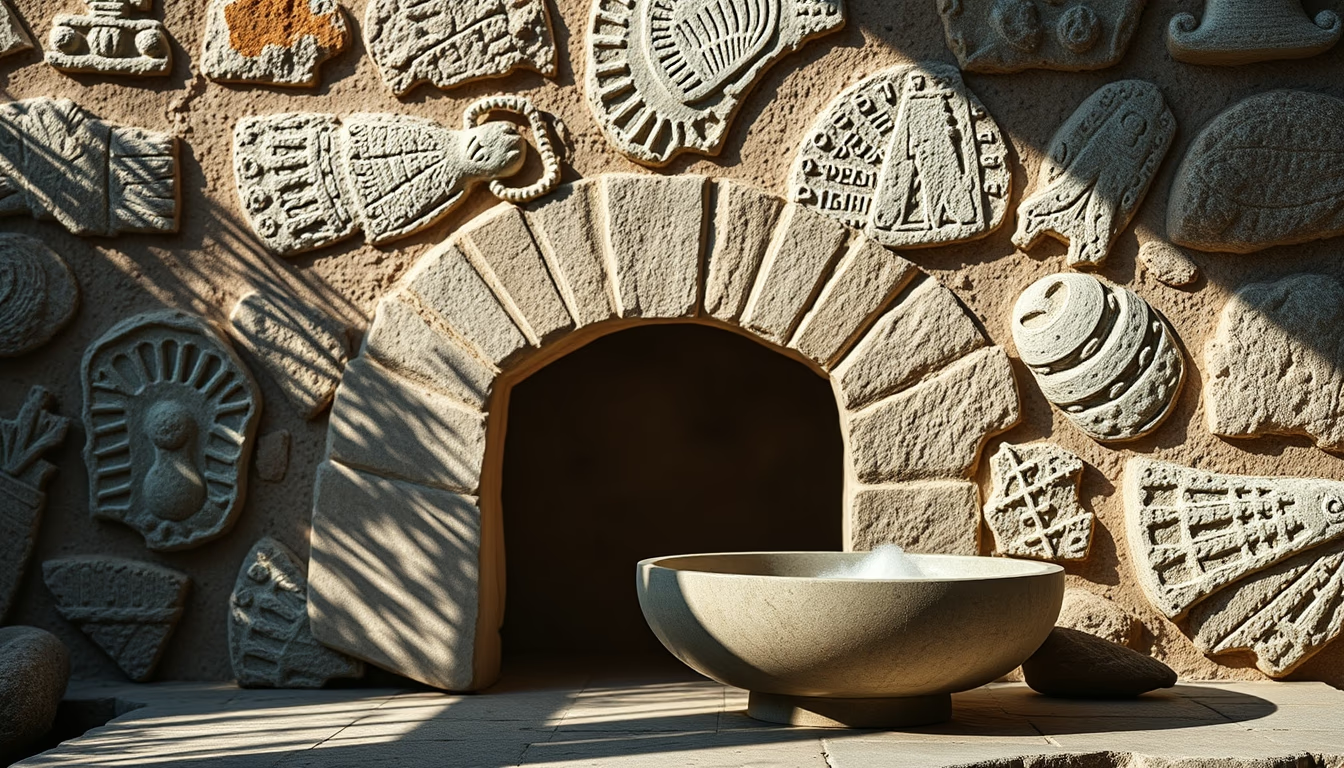
The traditional stone olive press is an ancient device used in artisanal olive oil production, especially in the Mediterranean region.
About this subject
The traditional stone olive press, also known as a stone mill or stone press, is one of the oldest methods for extracting olive oil. Its use dates back to ancient civilizations such as the Greeks and Romans, who employed large stone wheels driven by animal or human power to crush olives. The process involves grinding olives into a paste, which is then pressed to separate the oil from the pulp and water.
This artisanal method is valued for preserving the organoleptic properties of the oil, resulting in a more intense and complex flavor. Although largely replaced by hydraulic presses and modern centrifuges, it is still used in small-scale production and by producers who aim to maintain tradition. Regions like Italy, Greece, Spain, and Portugal still have functioning stone presses, often in rural areas.
The stone press is a symbol of Mediterranean culture, associated with the healthy diet and longevity. Olive oil extracted by this method is often more expensive and sought after by gourmets. Additionally, the equipment itself has become a piece of historical heritage, preserved in museums and even in wineries and farms that offer tourist experiences.
Interestingly, production with a stone press requires more time and effort: a single press can process only a few hundred kilograms of olives per day, whereas industrial methods process tons. This reinforces the artisanal character and exclusivity of traditional olive oil.
Frequently Asked Questions
How does a traditional stone olive press work?
A traditional stone press works by crushing olives with a large stone wheel, forming a paste that is then pressed to extract oil. The process is slow and manual, preserving flavor.
What is the difference between traditional and modern olive presses?
Traditional presses use stone and manual or animal power, while modern ones are hydraulic or centrifugal. The traditional method produces more flavorful oil but has lower yield and scale.
Where is the stone press still used for olive oil today?
The stone press is still used in small artisanal productions in Italy, Greece, Spain, Portugal, and other Mediterranean countries, mainly for premium oils.
Direct URL
https://pub-c7d6a6ea828543ac903a74a341ccb2e1.r2.dev/imagens/olive-press-traditional-stone-magazine-editorial-p0.avifHow to credit
Include a visible link back to UtilizAí. Copy one of the snippets below:
<a href="https://xn--utiliza-eza.com/en/midia/imagens/olive-press-traditional-stone-magazine-editorial-p0">Olive press traditional stone</a> by <a href="https://xn--utiliza-eza.com">UtilizAí</a>, licensed under <a href="https://creativecommons.org/licenses/by/4.0/">CC BY 4.0</a>.
[Olive press traditional stone](https://xn--utiliza-eza.com/en/midia/imagens/olive-press-traditional-stone-magazine-editorial-p0) by [UtilizAí](https://xn--utiliza-eza.com), CC BY 4.0
License: CC-BY-4.0