Olive leaf macro detail
1344×768 · AVIF · CC BY 4.0
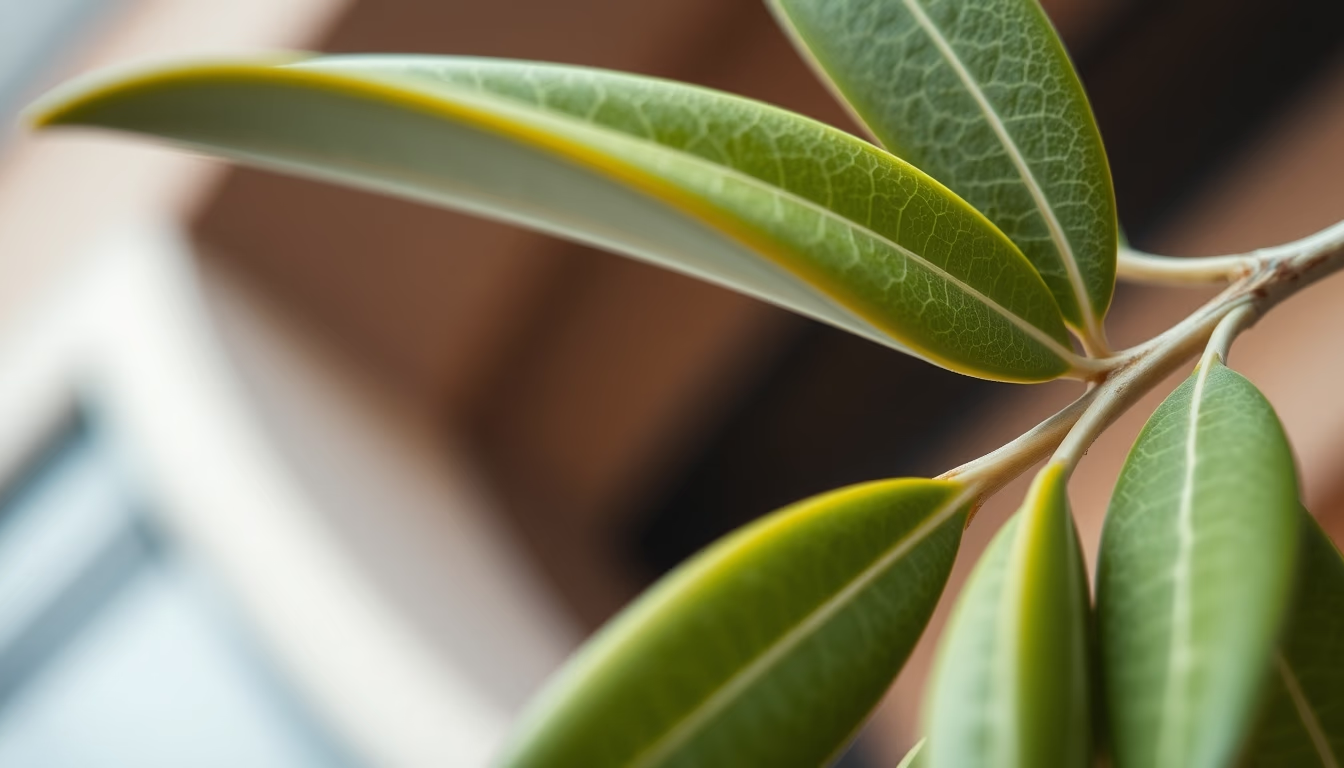
Macro detail of an olive leaf, revealing textures and veins that highlight its adaptation to the Mediterranean climate.
About this subject
The olive tree (Olea europaea) is a symbol of Mediterranean culture, cultivated for thousands of years for olive oil and table olives. Its leaves are elongated, leathery, and grayish-green on the upper surface, while the underside is silvery due to trichomes (hairs) that reduce water loss and reflect solar radiation. This structure is an adaptation to dry, sunny summers. In a macro detail of the leaf, the prominent central vein and secondary veins arranged in a pinnate pattern (typical of dicotyledons) are visible. The thick cuticle and protected stomata provide resistance to desiccation. Olive leaves have a lifespan of about two to three years and are continuously renewed. Besides their photosynthetic function, the leaves are rich in phenolic compounds such as oleuropein, which has antioxidant and antimicrobial properties, used in traditional medicine and the supplement industry. The olive tree is native to the Mediterranean region but is now cultivated in many parts of the world, including South America and Australia. Olive cultivation has significant economic and cultural importance, with varieties like 'Arbequina' and 'Picual' widely spread. Macro observation of leaves helps in identifying diseases like olive knot and peacock spot, and enables studies on plant physiology.
Frequently Asked Questions
What are the main features of an olive leaf visible in a macro detail?
A macro detail reveals a robust central vein, secondary veins in a pinnate pattern, a thick cuticle, and a silvery underside with trichomes. The leathery texture is also apparent.
What is the economic importance of olive leaves beyond photosynthesis?
Olive leaves are rich in oleuropein and other polyphenols, extracted for antioxidant supplements and herbal medicine. They are also used in teas and cosmetics.
How can olive leaves help identify diseases in olive trees?
Symptoms such as spots (peacock spot), deformations, or darkening of veins may indicate fungal or bacterial infections like olive knot (Pseudomonas savastanoi) or peacock spot (Spilocaea oleagina).
Direct URL
https://pub-c7d6a6ea828543ac903a74a341ccb2e1.r2.dev/imagens/olive-leaf-macro-detail-architectural-photography-p3.avifHow to credit
Include a visible link back to UtilizAí. Copy one of the snippets below:
<a href="https://xn--utiliza-eza.com/en/midia/imagens/olive-leaf-macro-detail-architectural-photography-p3">Olive leaf macro detail</a> by <a href="https://xn--utiliza-eza.com">UtilizAí</a>, licensed under <a href="https://creativecommons.org/licenses/by/4.0/">CC BY 4.0</a>.
[Olive leaf macro detail](https://xn--utiliza-eza.com/en/midia/imagens/olive-leaf-macro-detail-architectural-photography-p3) by [UtilizAí](https://xn--utiliza-eza.com), CC BY 4.0
License: CC-BY-4.0