Olive harvest baskets
1344×768 · AVIF · CC BY 4.0
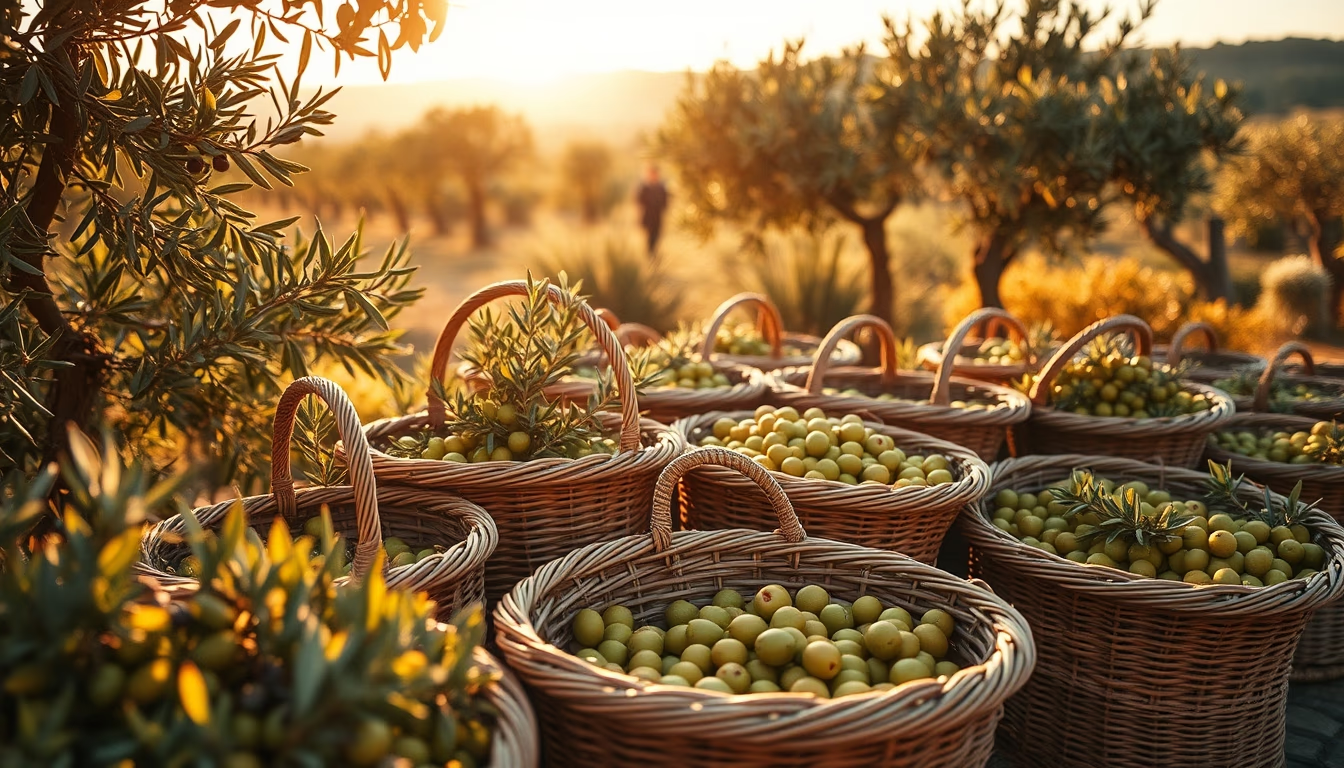
Traditional olive harvest baskets, used across the Mediterranean, showcase centuries-old techniques and the cultural significance of olive cultivation.
About this subject
Olive harvest baskets are essential tools in olive cultivation, especially in regions like Portugal, Spain, Italy, and Greece. Traditionally handwoven from natural materials such as willow, reed, or straw, these baskets vary in shape and size depending on the region and harvesting technique. In Portugal, for instance, wicker baskets are common in Alentejo, where manual harvesting still prevails. In Italy, wooden or plastic baskets are used in Tuscan olive groves.
Harvesting typically occurs between October and December when olives are ripe. Workers use poles to beat the branches, causing olives to fall onto tarps or directly into baskets. The baskets are designed to be lightweight yet sturdy, allowing harvesters to carry them for long periods. Beyond their practical function, many baskets feature regional patterns, reflecting local cultural identity.
Olive cultivation has ancient origins, dating back to 4000 BCE in the Eastern Mediterranean. Harvest baskets have changed little over centuries, still favored in small farms and artisanal harvests. They are integral to harvest festivals, such as Portugal's 'Festa da Oliveira,' where communities gather to celebrate olive oil production. The oil from these olives is prized worldwide for its quality and flavor.
Interestingly, basket design influences olive quality: well-ventilated baskets prevent bruising or fermentation. In some areas, straw baskets are preferred for absorbing moisture. The sustainability of these handmade baskets contrasts with modern plastic crates, yet many producers maintain tradition for cultural and ecological reasons.
Frequently Asked Questions
What materials are used to make olive harvest baskets?
Traditional materials include willow, reed, straw, and wood, but modern plastic baskets also exist. Willow is common in Portugal and Spain, while straw is used in drier regions.
How is olive harvesting done with these baskets?
Workers beat the branches with poles, causing olives to fall onto tarps or directly into baskets. In manual harvesting, baskets are hung from the waist or placed on the ground to collect the fruit.
What is the cultural significance of olive harvest baskets?
They are symbols of olive-growing tradition, featured in harvest festivals and celebrations. Many are decorated with regional patterns and passed down through generations, representing rural identity.
Direct URL
https://pub-c7d6a6ea828543ac903a74a341ccb2e1.r2.dev/imagens/olive-harvest-baskets-travel-photography-p3.avifHow to credit
Include a visible link back to UtilizAí. Copy one of the snippets below:
<a href="https://xn--utiliza-eza.com/en/midia/imagens/olive-harvest-baskets-travel-photography-p3">Olive harvest baskets</a> by <a href="https://xn--utiliza-eza.com">UtilizAí</a>, licensed under <a href="https://creativecommons.org/licenses/by/4.0/">CC BY 4.0</a>.
[Olive harvest baskets](https://xn--utiliza-eza.com/en/midia/imagens/olive-harvest-baskets-travel-photography-p3) by [UtilizAí](https://xn--utiliza-eza.com), CC BY 4.0
License: CC-BY-4.0