Olive harvest baskets
1344×768 · AVIF · CC BY 4.0
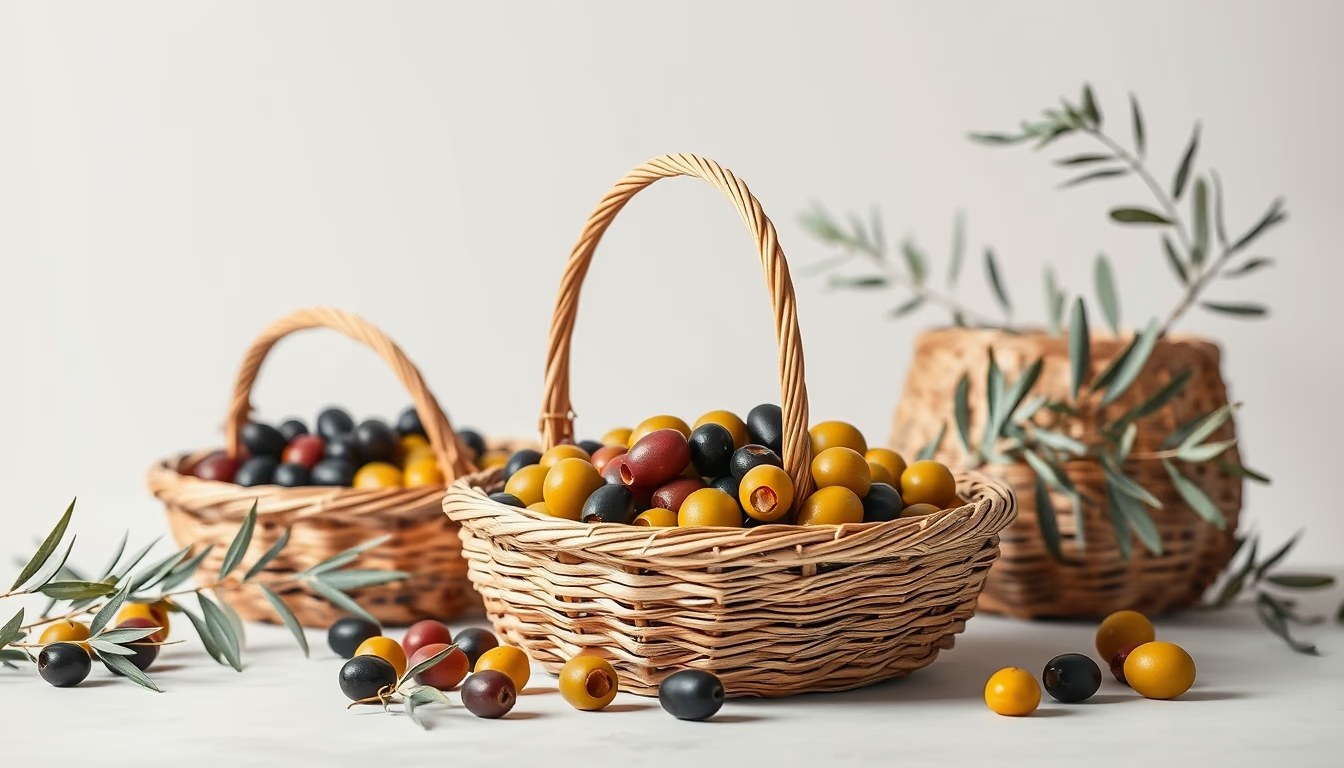
Olive harvest baskets are traditional tools that preserve fruit quality and reflect ancient techniques.
About this subject
Olive harvest baskets are essential tools in olive cultivation, used for millennia in Mediterranean regions and more recently in countries like Brazil, Chile, and Australia. Traditionally made from wicker or straw, these baskets allow olives to fall gently during manual harvesting, avoiding bruising and skin damage, a critical factor for producing high-quality extra virgin olive oil. The wide, shallow shape common in traditional Italian baskets (known as 'cesti') facilitates handling and sorting in the field.
Today, both artisanal and industrial models coexist. Reinforced plastic baskets, for example, are lighter and more durable, but many producers still prefer natural fiber baskets for their gentler impact on the fruit. Studies from the University of Córdoba indicate that ventilated baskets reduce early fermentation, keeping olives fresh longer after harvest. In regions like Andalusia, manual basket harvesting is valued for premium oils, while in Tuscany, the 'cesto delle olive' is a cultural symbol featured in harvest festivals.
The harvesting technique using baskets directly influences olive oil acidity: less mechanical damage results in lower acidity. Therefore, many producers invest in padded baskets or those with internal linings. Basket capacity varies: smaller ones (5-10 kg) are used for table olives, larger ones (20-30 kg) for oil production. Ergonomics have also evolved, with handles and shapes that reduce strain on the picker.
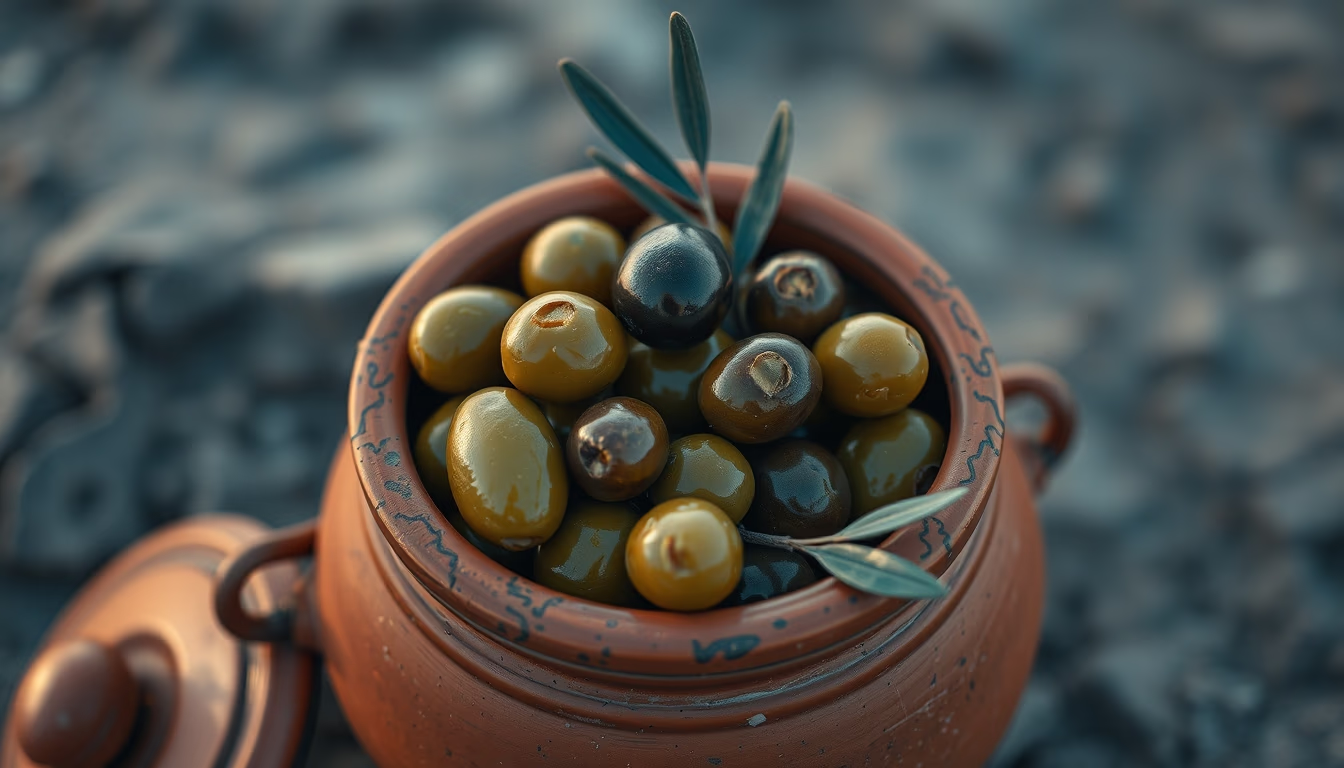
Interestingly, basket design has influenced art: in ancient Greece, amphorae and vases depict harvest baskets in rural scenes. Today, they are subjects of still-life photography celebrating olive oil culture. In Brazil, olive farming is growing in Rio Grande do Sul and the Mantiqueira range, and local artisanal baskets blend Portuguese and Italian influences, adapted to the subtropical climate.
Frequently Asked Questions
Why is the basket material important for olive oil quality?
The material directly affects olive preservation. Natural fiber baskets (wicker, straw) cushion the impact, reducing damage that increases oil acidity. Plastic baskets can trap heat and suffocate fruit, accelerating fermentation.
Are there specific baskets for table olives versus oil production?
Yes. For table olives, smaller baskets (5-10 kg) with soft linings prevent bruising. For oil production, larger baskets (20-30 kg) are used, as the fruit will be pressed soon.
How is manual basket harvesting done in modern olive groves?
Even with mechanization, many premium oil producers harvest by hand. Pickers use hanging or supported baskets, knocking olives down with combs or poles. The olives fall directly into the basket, minimizing soil contact.
Direct URL
https://pub-c7d6a6ea828543ac903a74a341ccb2e1.r2.dev/imagens/olive-harvest-baskets-studio-still-life-p9.avifHow to credit
Include a visible link back to UtilizAí. Copy one of the snippets below:
<a href="https://xn--utiliza-eza.com/en/midia/imagens/olive-harvest-baskets-studio-still-life-p9">Olive harvest baskets</a> by <a href="https://xn--utiliza-eza.com">UtilizAí</a>, licensed under <a href="https://creativecommons.org/licenses/by/4.0/">CC BY 4.0</a>.
[Olive harvest baskets](https://xn--utiliza-eza.com/en/midia/imagens/olive-harvest-baskets-studio-still-life-p9) by [UtilizAí](https://xn--utiliza-eza.com), CC BY 4.0
License: CC-BY-4.0