Olive harvest baskets
1344×768 · AVIF · CC BY 4.0
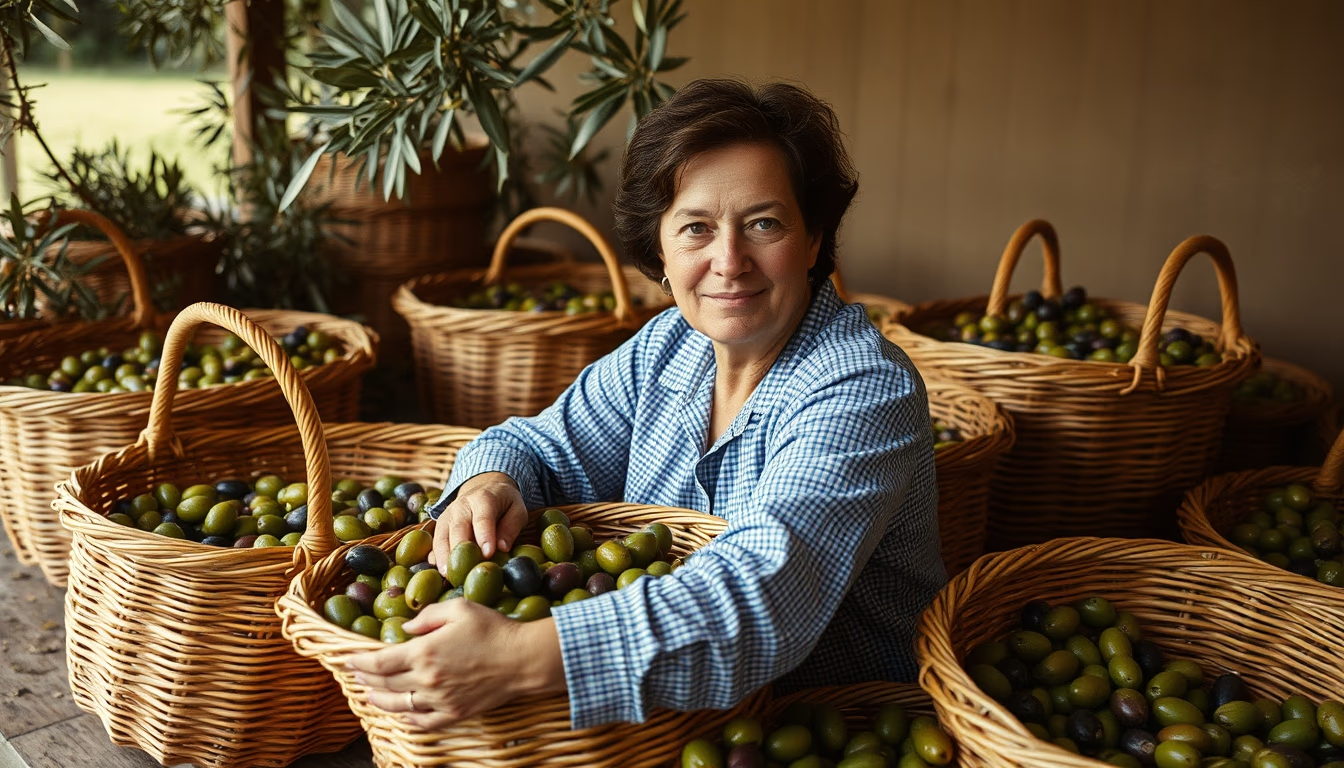
Olive harvest baskets are traditional tools that shape olive-growing culture, varying in materials and design according to region and cultivation technique.
About this subject
Olive harvest baskets are essential tools in olive cultivation, used to collect fruits manually during the harvest season. Traditionally made from wicker, bamboo, or straw, these baskets are lightweight and flexible, allowing workers to carry them hanging from their body or resting on the ground. In regions like the Mediterranean, where olive cultivation is ancient, each country has developed specific models: Spanish "canasta" are wide and shallow, while Italian "paniere" are deeper, both designed to prevent damage to the fruit. In Brazil, olive farming has been growing in the states of Rio Grande do Sul and Minas Gerais, adapting imported techniques, including the use of sturdy plastic baskets to facilitate cleaning and transport. The choice of material directly impacts olive quality: wicker baskets allow better airflow, reducing early fermentation, while plastic ones are more durable and easier to sanitize. Manual harvesting, which employs these baskets, is preferred for premium olive oils as it preserves fruit integrity and avoids unwanted oxidation. Interestingly, in Portugal these baskets are called "seiras", and in Andalusia, workers use a waist-mounted basket called "cascarón" that can hold up to 15 kg of olives. The age-old practice of weaving these utensils keeps the cultural identity of olive-growing communities alive, even with partial mechanization.
Frequently Asked Questions
What material are olive harvest baskets made of?
Traditionally, they are made from wicker, bamboo, or straw, natural materials that provide lightness and ventilation. Nowadays, sturdy plastics are also used in more modern farms.
How are the baskets used during manual harvesting?
Workers hang the baskets on their body or place them on the ground to catch olives knocked down by poles or mechanical harvesters. Later, the contents are transferred to larger crates or directly to the mill.
Is basket harvesting still common in Brazil?
Yes, especially on small farms and in artisanal olive oil production. In the states of Rio Grande do Sul and Minas Gerais, many producers maintain manual harvesting with baskets to ensure fruit quality.
Direct URL
https://pub-c7d6a6ea828543ac903a74a341ccb2e1.r2.dev/imagens/olive-harvest-baskets-lo-fi-disposable-camera-p8.avifHow to credit
Include a visible link back to UtilizAí. Copy one of the snippets below:
<a href="https://xn--utiliza-eza.com/en/midia/imagens/olive-harvest-baskets-lo-fi-disposable-camera-p8">Olive harvest baskets</a> by <a href="https://xn--utiliza-eza.com">UtilizAí</a>, licensed under <a href="https://creativecommons.org/licenses/by/4.0/">CC BY 4.0</a>.
[Olive harvest baskets](https://xn--utiliza-eza.com/en/midia/imagens/olive-harvest-baskets-lo-fi-disposable-camera-p8) by [UtilizAí](https://xn--utiliza-eza.com), CC BY 4.0
License: CC-BY-4.0