Olive harvest baskets
1344×768 · AVIF · CC BY 4.0
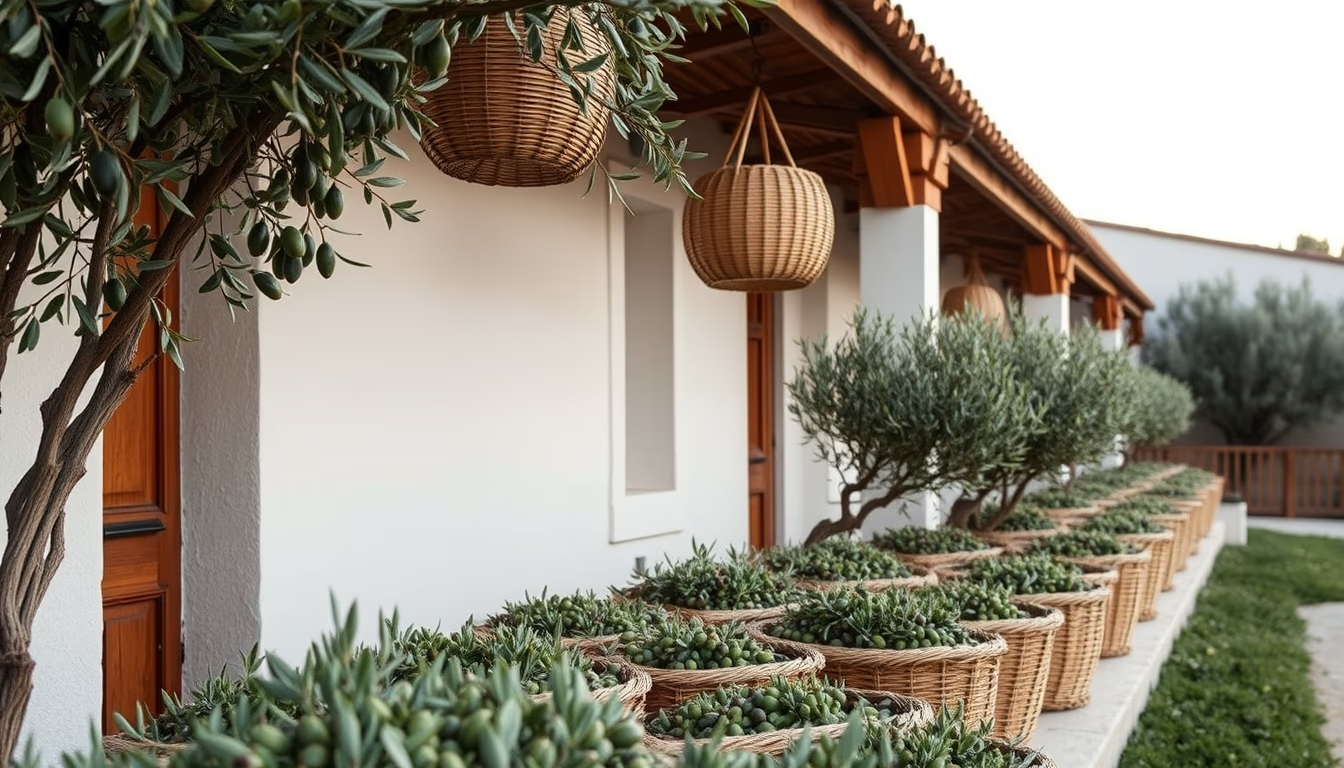
Olive harvest baskets are essential tools in olive cultivation, used for millennia to collect and transport the fruit.
About this subject
Olive harvest baskets are artifacts that have accompanied olive cultivation since antiquity. Originating in the Mediterranean region, these baskets were traditionally hand-woven from plant fibers such as wicker, straw, or reed, abundant and flexible materials that allowed for light, sturdy, and breathable containers. The woven structure facilitated air circulation, preventing moisture and rot during the period between harvest and processing.
In traditional harvesting techniques, still common in countries like Portugal, Greece, Italy, and Spain, workers spread large cloths or tarps under olive trees and use long poles to beat the branches, causing olives to fall. Baskets are then used to gather the fruit from the ground or to transport it from the trees to larger containers. In intensive production regions, baskets have evolved into plastic or metal versions, more durable and easier to sanitize, but handcrafted wicker baskets are still valued by producers who preserve ancestral methods.
The typical shape of these baskets is conical or deep, with reinforced handles to support the weight of olives. In some cultures, baskets are decorated with geometric patterns or natural dyes, reflecting local identity. Capacity ranges from 10 to 50 liters, depending on use: smaller baskets for manual picking and larger ones for transport by donkey or vehicle. A well-maintained wicker basket can last over a decade, exemplifying sustainability before the plastic era.
Global olive cultivation moves over 3 million metric tons of olives annually, with Spain leading production. Harvest baskets, though simple, play a crucial role in logistics: they facilitate initial sorting of damaged fruit and reduce mechanical losses. Currently, cultural revival initiatives promote traditional weaving, teaching new generations to make these utensils, ensuring that craftsmanship is not lost to agricultural modernization.
Frequently Asked Questions
What is the origin of olive harvest baskets?
Olive harvest baskets originated in the Mediterranean basin, where olive cultivation has been practiced for over 6,000 years. Archaeological excavations in Crete and mainland Greece have found depictions of baskets on amphorae and frescoes dating back to 1500 BC.
What materials are used to make traditional harvest baskets?
Traditionally, plant fibers such as wicker, willow, reed, wheat straw, or palm leaves are used. These materials are flexible, lightweight, and moisture-resistant, ideal for supporting the weight of olives without damaging them.
Are wicker baskets still used in modern olive cultivation?
Yes, although many producers have switched to plastic or metal baskets for hygiene and durability, handmade wicker baskets are still employed on small farms and in regions that value traditional methods. They are also used in fairs and cultural demonstrations.
Direct URL
https://pub-c7d6a6ea828543ac903a74a341ccb2e1.r2.dev/imagens/olive-harvest-baskets-architectural-photography-p6.avifHow to credit
Include a visible link back to UtilizAí. Copy one of the snippets below:
<a href="https://xn--utiliza-eza.com/en/midia/imagens/olive-harvest-baskets-architectural-photography-p6">Olive harvest baskets</a> by <a href="https://xn--utiliza-eza.com">UtilizAí</a>, licensed under <a href="https://creativecommons.org/licenses/by/4.0/">CC BY 4.0</a>.
[Olive harvest baskets](https://xn--utiliza-eza.com/en/midia/imagens/olive-harvest-baskets-architectural-photography-p6) by [UtilizAí](https://xn--utiliza-eza.com), CC BY 4.0
License: CC-BY-4.0