Olive branches with green olives
1344×768 · AVIF · CC BY 4.0
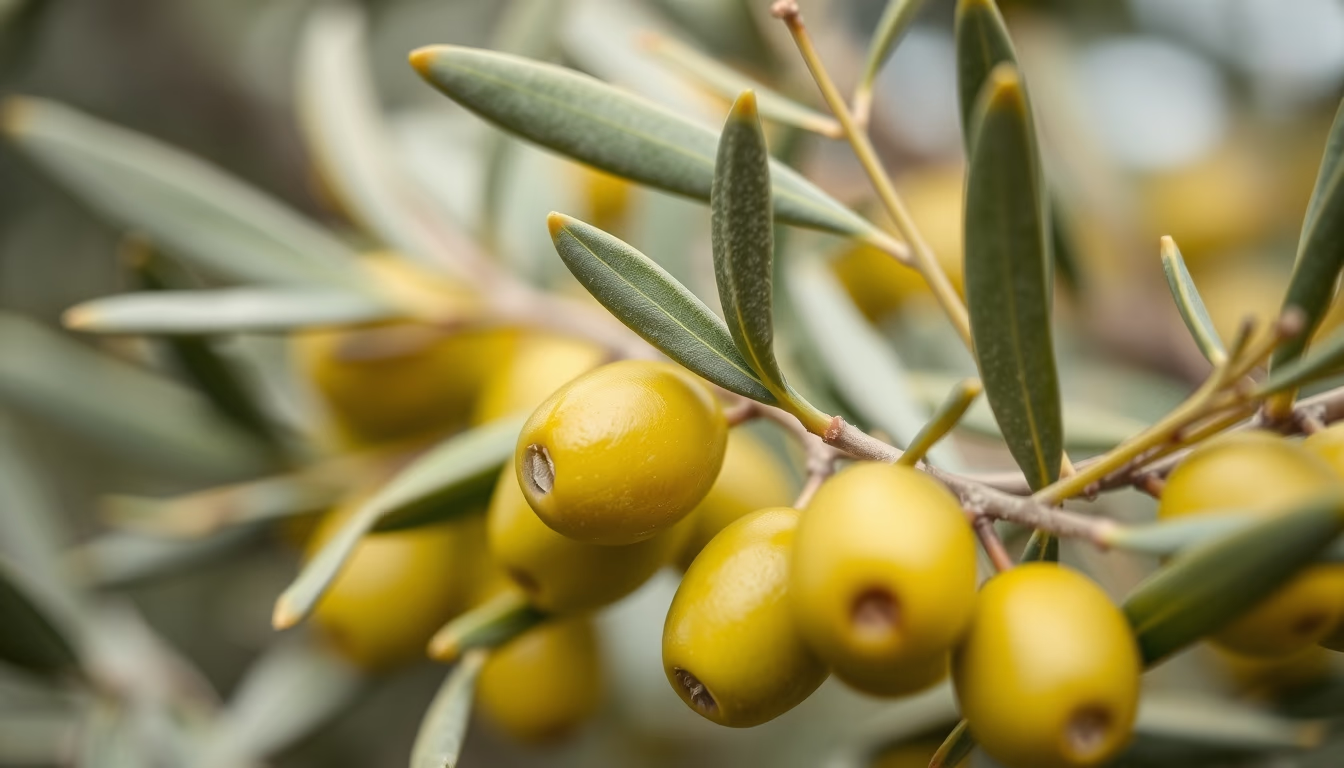
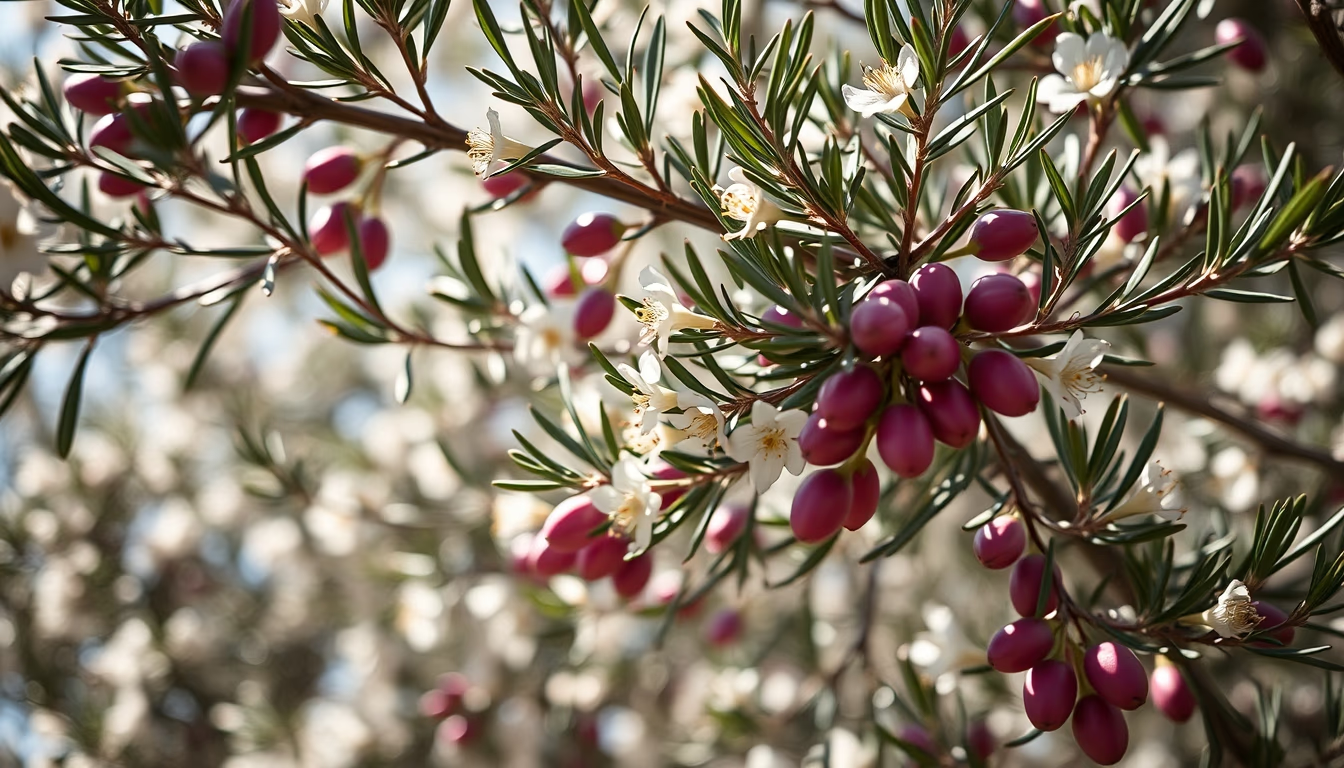
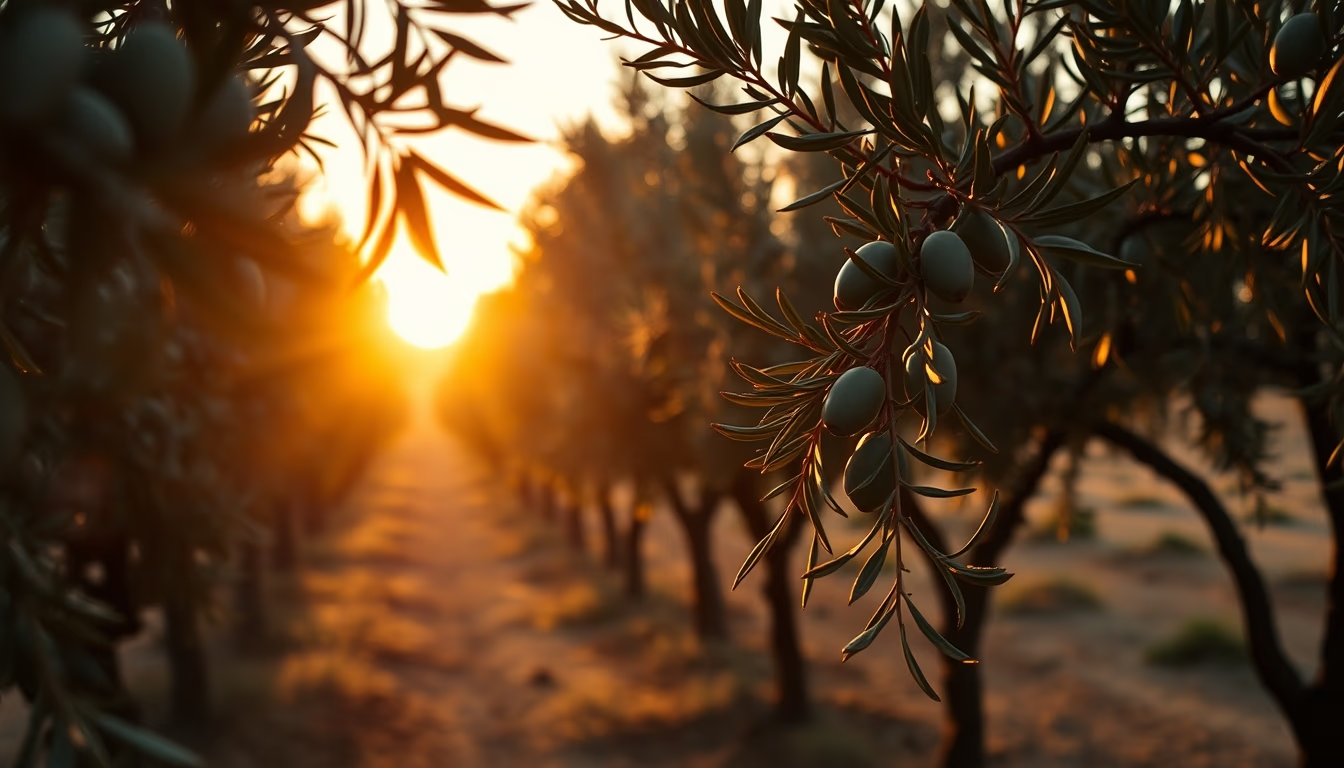
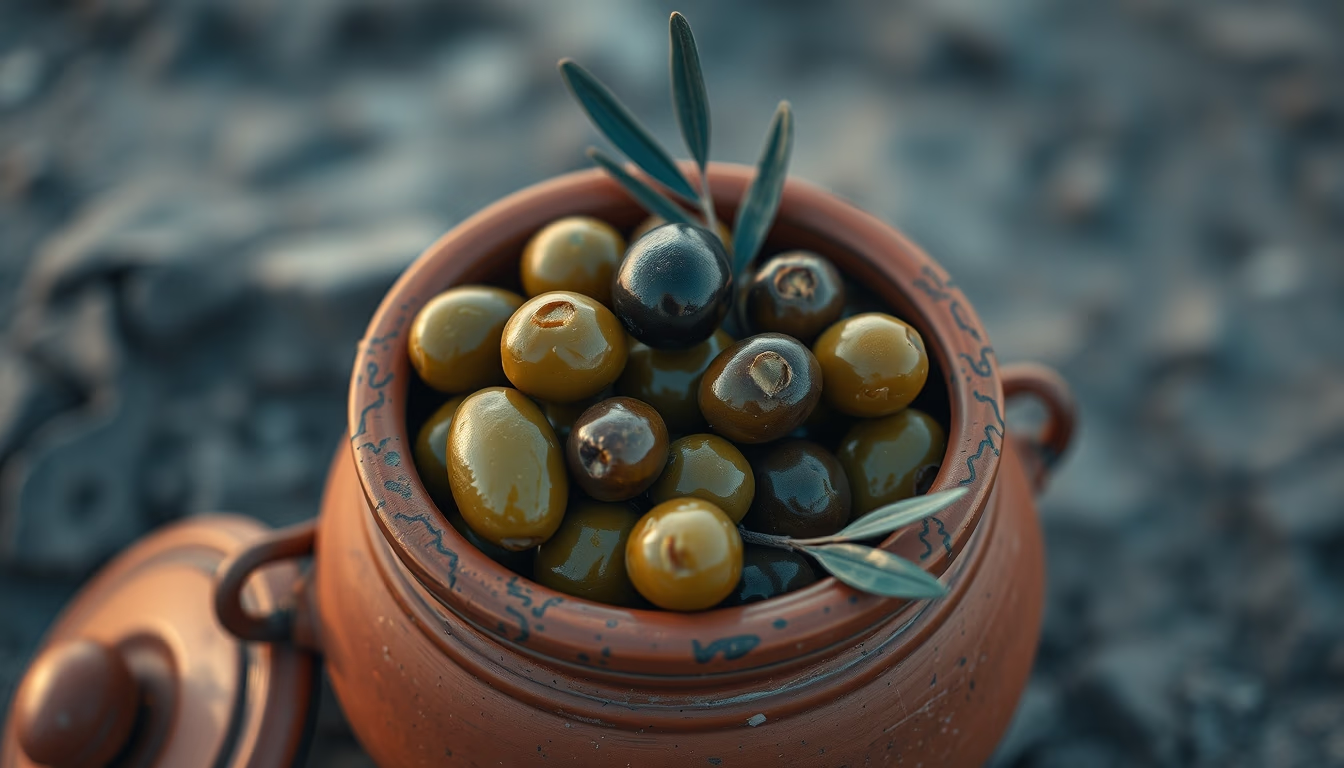
Olive branches with green olives in macro close-up, revealing details of the texture and coloring of the still immature fruits.
About this subject
Green olives are the unripe fruits of the olive tree (Olea europaea), harvested before the ripening process that darkens the skin and alters the chemical composition. This early harvest, typically between September and October in the Northern Hemisphere, preserves the firm texture and characteristic bitter flavor, due to the presence of oleuropein. The vibrant, glossy appearance seen in the close-up indicates freshness and high chlorophyll content.
The olive tree has been cultivated for millennia in the Mediterranean basin, with records dating back to 6000 BCE. Today, countries like Spain, Italy, Greece, and Turkey lead global table olive production, with green varieties including 'Manzanilla', 'Gordal', and 'Picholine'. Handpicking or mechanical harvesting requires care to avoid bruising, and the fruits undergo curing processes (brine, lye, or fermentation) to reduce bitterness and make them edible.
In Brazil, olive cultivation is recent and concentrated in Rio Grande do Sul, Minas Gerais, and Santa Catarina, with emphasis on the 'Arbequina' variety adapted to subtropical climates. Brazilian green olives, though still small-scale, have gained recognition for quality at gastronomic fairs. Besides being a snack, they are essential in pizzas, salads, and sauces such as pesto.
Green olives have lower fat content than ripe ones and are rich in antioxidants like hydroxytyrosol, along with vitamin E and monounsaturated fatty acids. Interestingly, the green color can range from yellow-green to deep green, depending on variety and harvest time. Studies suggest moderate consumption is linked to reduced risk of cardiovascular diseases.
Frequently Asked Questions
What is the difference between green and black olives?
Green olives are harvested unripe, while black olives are harvested ripe. The color difference is due to chlorophyll (green) and anthocyanins (black) during ripening. Flavor and texture also differ: green are firmer and more bitter, black are softer and sweeter.
How are green olives processed for consumption?
They undergo curing to remove the bitter oleuropein. Methods include brine fermentation, lye water to speed up the process, or salt-curing with herbs for flavor.
Which are the main green olive producing countries?
Spain is the largest producer, followed by Italy, Greece, and Turkey. In Brazil, production is emerging in the southern and southeastern states.
Direct URL
https://pub-c7d6a6ea828543ac903a74a341ccb2e1.r2.dev/imagens/olive-branches-with-green-olives-macro-closeup-p2.avifHow to credit
Include a visible link back to UtilizAí. Copy one of the snippets below:
<a href="https://xn--utiliza-eza.com/en/midia/imagens/olive-branches-with-green-olives-macro-closeup-p2">Olive branches with green olives</a> by <a href="https://xn--utiliza-eza.com">UtilizAí</a>, licensed under <a href="https://creativecommons.org/licenses/by/4.0/">CC BY 4.0</a>.
[Olive branches with green olives](https://xn--utiliza-eza.com/en/midia/imagens/olive-branches-with-green-olives-macro-closeup-p2) by [UtilizAí](https://xn--utiliza-eza.com), CC BY 4.0
License: CC-BY-4.0