Oil slick rainbow
1344×768 · AVIF · CC BY 4.0
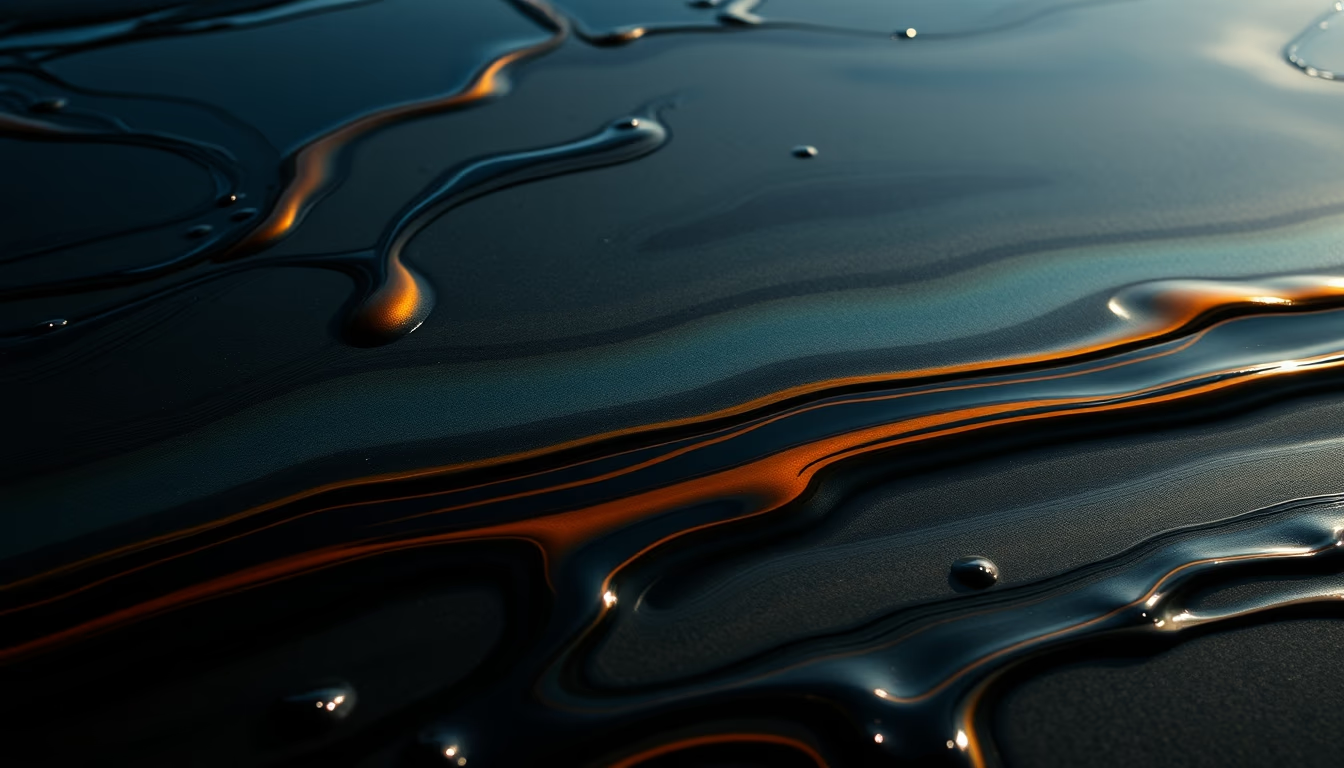
Oil slicks on water create rainbow patterns due to thin-film interference of light. Learn about this phenomenon and its environmental impact.
About this subject
The rainbow observed on oil slicks on water is an optical phenomenon known as thin-film interference. When a thin layer of oil (on the order of micrometers) spreads over the water surface, sunlight hits it. Part of the light reflects off the top surface of the oil, and another part penetrates, reflecting off the oil-water interface. These two light beams interfere constructively or destructively depending on the film thickness and light wavelength, producing the vibrant colors of the visible spectrum.
Although commonly associated with oil spills from industrial accidents or ships, not all oil slicks are man-made. There are natural oil seeps on the ocean floor that continuously release hydrocarbons, such as those in the Santa Barbara Basin, California. According to estimates by the U.S. National Research Council, natural seeps account for up to 60% of the oil entering the oceans. The rainbow indicates that the film is very thin (less than 1 micrometer) and usually corresponds to a small amount of oil.
From an environmental perspective, a rainbow-colored oil slick is a sign of contamination that can harm marine life. Birds, mammals, and planktonic organisms suffer from the toxicity of hydrocarbons. Oil also interferes with gas exchange between water and the atmosphere. Cleanup is complex, involving chemical dispersants, containment booms, and bioremediation. However, very thin films that produce the rainbow are difficult to remove and can persist for days.
Frequently Asked Questions
What causes the rainbow effect on oil slicks?
The rainbow effect is caused by thin-film interference. Light reflects off both the top and bottom surfaces of the oil layer, and the waves combine or cancel depending on film thickness, producing different colors.
Are oil slicks always the result of human spills?
No. Natural oil seeps on the ocean floor release hydrocarbons constantly. Many rainbows in remote areas are from natural sources, such as in the Santa Barbara Basin, California.
Is a rainbow oil slick dangerous to the environment?
Yes, because it indicates the presence of toxic hydrocarbons. Even thin films can harm birds, mammals, and plankton, and hinder gas exchange at the water surface. Removal is challenging.
Direct URL
https://pub-c7d6a6ea828543ac903a74a341ccb2e1.r2.dev/imagens/oil-slick-rainbow-magazine-editorial-p0.avifHow to credit
Include a visible link back to UtilizAí. Copy one of the snippets below:
<a href="https://xn--utiliza-eza.com/en/midia/imagens/oil-slick-rainbow-magazine-editorial-p0">Oil slick rainbow</a> by <a href="https://xn--utiliza-eza.com">UtilizAí</a>, licensed under <a href="https://creativecommons.org/licenses/by/4.0/">CC BY 4.0</a>.
[Oil slick rainbow](https://xn--utiliza-eza.com/en/midia/imagens/oil-slick-rainbow-magazine-editorial-p0) by [UtilizAí](https://xn--utiliza-eza.com), CC BY 4.0
License: CC-BY-4.0