Octopus coral camouflage
1344×768 · AVIF · CC BY 4.0
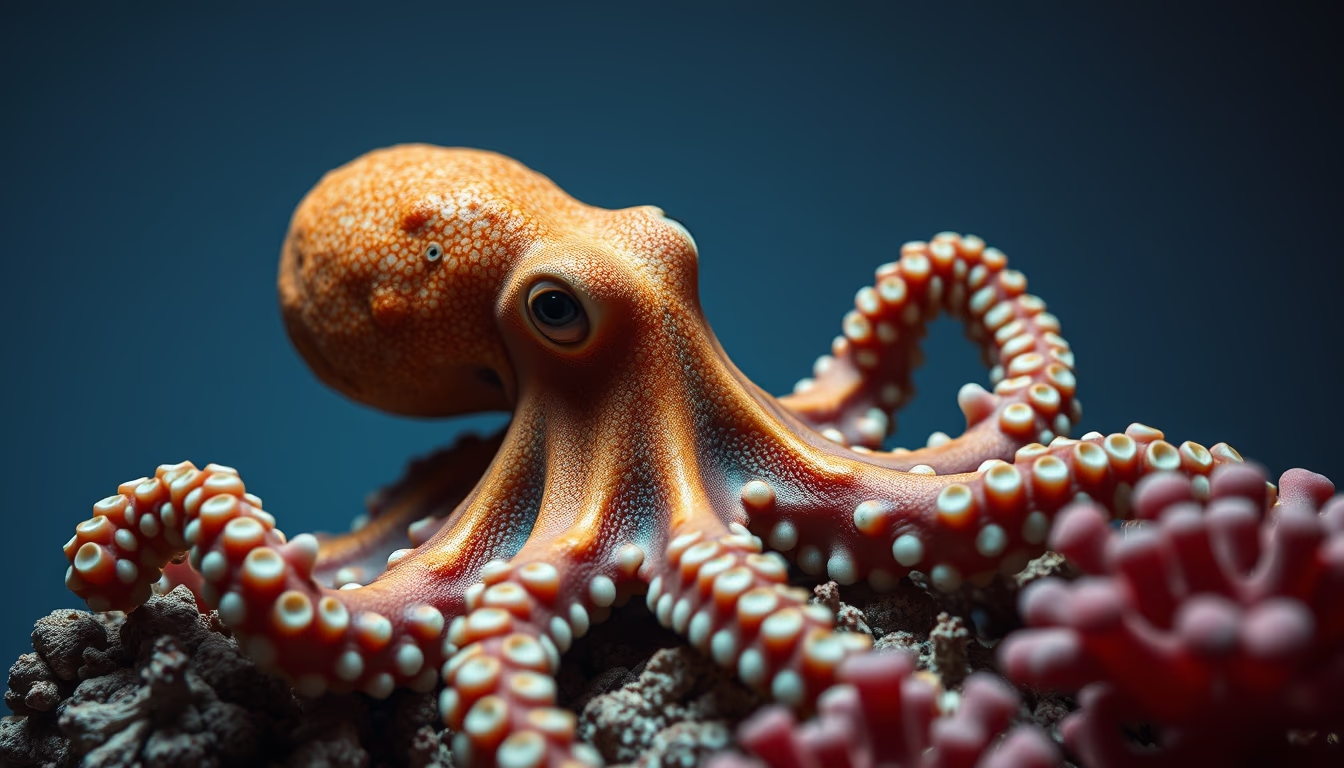
Octopus camouflaged in coral: master of disguise that mimics texture and color of the marine environment.
About this subject
The octopus is one of the most fascinating animals in the ocean due to its extraordinary camouflage ability. This skill is controlled by specialized skin cells called chromatophores, which contain pigments and can expand or contract in milliseconds. Additionally, octopuses have cells called iridophores and leucophores that reflect light, allowing them to adjust not only color but also brightness and pattern on the skin.
In coral reefs, octopuses use this camouflage to hide from predators such as sharks, moray eels, and dolphins, as well as to ambush prey like crabs and shrimp. They can mimic coral texture by altering the skin surface through muscles called papillae, creating bumps or roughness. Species like the mimic octopus (Thaumoctopus mimicus) are known to imitate not only the environment but also other venomous animals like lionfish and sea snakes.
Octopus camouflage is so precise that it is often difficult to distinguish the animal from the substrate even for trained human eyes. Studies show they adjust coloration based on visual perception of light and background pattern, indicating advanced cognitive ability. Although they do not see color like humans (they are colorblind), they detect polarized light, which helps in choosing the right camouflage.
Interestingly, octopuses are not the only cephalopods with this ability: squid and cuttlefish also have chromatophores, but the octopus is considered the most versatile. In captivity, octopuses can change color rapidly in response to stimuli, such as the presence of a caregiver or offering food, demonstrating that camouflage also plays a communicative role.
Frequently Asked Questions
How does an octopus change color so quickly?
Octopuses have specialized skin cells called chromatophores, each containing a pigment-filled sac. Tiny muscles around the sac contract or relax, changing the sac size and thus the visible color in milliseconds.
Can octopuses mimic textures as well as colors?
Yes. Octopuses control tiny muscles in the skin called papillae, which can extend or retract to create bumps, ridges, or spines, mimicking the texture of coral, rocks, or sand.
Why are octopuses considered highly intelligent?
Beyond camouflage, octopuses solve puzzles, use tools, have short- and long-term memory, and learn by observation. Their nervous system is highly decentralized, with most neurons located in the arms.
Direct URL
https://pub-c7d6a6ea828543ac903a74a341ccb2e1.r2.dev/imagens/octopus-coral-camouflage-studio-editorial-portrait-p4.avifHow to credit
Include a visible link back to UtilizAí. Copy one of the snippets below:
<a href="https://xn--utiliza-eza.com/en/midia/imagens/octopus-coral-camouflage-studio-editorial-portrait-p4">Octopus coral camouflage</a> by <a href="https://xn--utiliza-eza.com">UtilizAí</a>, licensed under <a href="https://creativecommons.org/licenses/by/4.0/">CC BY 4.0</a>.
[Octopus coral camouflage](https://xn--utiliza-eza.com/en/midia/imagens/octopus-coral-camouflage-studio-editorial-portrait-p4) by [UtilizAí](https://xn--utiliza-eza.com), CC BY 4.0
License: CC-BY-4.0