Octopus coral camouflage
1344×768 · AVIF · CC BY 4.0
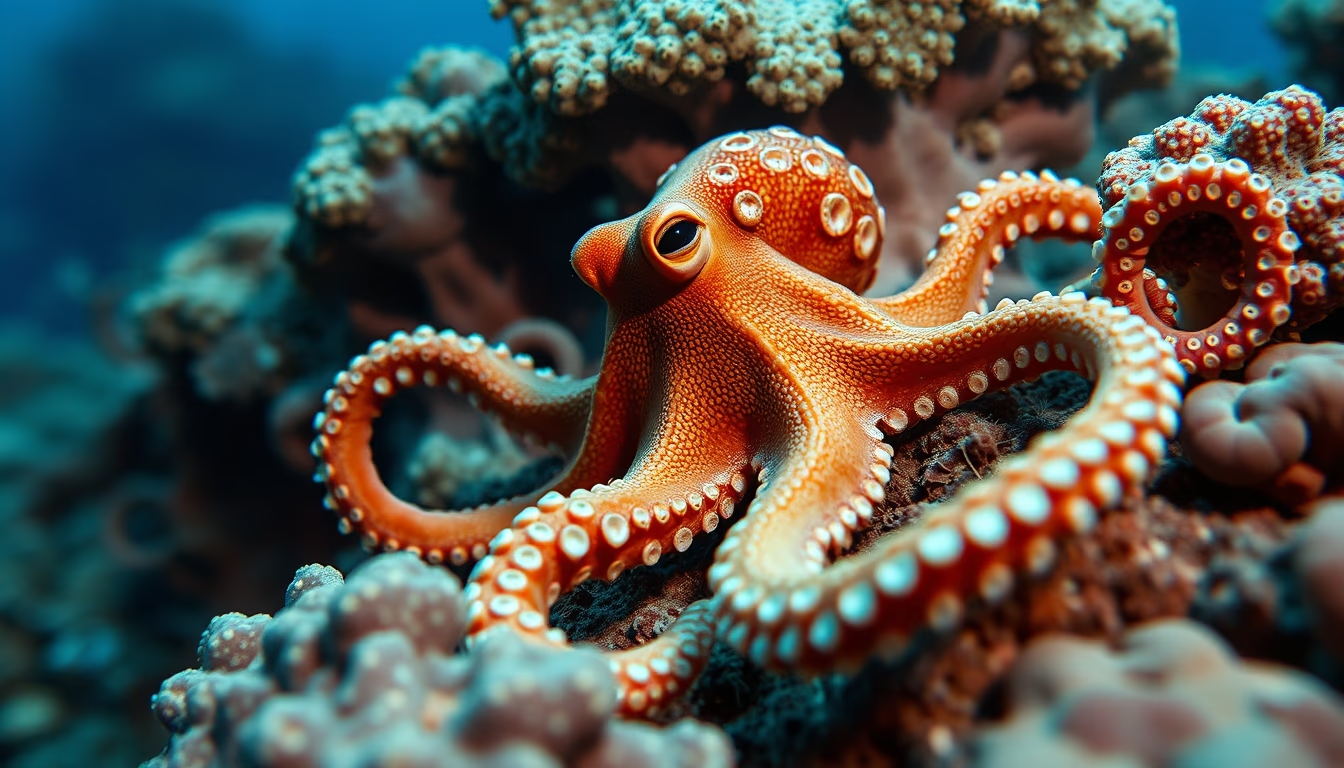
Octopuses are masters of camouflage on coral reefs, changing color and texture in milliseconds to blend into their surroundings.
About this subject
Octopuses, belonging to the order Octopoda, are renowned for their remarkable camouflage abilities, especially in coral reef environments. This skill is crucial for survival, helping them avoid predators and ambush prey. Common species like the Caribbean reef octopus (Octopus briareus) and the mimic octopus (Thaumoctopus mimicus) display exceptional camouflage. They can change skin color rapidly thanks to specialized cells called chromatophores, which contain pigments and expand or contract. Additionally, iridophores and leucophores reflect light, allowing fine-tuning of hue and brightness.
Coral reefs, where these animals are often found, are highly biodiverse marine ecosystems located in shallow tropical waters. They occur in regions such as the Coral Triangle in Southeast Asia, the Great Barrier Reef in Australia, and the Caribbean. These environments provide a rich variety of colors and textures that octopuses exploit for camouflage. The ability to mimic not only colors but also patterns and textures, such as the roughness of coral or smoothness of sand, is achieved by contracting skin muscles that alter skin rugosity.
A fascinating fact is that octopuses are colorblind, yet they precisely match their surroundings. Research suggests they detect ambient light through photoreceptors in their skin, adjusting camouflage without relying on vision. Beyond camouflage, some octopuses, like the mimic octopus, can impersonate other marine animals, such as lionfish or sea snakes, to deter predators. These evolutionary adaptations make octopuses one of the most intelligent and versatile invertebrates in the oceans.
Frequently Asked Questions
How do octopuses change color so quickly?
They use chromatophores, pigment-containing cells that expand or contract in milliseconds, controlled by nerve impulses.
Where do octopuses that camouflage on corals live?
They are found in tropical coral reefs worldwide, such as the Caribbean, the Coral Triangle, and the Great Barrier Reef.
Are octopuses really colorblind? How do they manage to camouflage?
Yes, they are colorblind. They have photoreceptors in their skin that detect ambient light and adjust color automatically.
Direct URL
https://pub-c7d6a6ea828543ac903a74a341ccb2e1.r2.dev/imagens/octopus-coral-camouflage-film-grain-authentic-p0.avifHow to credit
Include a visible link back to UtilizAí. Copy one of the snippets below:
<a href="https://xn--utiliza-eza.com/en/midia/imagens/octopus-coral-camouflage-film-grain-authentic-p0">Octopus coral camouflage</a> by <a href="https://xn--utiliza-eza.com">UtilizAí</a>, licensed under <a href="https://creativecommons.org/licenses/by/4.0/">CC BY 4.0</a>.
[Octopus coral camouflage](https://xn--utiliza-eza.com/en/midia/imagens/octopus-coral-camouflage-film-grain-authentic-p0) by [UtilizAí](https://xn--utiliza-eza.com), CC BY 4.0
License: CC-BY-4.0