Obsidian black volcanic
1344×768 · AVIF · CC BY 4.0
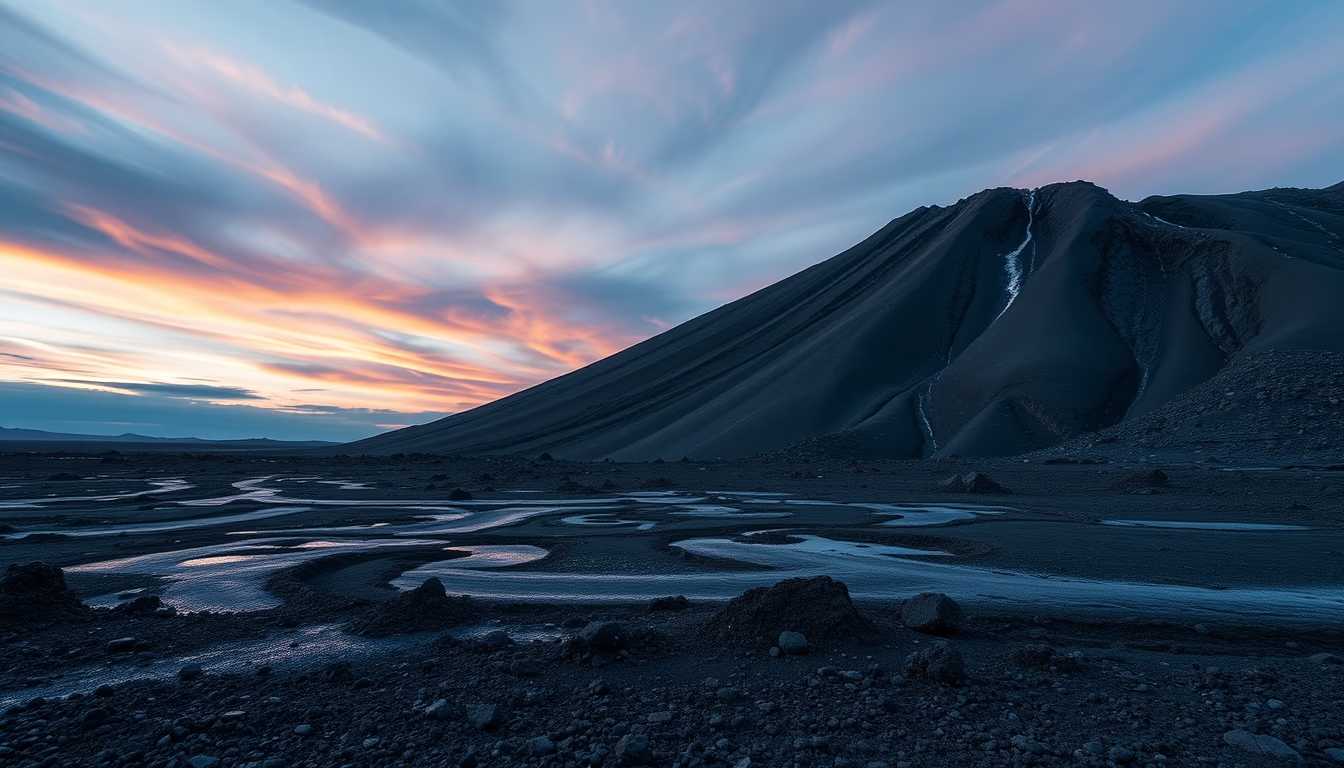
Obsidian is a volcanic glass formed by rapid cooling of lava, known for its black color and glassy luster. Used since ancient times for tools and ritual objects.
About this subject
Obsidian is an igneous rock of felsic composition, rich in silica, formed when lava extruded from volcanoes cools so rapidly that no mineral crystals have time to grow. This process results in an amorphous, hard, and brittle material with a conchoidal fracture similar to man-made glass. The most common color is deep black, but shades of green, brown, or banded patterns appear due to inclusions of minerals like hematite or magnetite.
Major obsidian deposits are found in regions of recent volcanism: in North America, Yellowstone National Park in the United States; in Central America, Mexico has rich archaeological sites linked to pre-Columbian extraction; in Brazil, volcanic fields such as Poços de Caldas in Minas Gerais contain high-quality specimens. Ancient civilizations like the Aztecs, Maya, and Mediterranean peoples used obsidian for knife blades, spear points, and mirrors because it can be fractured to produce extremely sharp edges.
Today, obsidian is used in jewelry and lapidary, polished as an ornamental gem. In modern medicine, obsidian surgical blades are employed in ophthalmological procedures for their hardness and a smoother edge than steel, reducing scarring. The long exposure (photographic technique mentioned in tags) could capture the reflections and glassy texture of the stone, but the focus here is the mineral itself, not the image.
Frequently Asked Questions
Where is obsidian found in Brazil?
In Brazil, obsidian occurs in ancient volcanic fields such as the Poços de Caldas region in Minas Gerais and the Campos do Jordão plateau in São Paulo. These areas have alkaline volcanism from the Cretaceous period.
What properties make obsidian suitable for surgical blades?
Obsidian can be fractured into edges as thin as a few nanometers, sharper than surgical steel. This sharpness reduces tissue damage and accelerates healing, making it useful in ophthalmological and precision surgeries.
Is black obsidian the only variety?
No. Besides black, there are brown, green, red, and banded obsidians. Color depends on impurities like iron, magnesium, or crystal inclusions. Rainbow obsidian shows iridescence due to microscopic magnetite inclusions.
Direct URL
https://pub-c7d6a6ea828543ac903a74a341ccb2e1.r2.dev/imagens/obsidian-black-volcanic-long-exposure-p6.avifHow to credit
Include a visible link back to UtilizAí. Copy one of the snippets below:
<a href="https://xn--utiliza-eza.com/en/midia/imagens/obsidian-black-volcanic-long-exposure-p6">Obsidian black volcanic</a> by <a href="https://xn--utiliza-eza.com">UtilizAí</a>, licensed under <a href="https://creativecommons.org/licenses/by/4.0/">CC BY 4.0</a>.
[Obsidian black volcanic](https://xn--utiliza-eza.com/en/midia/imagens/obsidian-black-volcanic-long-exposure-p6) by [UtilizAí](https://xn--utiliza-eza.com), CC BY 4.0
License: CC-BY-4.0