Obsidian black volcanic
1344×768 · AVIF · CC BY 4.0

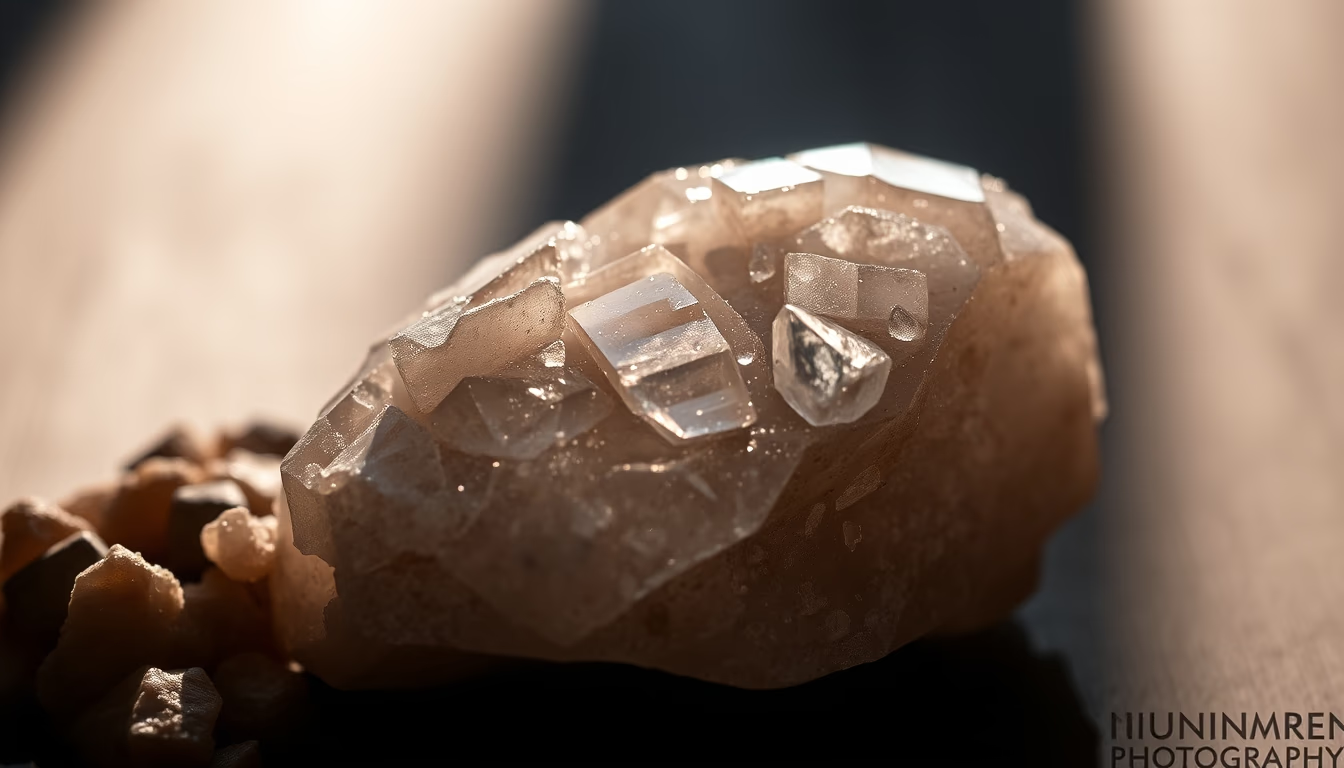
Obsidian is a black volcanic glass formed by rapid cooling of silica-rich lava, used since antiquity for tools and ornaments.
About this subject
Obsidian is a natural volcanic glass formed when silica-rich (acidic) lava cools rapidly, preventing crystal growth. This happens during explosive eruptions or when lava flows contact water or cold air. Its intense black color comes from impurities like iron and magnesium oxides, but it can also show red, green, or blue hues depending on composition. Major deposits are found in volcanic regions such as Iceland, Mexico (especially Pachuca and Teotihuacán), the United States (Yellowstone and Oregon), and Japan.
Historically, obsidian was one of the first materials used by humans for cutting tools like spearheads, knives, and scrapers, thanks to its conchoidal fracture that produces extremely sharp edges. In pre-Columbian Mesoamerica, it was the raw material for ritual blades and mirrors, such as those used by the Aztecs. The obsidian mirror of Tezcatlipoca, god of the night and destiny, is an iconic example. During the Neolithic period, obsidian was widely traded; artifacts found in Anatolia (modern Turkey) date back 12,000 years.
In modern times, obsidian is used in jewelry and decorative objects, cut into cabochons or spheres. In industry, fragments serve as abrasives in sandpaper and as lightweight aggregate in concrete. It has also gained popularity in lithotherapy as the "stone of truth" and for spiritual protection. In high-fashion editorial design, black obsidian inspires collections that evoke elegance and mystery, with textures mimicking the stone's glassy surface and reflections. Geologists study its composition to understand volcanic activity history, as its presence indicates explosive eruptions.
A curiosity: obsidian can contain gas bubbles or crystal inclusions that form "snowflake" patterns (snowflake obsidian) or iridescent streaks (rainbow obsidian). Although similar to manufactured glass, its natural appearance makes it unique. In Brazil, it occurs on Trindade Island and in Rio Grande do Sul, associated with the Paraná Basin volcanism. Contrary to popular belief, obsidian is not a mineral because it is amorphous (lacks crystalline structure).
Frequently Asked Questions
Is obsidian a gemstone?
No, obsidian is not a gemstone or mineral. It is an amorphous volcanic glass. However, it is widely used in jewelry as an ornamental stone.
Where can obsidian be found in Brazil?
In Brazil, obsidian is mainly found on Trindade Island (Espírito Santo) and in Rio Grande do Sul, within the Paraná Basin volcanic areas. There are also records in Roraima.
What is the difference between obsidian and common glass?
Both are glasses, but obsidian is natural, formed from cooled lava, while common glass is manufactured from melted siliceous sand. Obsidian may contain natural inclusions and bubbles.
Direct URL
https://pub-c7d6a6ea828543ac903a74a341ccb2e1.r2.dev/imagens/obsidian-black-volcanic-high-fashion-editorial-p1.avifHow to credit
Include a visible link back to UtilizAí. Copy one of the snippets below:
<a href="https://xn--utiliza-eza.com/en/midia/imagens/obsidian-black-volcanic-high-fashion-editorial-p1">Obsidian black volcanic</a> by <a href="https://xn--utiliza-eza.com">UtilizAí</a>, licensed under <a href="https://creativecommons.org/licenses/by/4.0/">CC BY 4.0</a>.
[Obsidian black volcanic](https://xn--utiliza-eza.com/en/midia/imagens/obsidian-black-volcanic-high-fashion-editorial-p1) by [UtilizAí](https://xn--utiliza-eza.com), CC BY 4.0
License: CC-BY-4.0