Obsidian black volcanic
1344×768 · AVIF · CC BY 4.0
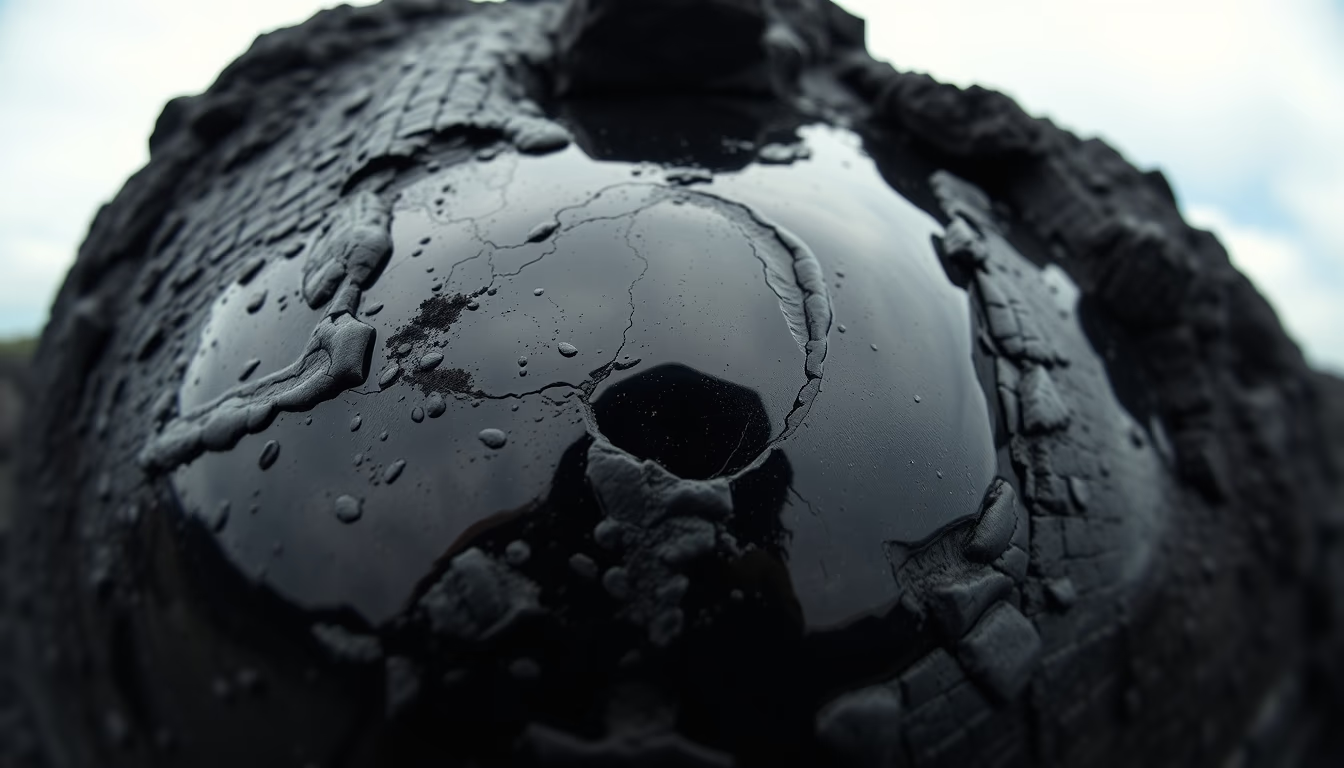
Obsidian is a natural volcanic glass formed by the rapid cooling of lava, known for its intense black color and conchoidal fracture.
About this subject
Obsidian is an extrusive igneous rock classified as volcanic glass, formed when silica-rich lava cools rapidly, preventing crystal growth. This process occurs in explosive volcanic eruptions or when lava flows contact water or cold air. Its chemical composition is primarily silicon dioxide (SiO2), with impurities like iron and magnesium oxides influencing its color. While black obsidian is most common, variants with streaks or inclusions, such as silver or rainbow obsidian, also exist.
Since prehistoric times, obsidian has been widely used by civilizations worldwide to make cutting tools, arrowheads, and blades. Its conchoidal fracture, producing extremely sharp edges, made it valuable for knives and scrapers. In Mesoamerica, the Aztecs used it in rituals and weapons, while in Ethiopia and Armenia, archaeological sites reveal its long-distance trade. Today, obsidian is employed in jewelry, decorative objects, and, in alternative medicine, as a healing crystal.
Geographically, obsidian is found in active or ancient volcanic regions, such as the Andes (Peru, Chile), the western United States (Yellowstone National Park, Oregon), the Mediterranean (Aeolian Islands, Italy), and Japan. In Brazil, it occurs in areas like the Paraíba Valley (SP) and Rio Grande do Sul. Obsidian hydration dating is an archaeological technique that measures the time surface has been exposed to moisture, helping date artifacts. Interestingly, black obsidian has isotropic properties and is used in seismic refraction research and as a calibration material in spectroscopy.
Frequently Asked Questions
What is obsidian and how is it formed?
Obsidian is a natural volcanic glass formed when silica-rich lava cools rapidly without crystallizing. This happens in explosive volcanic eruptions or when lava contacts water or cold air.
What was obsidian historically used for?
Since prehistoric times, obsidian was used to make cutting tools, arrowheads, and blades due to its conchoidal fracture creating sharp edges. Civilizations like the Aztecs used it in rituals and weapons.
Where is obsidian found in the world?
Obsidian occurs in active or ancient volcanic regions, such as the Andes, western United States, Mediterranean, Japan, and Brazil. Significant deposits exist in Peru, Chile, Yellowstone, the Aeolian Islands, and the Paraíba Valley.
Direct URL
https://pub-c7d6a6ea828543ac903a74a341ccb2e1.r2.dev/imagens/obsidian-black-volcanic-fish-eye-wide-angle-p8.avifHow to credit
Include a visible link back to UtilizAí. Copy one of the snippets below:
<a href="https://xn--utiliza-eza.com/en/midia/imagens/obsidian-black-volcanic-fish-eye-wide-angle-p8">Obsidian black volcanic</a> by <a href="https://xn--utiliza-eza.com">UtilizAí</a>, licensed under <a href="https://creativecommons.org/licenses/by/4.0/">CC BY 4.0</a>.
[Obsidian black volcanic](https://xn--utiliza-eza.com/en/midia/imagens/obsidian-black-volcanic-fish-eye-wide-angle-p8) by [UtilizAí](https://xn--utiliza-eza.com), CC BY 4.0
License: CC-BY-4.0