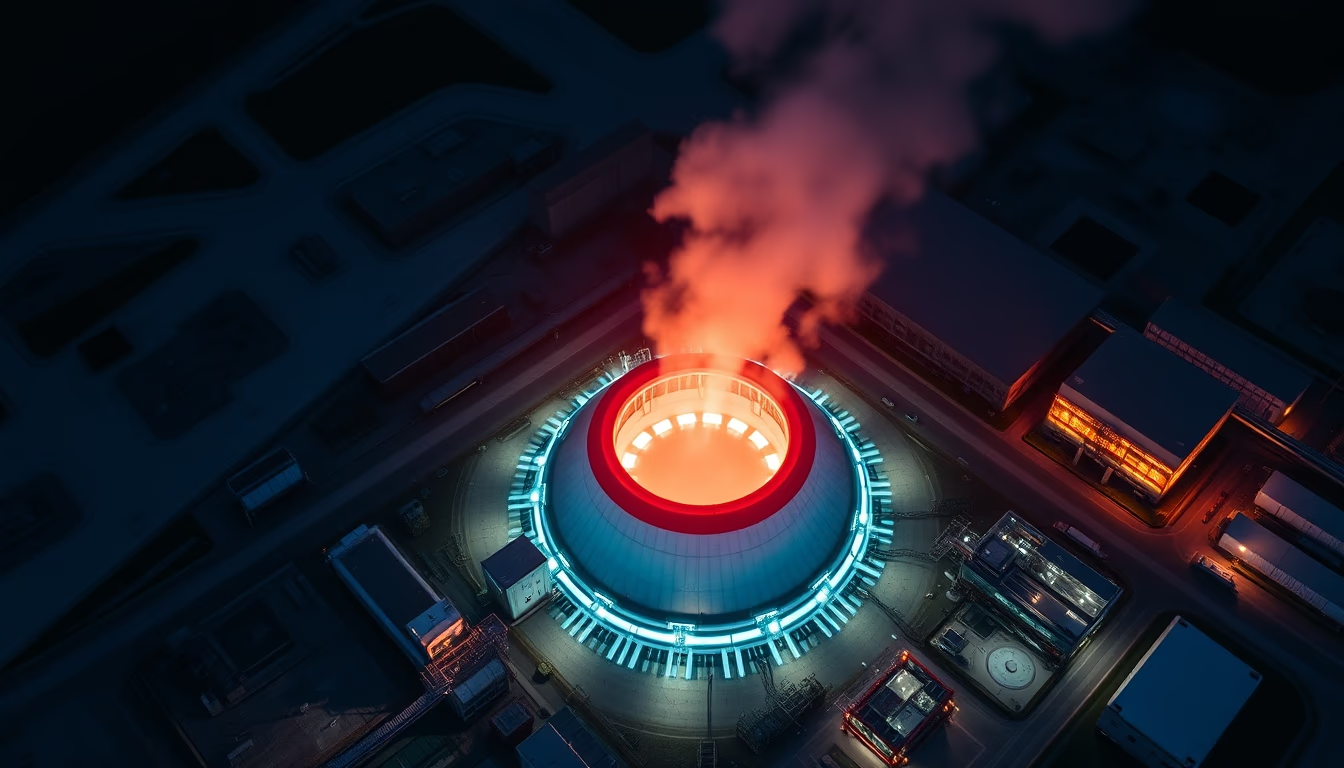
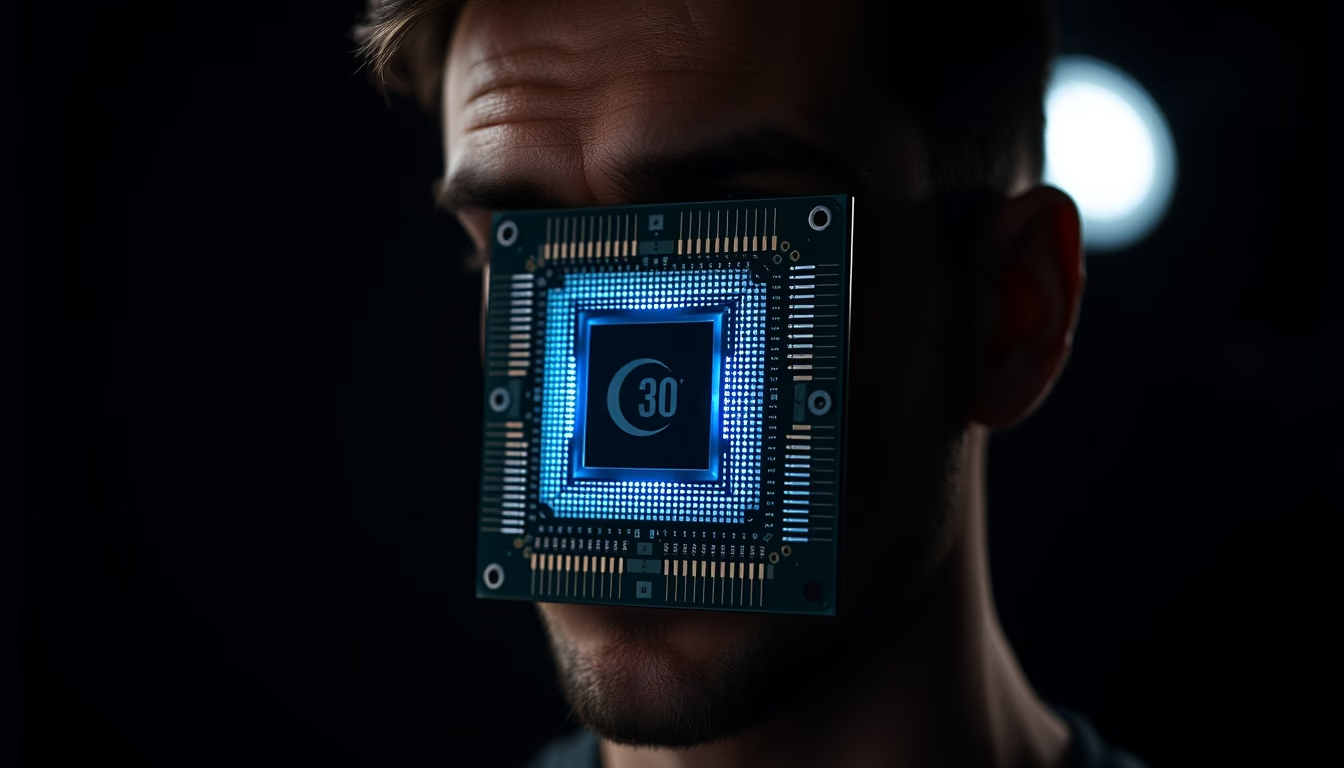
Nuclear reactor core glow
1344×768 · AVIF · CC BY 4.0

The characteristic blue glow of a nuclear reactor core results from Cherenkov radiation, a phenomenon occurring when charged particles exceed the speed of light in water.
About this subject
The blue glow emitted by a nuclear reactor core is one of modern physics' most iconic phenomena. This effect, known as Cherenkov radiation, occurs when charged particles such as electrons travel faster than light in a material medium, typically the water surrounding the reactor core. The speed of light in water is about 75% of its speed in vacuum, and particles from nuclear fission can exceed this limit, producing a cone of blue light analogous to the sonic boom of supersonic aircraft.
Nuclear reactors use this phenomenon as a visual indicator of nuclear activity. The blue color dominates because Cherenkov radiation has a continuous spectrum, but the human eye's sensitivity and differential absorption by water make blue stand out. Although often associated with accidents or leaks, the glow actually signals normal operation in light-water reactors, provided the core is submerged and running within safety parameters.
The discovery of Cherenkov radiation earned Pavel Cherenkov, Ilya Frank, and Igor Tamm the 1958 Nobel Prize in Physics. This effect is also used in particle detectors such as those at the Sudbury Neutrino Observatory in Canada and Super-Kamiokande in Japan. In Brazil, the IEA-R1 research reactor at the Institute for Energy and Nuclear Research (IPEN) in São Paulo exhibits this characteristic glow during operations, serving as a vital tool for radioisotope production and scientific research.
Frequently Asked Questions
Why is the nuclear reactor core glow blue?
The blue color comes from Cherenkov radiation, which has a continuous spectrum. The human eye is most sensitive to blue, and water absorbs longer wavelengths, enhancing the bluish tint.
Is Cherenkov radiation dangerous?
The glow itself is not dangerous as it is visible light. However, its presence indicates intense ionizing radiation, requiring operators to be protected by proper shielding.
Where can I see this phenomenon in Brazil?
At the IEA-R1 research reactor at IPEN in São Paulo, which offers technical visits. The blue glow is visible during reactor operation while submerged in water.
Direct URL
https://pub-c7d6a6ea828543ac903a74a341ccb2e1.r2.dev/imagens/nuclear-reactor-core-glow-studio-still-life-p4.avifHow to credit
Include a visible link back to UtilizAí. Copy one of the snippets below:
<a href="https://xn--utiliza-eza.com/en/midia/imagens/nuclear-reactor-core-glow-studio-still-life-p4">Nuclear reactor core glow</a> by <a href="https://xn--utiliza-eza.com">UtilizAí</a>, licensed under <a href="https://creativecommons.org/licenses/by/4.0/">CC BY 4.0</a>.
[Nuclear reactor core glow](https://xn--utiliza-eza.com/en/midia/imagens/nuclear-reactor-core-glow-studio-still-life-p4) by [UtilizAí](https://xn--utiliza-eza.com), CC BY 4.0
License: CC-BY-4.0