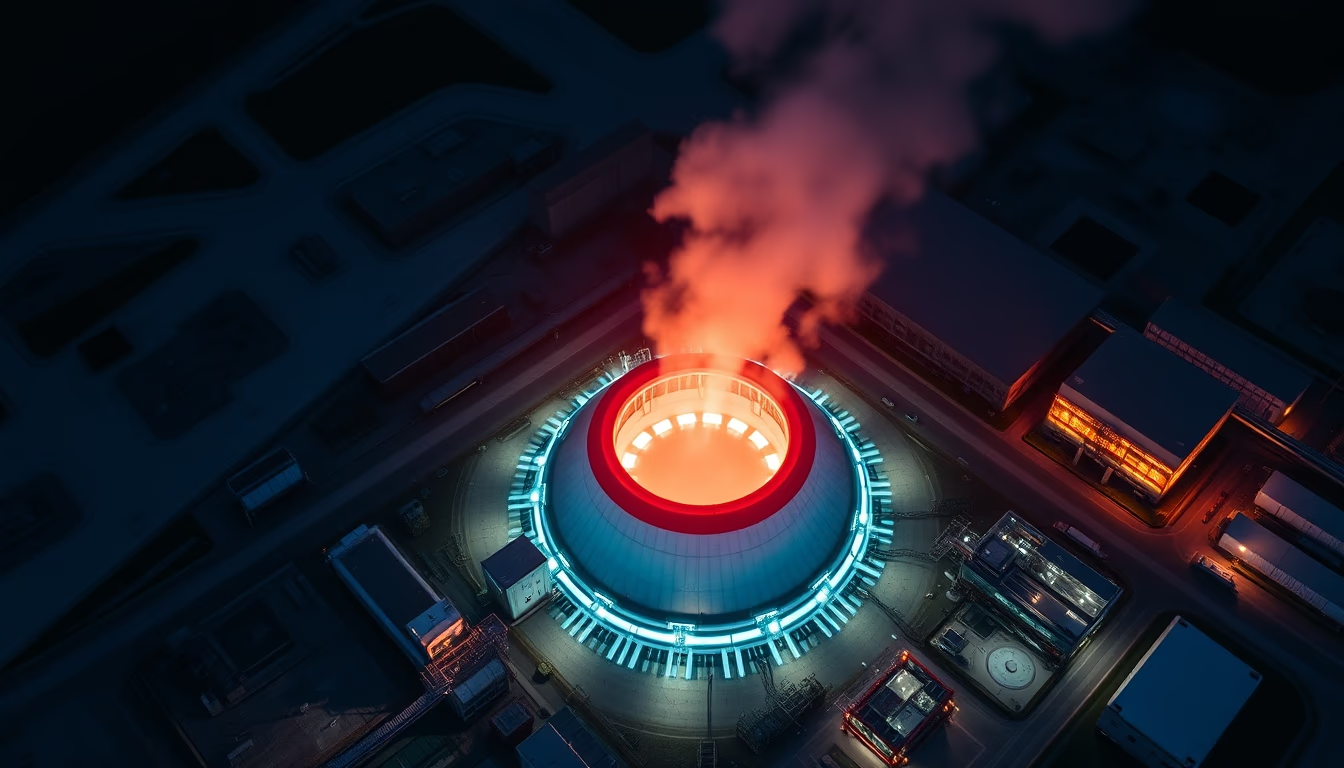
Nuclear reactor core glow
1344×768 · AVIF · CC BY 4.0

The distinctive blue glow in nuclear reactor cores during underwater operation is caused by Cherenkov radiation, a phenomenon occurring when charged particles exceed the speed of light in water.
About this subject
Cherenkov radiation is an optical phenomenon that occurs when charged particles, such as electrons, travel through a medium (like water) faster than light does in that medium. This produces a characteristic blue glow, analogous to a sonic boom but in the electromagnetic spectrum. In nuclear reactors, this glow is most commonly seen in spent fuel pools or the submerged core of research reactors, where water acts as both a moderator and shielding.
The effect is safe for direct observation because visible light is non-ionizing, but the presence of the glow indicates intense radiation nearby. Therefore, it is monitored as a visual indicator of reactor activity. In practice, the blue glow is often associated with TRIGA reactors or boiling water reactors (BWR), where water circulates directly over the core.
Historically, the glow was described by Pavel Cherenkov in 1934, earning him the Nobel Prize in Physics in 1958. Today, beyond its use in reactors, Cherenkov radiation is employed in particle detectors such as the IceCube Observatory in Antarctica. In Brazil, reactors like the IEA-R1 at IPEN in São Paulo allow visitors to see the glow during operation under strict safety conditions.
Frequently Asked Questions
Is it dangerous to look at the blue glow of a nuclear reactor?
No, the visible glow itself is not dangerous because Cherenkov light is non-ionizing. However, it indicates intense radiation nearby, so observation is only safe through shielded glass windows.
Why is Cherenkov radiation blue?
The blue color occurs because Cherenkov radiation has a continuous spectrum, but intensity is highest at higher frequencies (near violet). The human eye perceives this peak as blue.
In what type of reactor is Cherenkov glow most visible?
It is most visible in research reactors with submerged cores, such as TRIGA reactors, and in spent fuel pools. Commercial power reactors typically do not allow direct visual access.
Direct URL
https://pub-c7d6a6ea828543ac903a74a341ccb2e1.r2.dev/imagens/nuclear-reactor-core-glow-studio-editorial-portrait-p11.avifHow to credit
Include a visible link back to UtilizAí. Copy one of the snippets below:
<a href="https://xn--utiliza-eza.com/en/midia/imagens/nuclear-reactor-core-glow-studio-editorial-portrait-p11">Nuclear reactor core glow</a> by <a href="https://xn--utiliza-eza.com">UtilizAí</a>, licensed under <a href="https://creativecommons.org/licenses/by/4.0/">CC BY 4.0</a>.
[Nuclear reactor core glow](https://xn--utiliza-eza.com/en/midia/imagens/nuclear-reactor-core-glow-studio-editorial-portrait-p11) by [UtilizAí](https://xn--utiliza-eza.com), CC BY 4.0
License: CC-BY-4.0