Nuclear reactor core glow
1344×768 · AVIF · CC BY 4.0
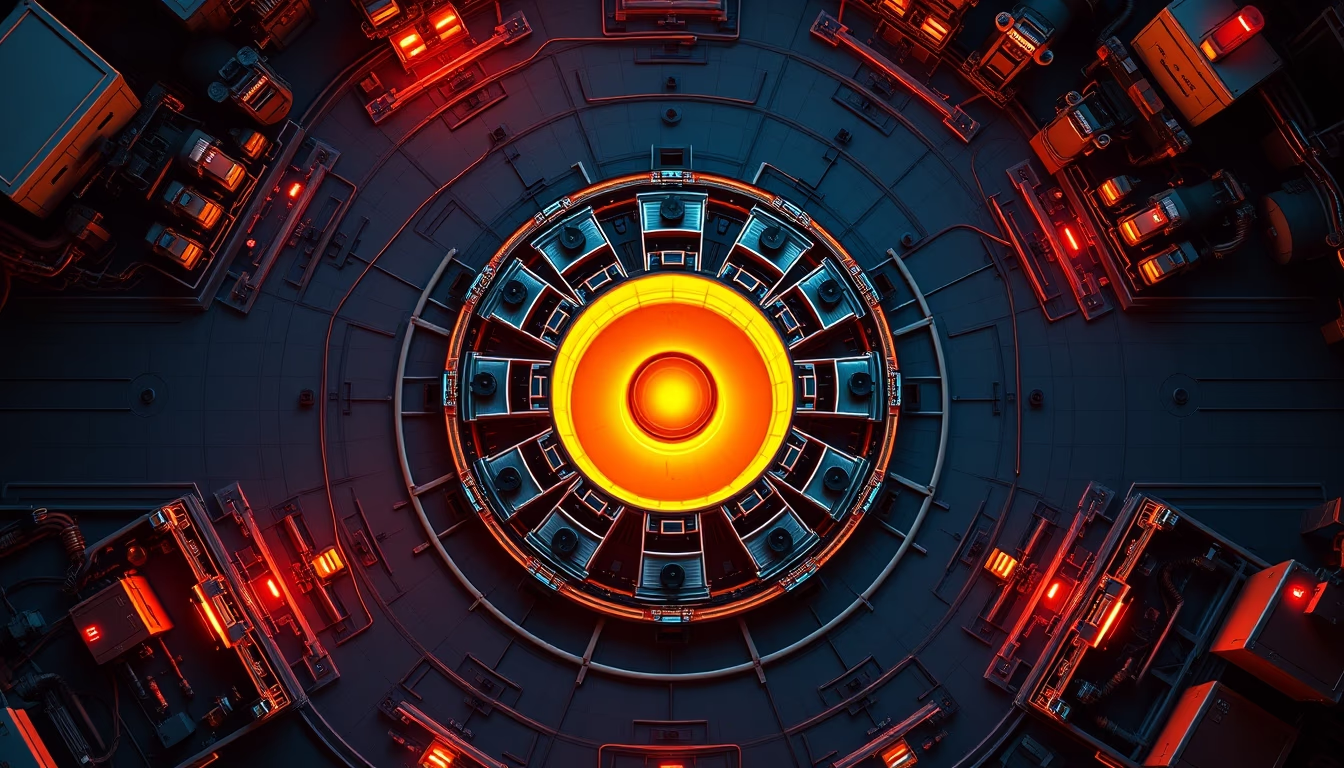
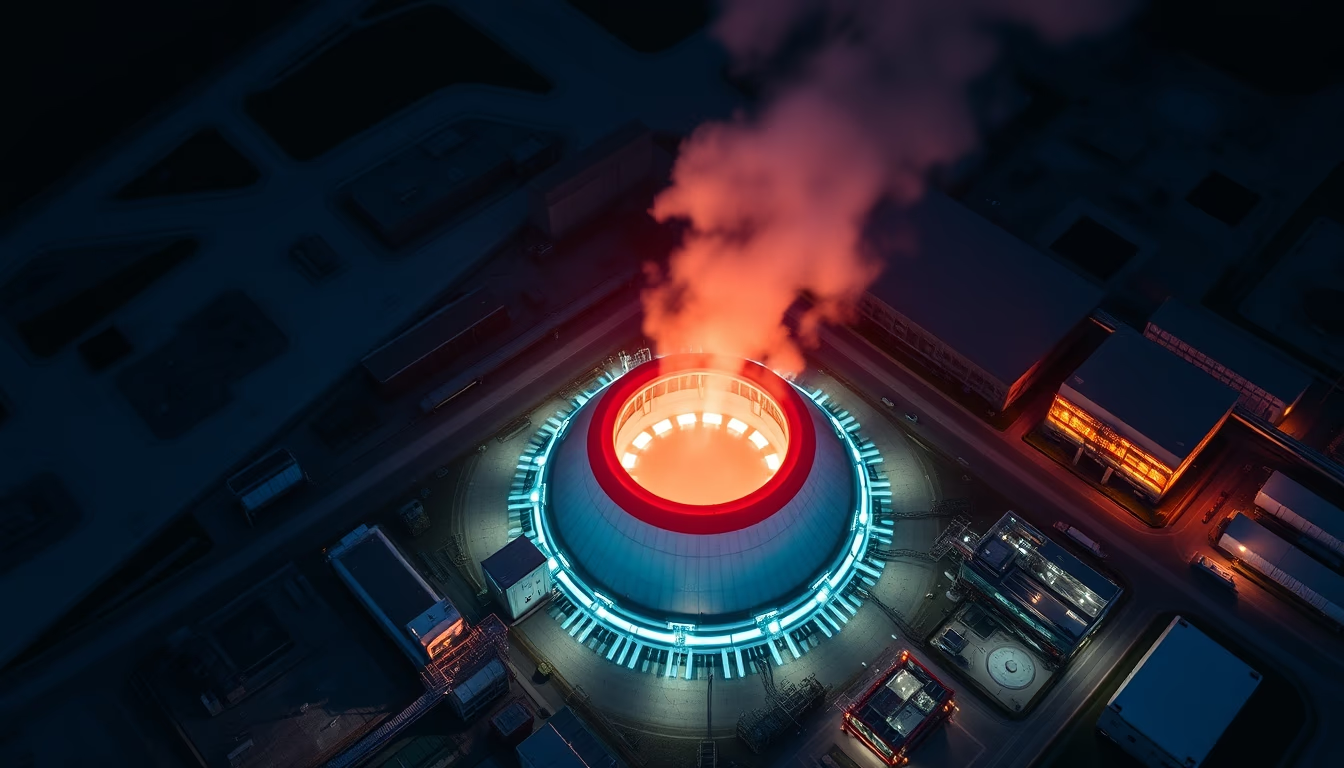
The distinctive blue glow from a nuclear reactor core, known as Cherenkov radiation, reveals intense and controlled physical processes.
About this subject
The blue glow emanating from a nuclear reactor core is caused by Cherenkov radiation, an optical phenomenon where charged particles (like electrons) travel through a medium (usually water) faster than light does in that medium. This radiation is analogous to a sonic boom but in the visible spectrum. In light-water reactors, water acts as both moderator and coolant, and fission products emit particles that produce this characteristic glow, ranging from blue to violet.
The phenomenon was discovered by Soviet physicist Pavel Cherenkov in 1934, who later won the Nobel Prize in Physics in 1958. It is observed in research and power reactors, such as Pressurized Water Reactors (PWR) and Boiling Water Reactors (BWR). The glow serves as a visual indicator of nuclear activity, but it can only be viewed safely through special observation windows or in spent fuel pools, where water provides radiation shielding.
Interestingly, the blue color is dominant, but the spectral intensity depends on particle energy. Experimental fusion reactors like tokamaks can also produce Cherenkov radiation under certain conditions. The glow itself is not dangerous when observed indirectly, because ionizing radiation is blocked by water and containment structures. However, direct exposure to the core is lethal, hence strict safety protocols.
The core glow captivates scientists and the public, symbolizing the power of nuclear energy. It demonstrates fundamental particle physics and serves as an educational tool. While visually striking, it is a constant reminder of the risks and benefits of nuclear technology, widely used for clean electricity generation in many countries.
Frequently Asked Questions
What causes the blue glow in a nuclear reactor core?
The blue glow is caused by Cherenkov radiation, emitted when charged particles (like electrons) move through a medium (water) faster than light does in that medium. This occurs due to nuclear fission reactions in the reactor core.
Is Cherenkov radiation dangerous?
Cherenkov radiation itself is not dangerous, as it is visible light. However, it indicates the presence of intense ionizing radiation. Observing it through water or special windows is safe, but direct exposure to the reactor core is lethal.
In which types of reactors can the Cherenkov glow be seen?
The glow is most commonly seen in light-water reactors such as PWRs (Pressurized Water Reactors) and BWRs (Boiling Water Reactors), as well as in spent fuel pools. It also occurs in research reactors and some fusion experiments.
Direct URL
https://pub-c7d6a6ea828543ac903a74a341ccb2e1.r2.dev/imagens/nuclear-reactor-core-glow-isometric-flat-lay-p6.avifHow to credit
Include a visible link back to UtilizAí. Copy one of the snippets below:
<a href="https://xn--utiliza-eza.com/en/midia/imagens/nuclear-reactor-core-glow-isometric-flat-lay-p6">Nuclear reactor core glow</a> by <a href="https://xn--utiliza-eza.com">UtilizAí</a>, licensed under <a href="https://creativecommons.org/licenses/by/4.0/">CC BY 4.0</a>.
[Nuclear reactor core glow](https://xn--utiliza-eza.com/en/midia/imagens/nuclear-reactor-core-glow-isometric-flat-lay-p6) by [UtilizAí](https://xn--utiliza-eza.com), CC BY 4.0
License: CC-BY-4.0