Neuromorphic chip
1344×768 · AVIF · CC BY 4.0
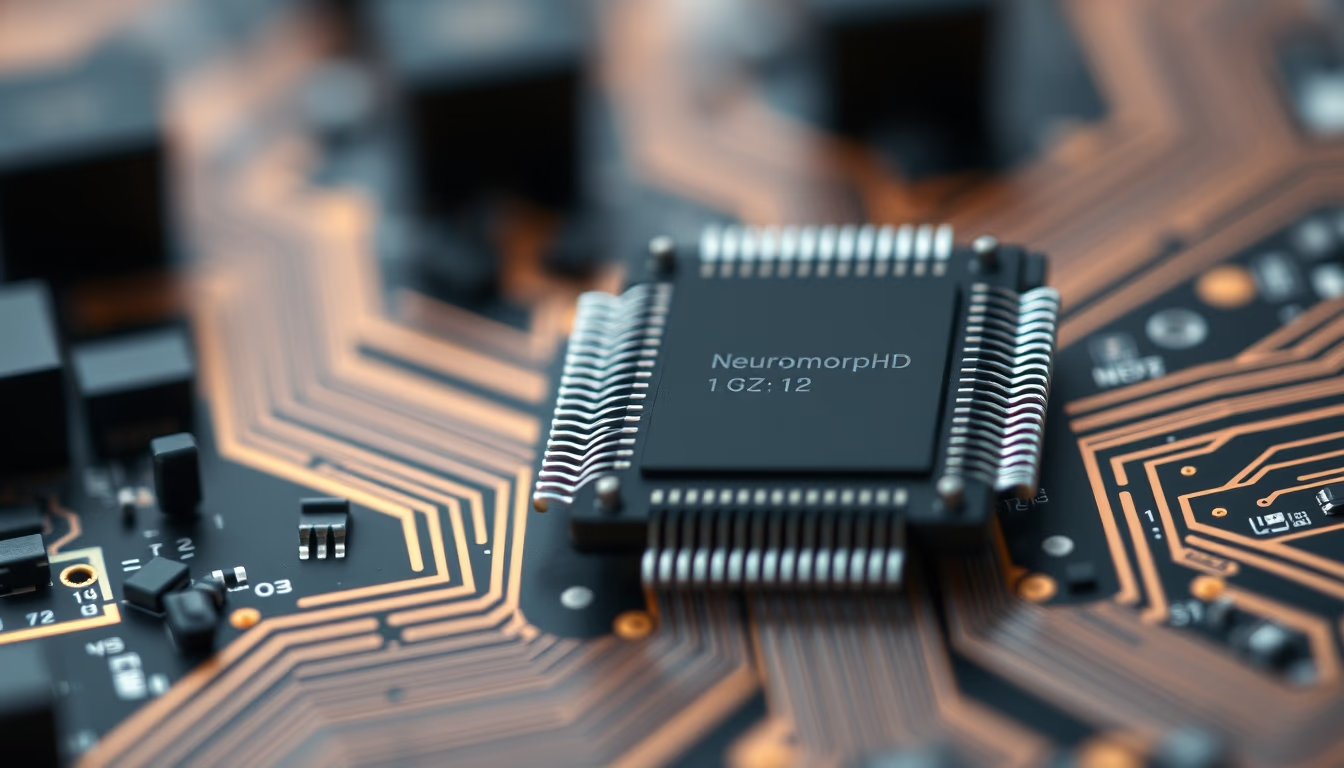
Neuromorphic chips mimic the human brain to process data with energy efficiency far superior to traditional computing.
About this subject
Neuromorphic chips are processors designed to emulate the neural architecture of the human brain. Unlike conventional chips based on the von Neumann architecture, which separate memory and processing, neuromorphic chips integrate these functions into artificial neurons and synapses. This approach enables parallel, adaptive operations with drastically reduced energy consumption, in some cases up to a thousand times less than a traditional chip for tasks such as pattern recognition and real-time decision-making.
The concept was first proposed by Carver Mead in the late 1980s, inspired by neuroscience. Since then, projects like IBM's TrueNorth (launched in 2014, with 1 million neurons and 256 million synapses) and Intel's Loihi (2018, with 130,000 neurons) have made significant progress. These chips are especially useful in edge computing, autonomous robotics, smart sensors, and AI systems requiring low latency and low power, such as neural prosthetics and autonomous vehicles.
A notable example is BrainChip's Akida chip, which can learn continuously in real time, without relying on cloud or massive retraining. Unlike traditional GPUs that consume hundreds of watts for inference, a neuromorphic chip can operate on a few milliwatts. The current barrier is programming: software tools are still immature, and scaling to deep neural networks faces numerical precision challenges. Nevertheless, major manufacturers like Samsung, IBM, and Intel are heavily investing, and the global neuromorphic hardware market is expected to exceed US$10 billion by 2030.
Frequently Asked Questions
How does a neuromorphic chip work?
A neuromorphic chip uses artificial neurons and synapses to process information analogously to the brain. Instead of sequential instruction execution, it operates with electrical pulses (spikes) that activate or deactivate connections, learning from patterns and adapting in real time.
What are the advantages of neuromorphic chips over traditional ones?
The main advantages are extremely low energy consumption, up to a thousand times lower for specific tasks, parallel processing capability, and adaptability to new situations without intensive reprogramming. They are ideal for edge devices and applications requiring real-time response.
Are neuromorphic chips commercially available?
Yes, some models like Intel's Loihi 2 and BrainChip's Akida are available for prototyping and development. The commercial market is still niche, but companies like IBM and Samsung also have advanced prototypes, with growing adoption expected in sectors such as industrial automation and autonomous vehicles.
Direct URL
https://pub-c7d6a6ea828543ac903a74a341ccb2e1.r2.dev/imagens/neuromorphic-chip-tilt-shift-miniature-p2.avifHow to credit
Include a visible link back to UtilizAí. Copy one of the snippets below:
<a href="https://xn--utiliza-eza.com/en/midia/imagens/neuromorphic-chip-tilt-shift-miniature-p2">Neuromorphic chip</a> by <a href="https://xn--utiliza-eza.com">UtilizAí</a>, licensed under <a href="https://creativecommons.org/licenses/by/4.0/">CC BY 4.0</a>.
[Neuromorphic chip](https://xn--utiliza-eza.com/en/midia/imagens/neuromorphic-chip-tilt-shift-miniature-p2) by [UtilizAí](https://xn--utiliza-eza.com), CC BY 4.0
License: CC-BY-4.0