Neuromorphic chip
1344×768 · AVIF · CC BY 4.0
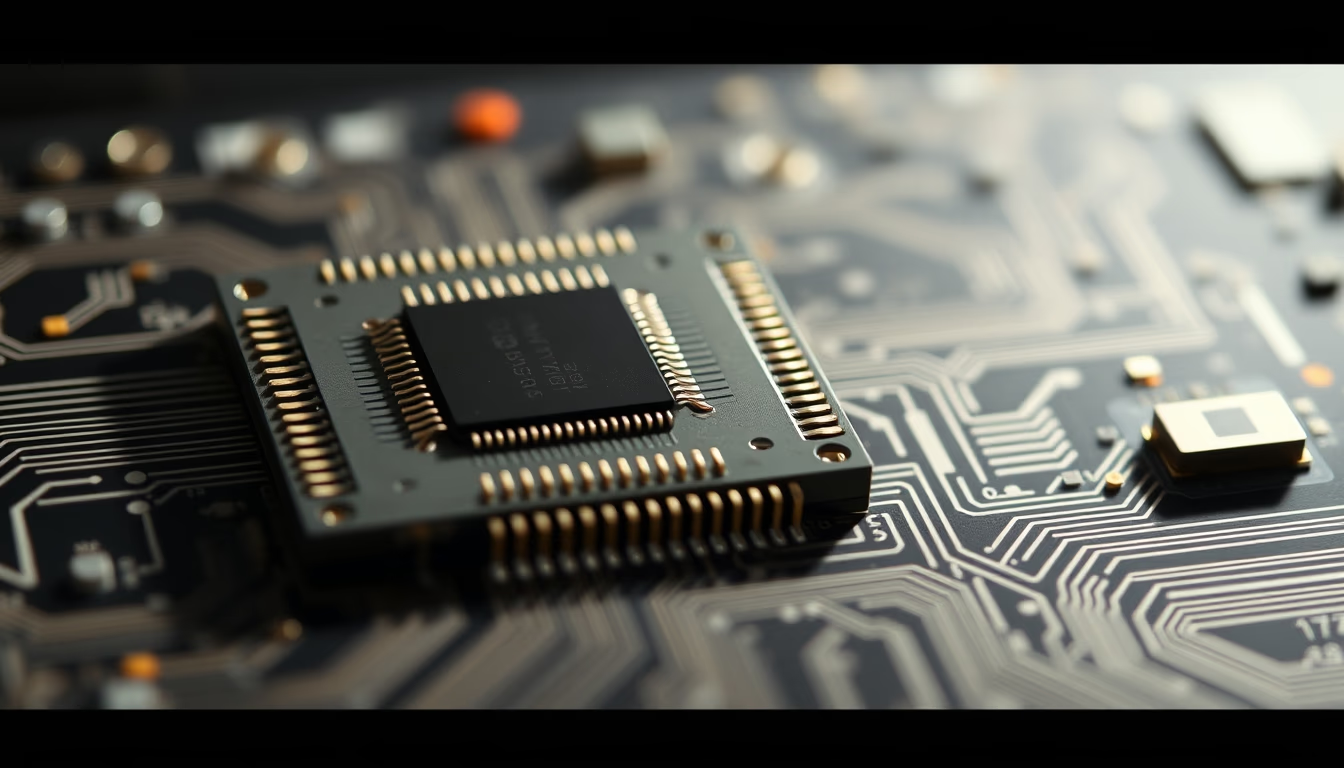
Neuromorphic chips mimic the human brain to process data efficiently, revolutionizing artificial intelligence.
About this subject
Neuromorphic chips represent an innovative approach to computing, inspired by the structure and functioning of the human brain. Unlike traditional processors based on the von Neumann architecture, which separate memory and processing, these chips integrate both functions into artificial neurons and synapses. This allows parallel and asynchronous information processing, consuming far less energy. For instance, while a supercomputer may require megawatts to simulate a fraction of brain activity, a neuromorphic chip operates on a few watts.
Research in this area began with Carver Mead's work in the late 1980s, who coined the term "neuromorphic." Since then, significant advances have been made, such as IBM's TrueNorth chip, released in 2014, featuring 1 million neurons and 256 million synapses. More recently, Intel developed Loihi, which incorporates real-time learning. These chips are ideal for robotics, smart sensors, signal processing, and edge AI, where energy efficiency is crucial.
A notable feature is the use of electrical spikes for communication, similar to biological action potentials. This allows sensor events such as vision and hearing to be processed with minimal latency. Unlike traditional artificial neural networks that require intensive training on GPUs, neuromorphic chips can learn continuously and adaptively. Although they have not yet replaced conventional processors for general tasks, they promise to transform areas like autonomous vehicles, medical devices, and the Internet of Things.
Frequently Asked Questions
How does a neuromorphic chip differ from a traditional processor?
Traditional processors use the von Neumann architecture with separate memory and processing units, while neuromorphic chips integrate memory and processing into artificial neurons, operating in parallel and asynchronously, drastically reducing energy consumption.
What are the main applications of neuromorphic chips?
They are used in robotics, smart sensors, signal processing, brain-computer interfaces, and edge AI, especially where energy efficiency and low latency are critical.
Are neuromorphic chips commercially available?
Yes, chips like Intel Loihi 2 and IBM TrueNorth exist, but they are still more focused on research and prototyping. Large-scale consumer production is still limited.
Direct URL
https://pub-c7d6a6ea828543ac903a74a341ccb2e1.r2.dev/imagens/neuromorphic-chip-magazine-editorial-p10.avifHow to credit
Include a visible link back to UtilizAí. Copy one of the snippets below:
<a href="https://xn--utiliza-eza.com/en/midia/imagens/neuromorphic-chip-magazine-editorial-p10">Neuromorphic chip</a> by <a href="https://xn--utiliza-eza.com">UtilizAí</a>, licensed under <a href="https://creativecommons.org/licenses/by/4.0/">CC BY 4.0</a>.
[Neuromorphic chip](https://xn--utiliza-eza.com/en/midia/imagens/neuromorphic-chip-magazine-editorial-p10) by [UtilizAí](https://xn--utiliza-eza.com), CC BY 4.0
License: CC-BY-4.0