Neuromorphic chip
1344×768 · AVIF · CC BY 4.0
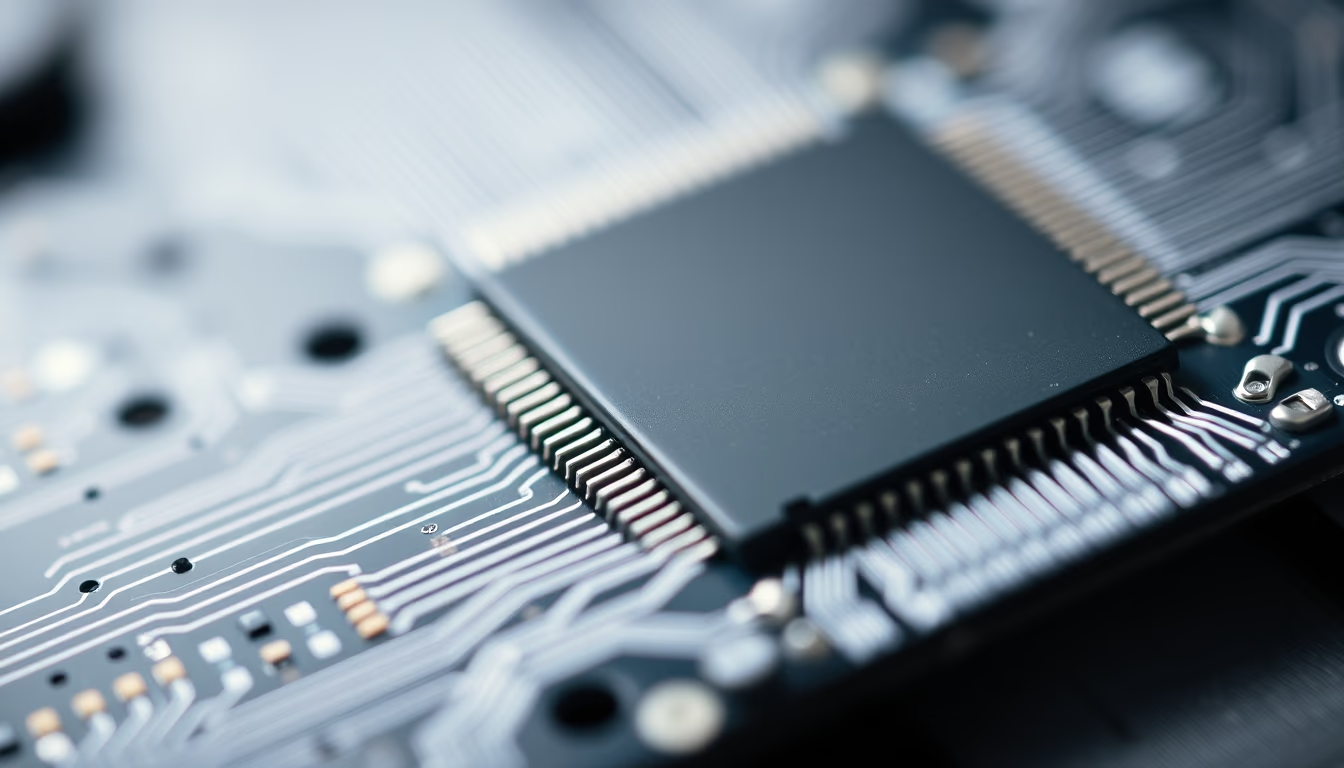
Neuromorphic chips are processors that mimic the human brain, using artificial neurons for efficient AI computation.
About this subject
Neuromorphic chips represent a radically different approach to computing, inspired by the architecture and functioning of the human brain. Unlike conventional processors that follow the Von Neumann model with separate processing and memory units, neuromorphic chips integrate memory and processing into artificial neurons interconnected by synapses. This allows them to process information in a parallel and asynchronous manner with drastically reduced energy consumption. The term 'neuromorphic' was coined by Carver Mead in the 1980s, and since then, labs like Intel (with the Loihi chip) and IBM (with TrueNorth) have been developing these technologies.
One of the main differentiators of neuromorphic chips is the use of spiking neural networks, where neurons only activate when an action potential is reached, saving energy when idle. This makes them ideal for edge computing applications such as smart sensors, autonomous robots, and IoT devices that need to process data in real time without relying on the cloud. For instance, Intel's Loihi chip can perform pattern recognition tasks with hundreds of times less energy than a conventional GPU.
The cultural and technical importance of neuromorphic chips lies in their ability to enable low-power artificial intelligence, paving the way for personal devices with continuous learning and data privacy. Moreover, they provide a platform to better understand the brain itself, allowing large-scale neural simulations. Interestingly, while traditional processors advance under Moore's law, neuromorphic chips exploit a more efficient computation less dependent on miniaturization, being seen as one of the main routes to post-Moore computing.
Frequently Asked Questions
What is a neuromorphic chip and how does it work?
A neuromorphic chip is a processor that mimics the structure and operation of the human brain. It uses artificial neurons and synapses to process information in parallel with low energy consumption, employing spiking neural networks that save energy by activating only when needed.
What are the main applications of neuromorphic chips?
Neuromorphic chips are ideal for edge computing applications such as smart sensors, autonomous robots, IoT devices, and pattern recognition systems. They enable real-time processing with extremely low power consumption, making AI viable in battery-constrained devices.
Who developed the first neuromorphic chips?
The concept of neuromorphic computing was introduced by Carver Mead in the 1980s. Since then, companies like Intel (Loihi chip) and IBM (TrueNorth chip) have created practical implementations, along with startups like BrainChip (Akida).
Direct URL
https://pub-c7d6a6ea828543ac903a74a341ccb2e1.r2.dev/imagens/neuromorphic-chip-macro-closeup-p7.avifHow to credit
Include a visible link back to UtilizAí. Copy one of the snippets below:
<a href="https://xn--utiliza-eza.com/en/midia/imagens/neuromorphic-chip-macro-closeup-p7">Neuromorphic chip</a> by <a href="https://xn--utiliza-eza.com">UtilizAí</a>, licensed under <a href="https://creativecommons.org/licenses/by/4.0/">CC BY 4.0</a>.
[Neuromorphic chip](https://xn--utiliza-eza.com/en/midia/imagens/neuromorphic-chip-macro-closeup-p7) by [UtilizAí](https://xn--utiliza-eza.com), CC BY 4.0
License: CC-BY-4.0