Neptune deep blue storms
1344×768 · AVIF · CC BY 4.0
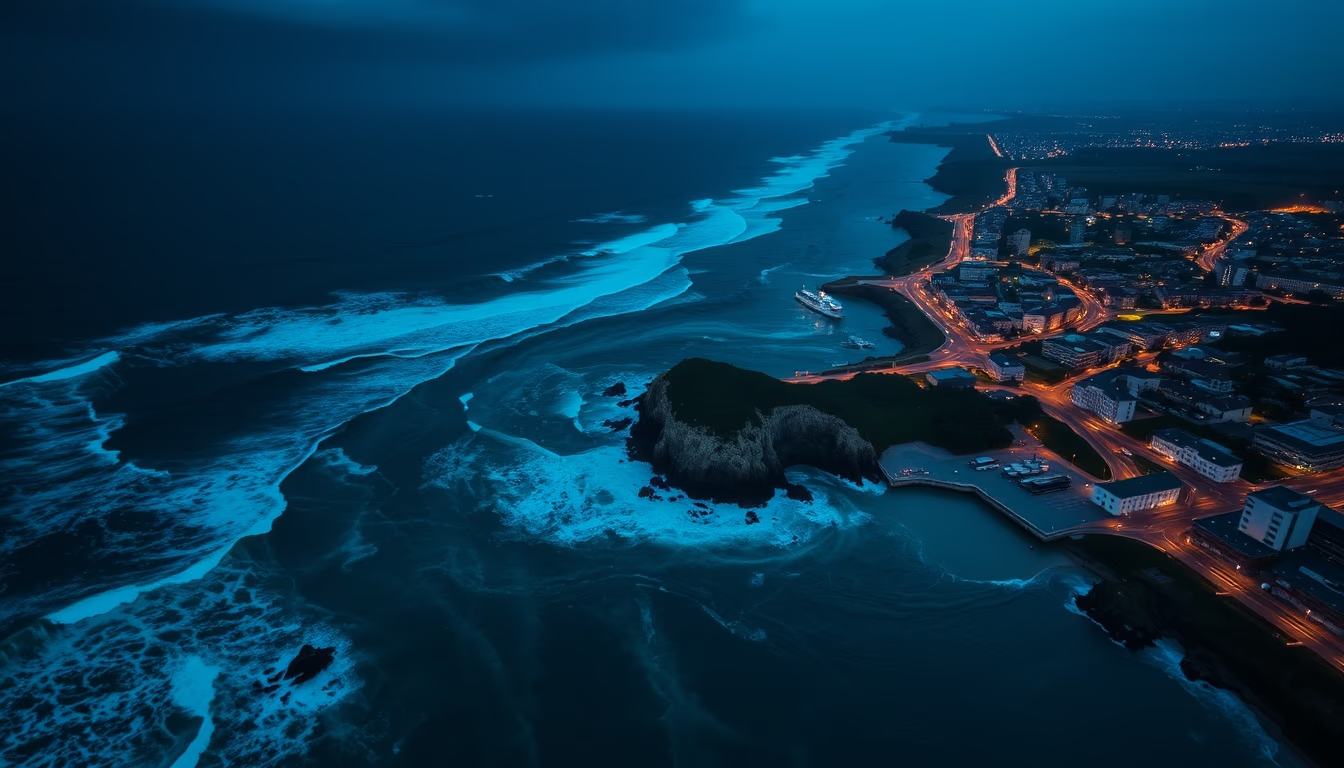
Neptune, the deep blue gas giant, exhibits dynamic and profound storms in its atmosphere, revealing extreme weather patterns in the solar system.
About this subject
Neptune is the eighth and most distant planet in the Solar System, famous for its deep blue color caused by methane absorbing red light in its atmosphere. The storms observed on Neptune, such as the Great Dark Spot, are high-pressure systems with wind speeds exceeding 2,000 km/h, the fastest recorded on any planet. These storms are short-lived, lasting from months to years, and their origin is linked to the planet's internal dynamics, including rapid rotation and heat flow from the interior.
Neptune's atmosphere is mainly composed of hydrogen and helium, with traces of methane, water, and ammonia. The storms, like the one observed by Voyager 2 in 1989, appear as dark spots contrasting with the azure blue. Later studies by the Hubble Space Telescope revealed that these storms can change shape and brightness, and some even migrate in latitude. They are thought to be fueled by updrafts of warmer gases, similar to high-pressure systems on Earth but on a much larger scale.
Interestingly, Neptune is bluer than Uranus despite their similar compositions. The color difference may be due to a thicker haze layer on Uranus that mutes red light absorption. On Neptune, deep storms and bright white clouds of frozen methane reveal vigorous atmospheric activity. Studying these storms helps scientists understand weather patterns and atmospheric evolution of gas giants, both in our solar system and on exoplanets.
Frequently Asked Questions
Why is Neptune so blue?
Neptune's deep blue color is caused by methane in its atmosphere absorbing red light. Blue light is reflected back, giving the planet its characteristic hue.
How fast are the winds on Neptune?
Neptune has the fastest winds in the Solar System, reaching speeds over 2,000 km/h, driven by its rapid rotation and internal heat flow.
Do Neptune's storms last long?
Neptune's storms are short-lived, lasting from months to years. They appear and disappear, changing shape and position, unlike Jupiter's storms such as the Great Red Spot.
Direct URL
https://pub-c7d6a6ea828543ac903a74a341ccb2e1.r2.dev/imagens/neptune-deep-blue-storms-aerial-drone-shot-p2.avifHow to credit
Include a visible link back to UtilizAí. Copy one of the snippets below:
<a href="https://xn--utiliza-eza.com/en/midia/imagens/neptune-deep-blue-storms-aerial-drone-shot-p2">Neptune deep blue storms</a> by <a href="https://xn--utiliza-eza.com">UtilizAí</a>, licensed under <a href="https://creativecommons.org/licenses/by/4.0/">CC BY 4.0</a>.
[Neptune deep blue storms](https://xn--utiliza-eza.com/en/midia/imagens/neptune-deep-blue-storms-aerial-drone-shot-p2) by [UtilizAí](https://xn--utiliza-eza.com), CC BY 4.0
License: CC-BY-4.0