Nebula colorful deep space
1344×768 · AVIF · CC BY 4.0
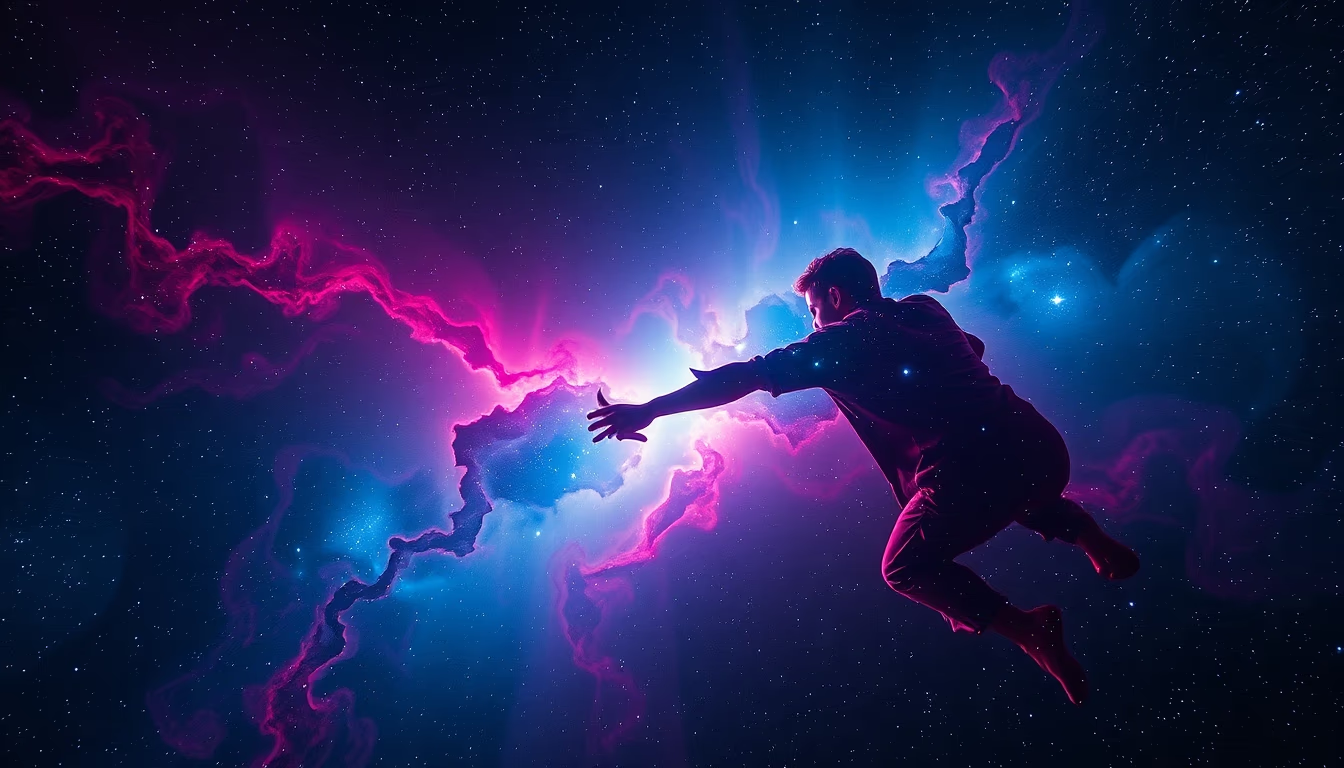
Colorful nebulae are interstellar clouds of dust and gas that glow with vibrant hues, revealing stellar nurseries and impressive cosmic phenomena.
About this subject
Nebulae are vast regions of the interstellar medium composed mostly of hydrogen, helium, and cosmic dust. Their vivid colors result from the ionization of gases by ultraviolet radiation from young, massive stars. Hydrogen emits reddish light, doubly ionized oxygen produces greenish hues, and sulfur contributes reddish-orange tones. These clouds can span tens to hundreds of light-years and are classified into emission, reflection, and dark nebulae.
Among the most famous is the Orion Nebula, visible to the naked eye as a fuzzy patch in Orion's sword. The Eagle Nebula hosts the iconic Pillars of Creation, dense regions where stars are born. The Carina Nebula contains Eta Carinae, an unstable hypergiant star. Each nebula type reveals distinct stages of the stellar life cycle: emission nebulae are stellar nurseries; planetary nebulae like the Ring Nebula are remnants of dying stars; and supernova remnants like the Crab Nebula mark cataclysmic explosions.
Observing colorful nebulae requires telescopes sensitive to visible and infrared light. The Hubble Space Telescope has produced iconic images that popularized these objects, such as the Eagle Nebula and the Veil Nebula. In Brazil, amateur astronomers can capture bright nebulae with modest equipment, especially during winter when the galactic center is higher in the sky. The study of these structures helps understand planetary system formation and the chemical evolution of the galaxy.
Frequently Asked Questions
What causes the colors of nebulae?
Colors are caused by ionization of gases by ultraviolet radiation from nearby stars. Each chemical element emits light at specific wavelengths: hydrogen in red, oxygen in green, and sulfur in red-orange, resulting in vibrant hues.
What is the most famous nebula?
The Orion Nebula (M42) is the most famous for being visible to the naked eye and its role as a stellar nursery. Other iconic ones include the Eagle Nebula (M16) with the Pillars of Creation and the Crab Nebula (M1), a supernova remnant.
Can nebulae be seen with the naked eye?
Yes, some like the Orion Nebula and the Tarantula Nebula are visible without a telescope in areas with low light pollution. Most, however, require binoculars or telescopes to be observed in detail.
Direct URL
https://pub-c7d6a6ea828543ac903a74a341ccb2e1.r2.dev/imagens/nebula-colorful-deep-space-aerial-drone-shot-p4.avifHow to credit
Include a visible link back to UtilizAí. Copy one of the snippets below:
<a href="https://xn--utiliza-eza.com/en/midia/imagens/nebula-colorful-deep-space-aerial-drone-shot-p4">Nebula colorful deep space</a> by <a href="https://xn--utiliza-eza.com">UtilizAí</a>, licensed under <a href="https://creativecommons.org/licenses/by/4.0/">CC BY 4.0</a>.
[Nebula colorful deep space](https://xn--utiliza-eza.com/en/midia/imagens/nebula-colorful-deep-space-aerial-drone-shot-p4) by [UtilizAí](https://xn--utiliza-eza.com), CC BY 4.0
License: CC-BY-4.0