Mushroom farm dark
1344×768 · AVIF · CC BY 4.0
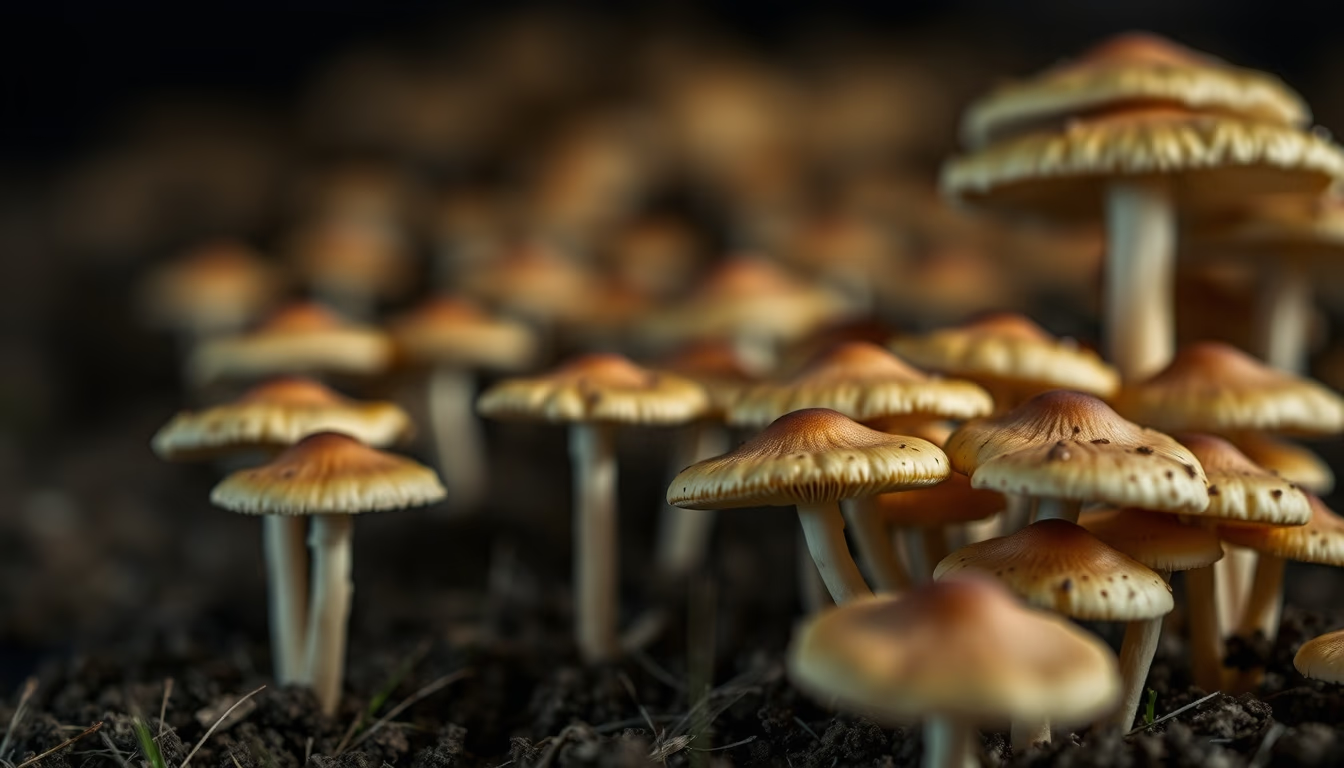
Mushroom cultivation in dark environments techniques and challenges of commercial production.
About this subject
Growing mushrooms in dark environments is an essential practice for species that require total absence of light to develop properly. One of the most important is Agaricus bisporus, the common white button mushroom, which accounts for about 40% of global mushroom production. The process takes place in climate-controlled rooms with strict temperature regulation (between 22 and 25 °C), relative humidity above 85%, and ventilation to manage CO2 levels. The substrate, typically composed of pasteurized straw, manure, and gypsum, is inoculated with mycelium and kept in darkness for 12 to 14 days until full colonization.
Darkness during the vegetative growth phase prevents premature fruiting body formation and stimulates hyphal development. After adding a casing layer of peat and lime, the temperature is lowered to 15, 18 °C and humidity raised, triggering mushroom pinning and growth. This controlled environment method allows up to six harvest cycles per year, with average yields of 25 to 30 kg per square meter per cycle. Leading producers include China, the United States, and the Netherlands, with global output exceeding 12 million tons in 2023.
Recent advances include the use of low-intensity LED lighting during the fruiting stage to guide vertical growth and improve mushroom quality, though most commercial species still rely on complete darkness in the first weeks. In Brazil, mushroom farming has expanded, with São Paulo, Minas Gerais, and Rio Grande do Sul states accounting for over 70% of national production.
Frequently Asked Questions
Why do some mushrooms need darkness to grow?
Darkness is required during the vegetative growth phase to prevent premature fruiting and ensure vigorous mycelial development. Light can inhibit growth or cause irregular fruiting.
What are the ideal temperature and humidity conditions for growing mushrooms in the dark?
During substrate colonization, the ideal temperature is 22, 25 °C with relative humidity above 85%. In the fruiting phase, temperature is lowered to 15, 18 °C and humidity maintained at 85, 90%.
Which country is the world's largest mushroom producer?
China is the largest producer, accounting for about 70% of global output, followed by the United States and the Netherlands. Brazil produces roughly 100,000 tons per year, mainly button mushrooms and shiitake.
Direct URL
https://pub-c7d6a6ea828543ac903a74a341ccb2e1.r2.dev/imagens/mushroom-farm-dark-macro-closeup-p3.avifHow to credit
Include a visible link back to UtilizAí. Copy one of the snippets below:
<a href="https://xn--utiliza-eza.com/en/midia/imagens/mushroom-farm-dark-macro-closeup-p3">Mushroom farm dark</a> by <a href="https://xn--utiliza-eza.com">UtilizAí</a>, licensed under <a href="https://creativecommons.org/licenses/by/4.0/">CC BY 4.0</a>.
[Mushroom farm dark](https://xn--utiliza-eza.com/en/midia/imagens/mushroom-farm-dark-macro-closeup-p3) by [UtilizAí](https://xn--utiliza-eza.com), CC BY 4.0
License: CC-BY-4.0