Mushroom farm dark
1344×768 · AVIF · CC BY 4.0
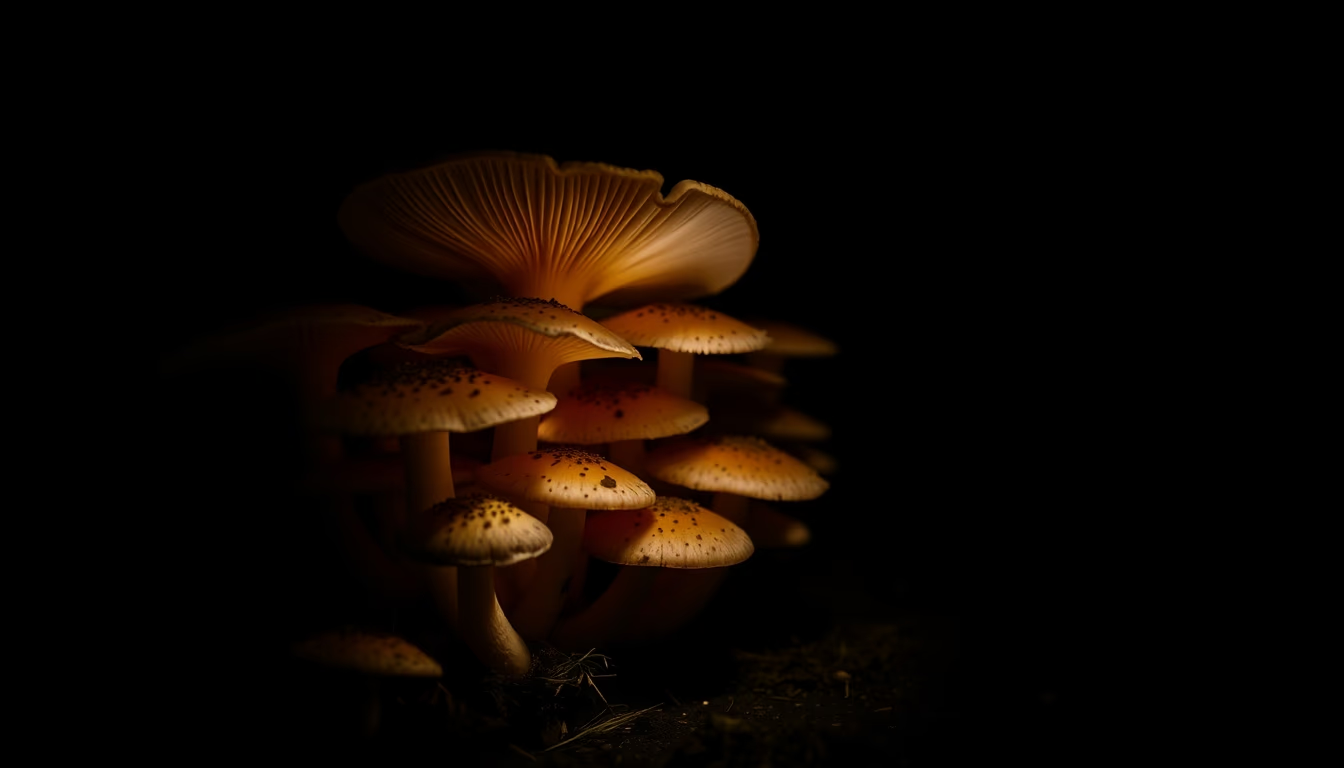
Mushroom cultivation in dark environments: techniques, benefits, and challenges of indoor production.
About this subject
Mushroom cultivation in dark environments is an essential practice in commercial production of varieties such as shiitake, oyster, and white button mushrooms. Unlike green plants, mushrooms do not perform photosynthesis and therefore do not require light to grow. In fact, darkness can favor mycelium development and fruit body formation, especially for light-sensitive species. Indoor mushroom farms typically use climate-controlled chambers with strict regulation of temperature, humidity, and ventilation, keeping rooms completely dark or with minimal artificial lighting.
These facilities are common in countries like China, the United States, the Netherlands, and Brazil, where mushroom consumption is rising. In Brazil, production is concentrated in mild climate regions such as the South and Southeast, but controlled environments allow year-round production. The substrate varies: enriched sawdust, straw, organic compost, or grains, all prepared to provide nutrients to the fungus. Darkness helps prevent drying and light stress, which can cause deformations or lower yields.
A key challenge is maintaining sterility, as dark, humid environments are prone to contaminants like molds and bacteria. Farms follow strict hygiene protocols, including air filtration, sterilized equipment, and constant monitoring. Harvest usually occurs in cycles of 3 to 6 weeks, depending on the species. Mushrooms grown in darkness tend to have lighter coloration and softer texture, traits valued in the gourmet market.
Economically, commercial mushroom cultivation is profitable, with high margins and growing demand for healthy, sustainable food. Dark environment production also reduces electricity costs for lighting, though it requires investment in climate control systems. Modern techniques, such as using low-intensity LEDs during certain phases, are being tested to optimize productivity without compromising quality.
Frequently Asked Questions
Why is darkness important for mushroom cultivation?
Darkness is important because many mushrooms do not perform photosynthesis and develop better without light, avoiding light stress that can cause deformations or lower yields. Dark environments also help maintain humidity and reduce lighting costs.
Which mushroom species are grown in darkness?
Species such as white button mushrooms (Agaricus bisporus), shiitake (Lentinula edodes), and oyster mushrooms (Pleurotus ostreatus) are commonly grown in darkness. Each has specific temperature and substrate requirements.
What are the main challenges of a dark-environment mushroom farm?
Main challenges include controlling contamination by molds and bacteria, maintaining ideal temperature and humidity, and ensuring sterility of the substrate and environment.
Direct URL
https://pub-c7d6a6ea828543ac903a74a341ccb2e1.r2.dev/imagens/mushroom-farm-dark-fine-art-photography-p5.avifHow to credit
Include a visible link back to UtilizAí. Copy one of the snippets below:
<a href="https://xn--utiliza-eza.com/en/midia/imagens/mushroom-farm-dark-fine-art-photography-p5">Mushroom farm dark</a> by <a href="https://xn--utiliza-eza.com">UtilizAí</a>, licensed under <a href="https://creativecommons.org/licenses/by/4.0/">CC BY 4.0</a>.
[Mushroom farm dark](https://xn--utiliza-eza.com/en/midia/imagens/mushroom-farm-dark-fine-art-photography-p5) by [UtilizAí](https://xn--utiliza-eza.com), CC BY 4.0
License: CC-BY-4.0