Mushroom farm dark
1344×768 · AVIF · CC BY 4.0
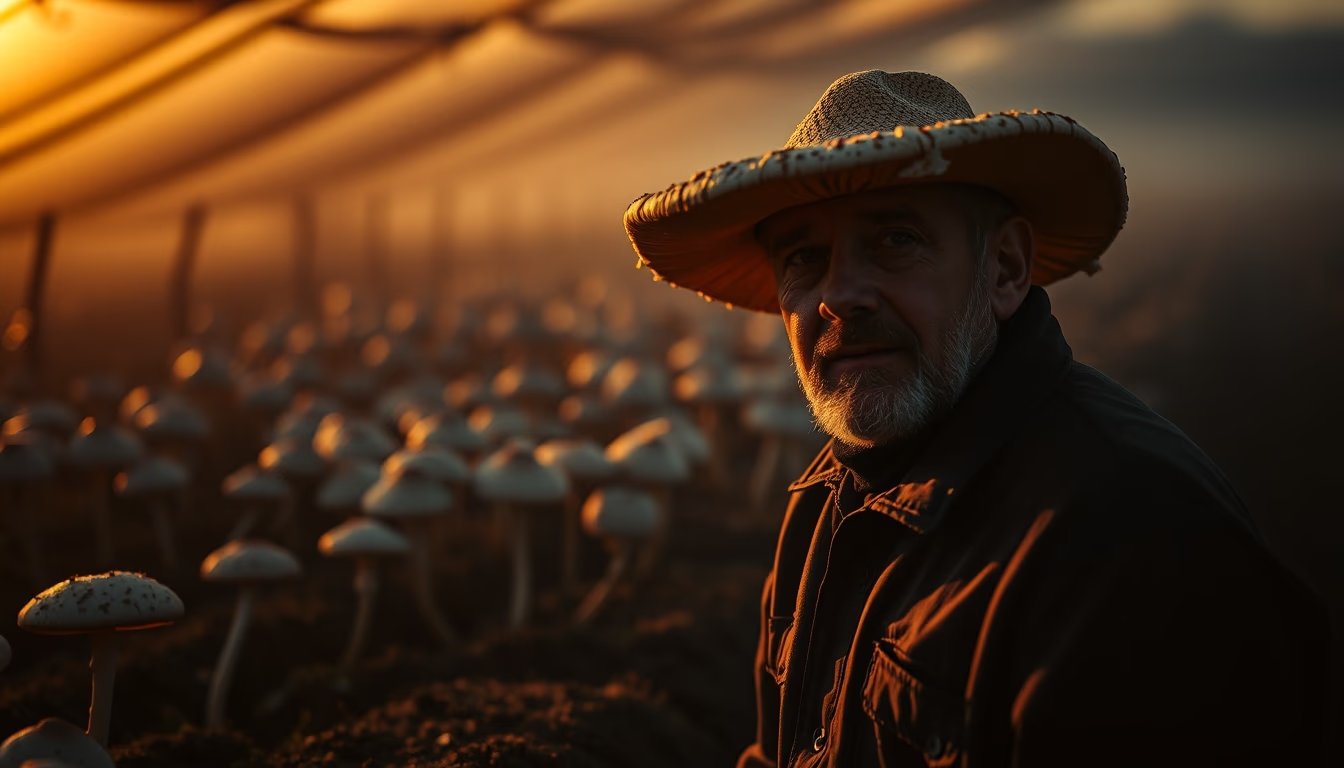
Mushroom cultivation in dark, controlled environments is essential for producing varieties like shiitake and button mushrooms.
About this subject
The cultivation of edible mushrooms, such as button mushrooms (Agaricus bisporus) and shiitake (Lentinula edodes), is carried out in dark, climate-controlled environments. The absence of light is crucial for mycelium growth and fruiting body formation, as photosynthesis is not required and light can inhibit growth or alter coloration. These environments are called cultivation rooms or fruiting chambers, with strict control of temperature, humidity, and ventilation.
In Brazil, mushroom production is concentrated in states like São Paulo, Minas Gerais, and Paraná. Button mushrooms are the most cultivated, followed by shiitake and shimeji. The substrate varies: for button mushrooms, an organic compost based on straw and manure is used; for shiitake, hardwood logs or enriched sawdust. Incubation occurs in total darkness, and fruiting is induced by changes in temperature and relative humidity around 80-95%.
Dark cultivation techniques allow year-round production, independent of seasons. Moreover, darkness reduces competition from algae and other photosynthetic organisms. Interestingly, mushrooms do not perform photosynthesis; they obtain nutrients by decomposing organic matter. Thus, light is not a limiting factor, but rather substrate quality and gas balance, such as carbon dioxide levels, which must be monitored to avoid deformities.
Modern mushroom farms use automated systems to control these variables. The trend for 2026 includes IoT sensors and artificial intelligence to optimize production. Global demand for mushrooms is rising due to interest in vegetarian and vegan diets, as well as nutraceutical properties. Brazil, though not a major exporter, has a growing domestic market, with per capita consumption still low but expanding.
Frequently Asked Questions
Why are mushrooms grown in the dark?
Mushrooms do not perform photosynthesis and light can inhibit growth or alter coloration. Darkness also reduces competition from algae and other photosynthetic organisms.
What are the main mushroom varieties cultivated in Brazil?
The main varieties are button mushrooms (Agaricus bisporus), shiitake (Lentinula edodes), and shimeji (Pleurotus ostreatus). Production is concentrated in São Paulo, Minas Gerais, and Paraná states.
How is the environment controlled in a mushroom farm?
Fruiting chambers are used with control of temperature, relative humidity (80-95%), ventilation, and CO2 levels. Sensors and automation are increasingly common.
Direct URL
https://pub-c7d6a6ea828543ac903a74a341ccb2e1.r2.dev/imagens/mushroom-farm-dark-cinematic-wide-shot-p0.avifHow to credit
Include a visible link back to UtilizAí. Copy one of the snippets below:
<a href="https://xn--utiliza-eza.com/en/midia/imagens/mushroom-farm-dark-cinematic-wide-shot-p0">Mushroom farm dark</a> by <a href="https://xn--utiliza-eza.com">UtilizAí</a>, licensed under <a href="https://creativecommons.org/licenses/by/4.0/">CC BY 4.0</a>.
[Mushroom farm dark](https://xn--utiliza-eza.com/en/midia/imagens/mushroom-farm-dark-cinematic-wide-shot-p0) by [UtilizAí](https://xn--utiliza-eza.com), CC BY 4.0
License: CC-BY-4.0