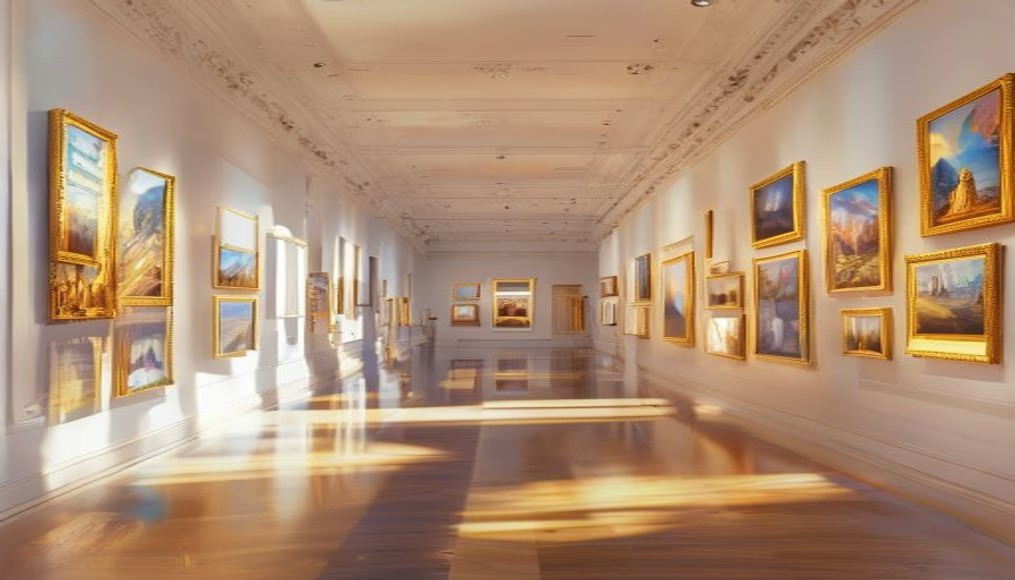
Museum gallery white walls
1344×768 · AVIF · CC BY 4.0
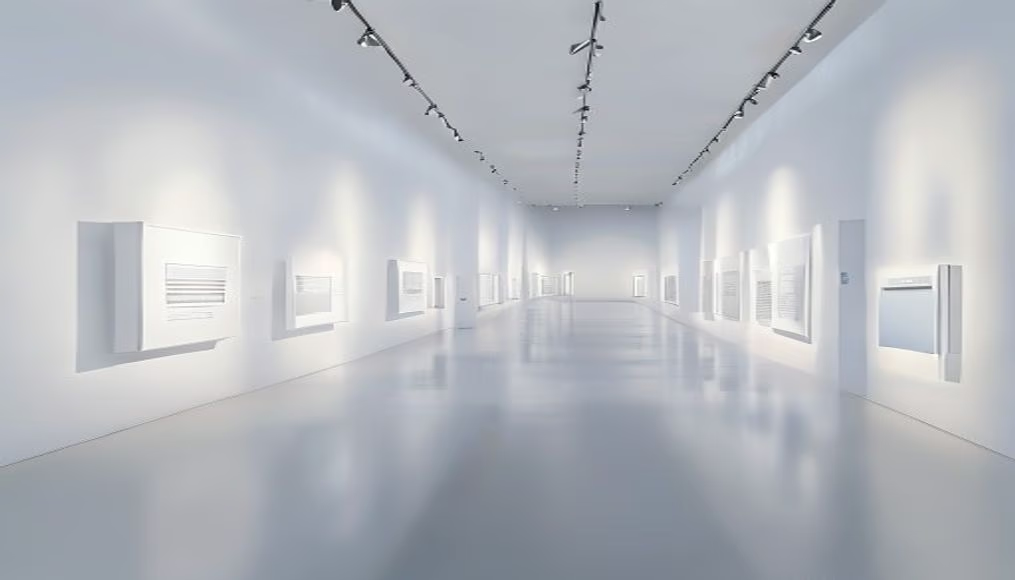
Museum gallery white walls: essential for art exhibitions, controlled lighting, and highlighting artworks, serving as a benchmark in cultural space design.
About this subject
White walls are a fundamental element in museum galleries worldwide. This design, known as the 'white cube', emerged in the early 20th century, particularly with the modern movement, seeking a neutral space to highlight artworks. Artists like Brian O'Doherty, in his essay 'Inside the White Cube', criticized this model for isolating art from the outside world, but it became a standard in institutions such as MoMA and Tate Modern. White reflects light uniformly, allowing viewers to focus on the art without visual distractions, and serves as an ideal backdrop for various styles and eras.
In museum practice, white walls offer flexibility for curation. They do not compete with the colors of the works and can be easily adapted for temporary or permanent exhibitions. Lighting is carefully planned, with spotlights and tracks directing light onto the pieces, creating shadows and contrasts that enrich the visitor experience. In contemporary art museums like Inhotim in Brazil, white galleries contrast with the surrounding nature while maintaining the same function of isolating and enhancing installations.
Beyond the art context, white walls are widely used in commercial product photography. Studios replicate this environment to avoid unwanted reflections and ensure accurate color and texture capture. Light bounced off white surfaces fills shadows and eliminates chromatic variations, resulting in clean, professional images. This crossover use shows how the white cube concept transcended museums and became a versatile tool in different fields.
Frequently Asked Questions
Why do art galleries use white walls?
White walls create a neutral backdrop that does not compete with the artworks, allowing visitors to focus entirely on the art. Additionally, white reflects light uniformly, facilitating controlled lighting and highlighting details of the pieces.
What is the origin of the 'white cube' concept?
The white cube concept emerged in the early 20th century with modernism as a way to present art in a distraction-free space. The term was popularized by critic Brian O'Doherty in his 1976 essay 'Inside the White Cube', which analyzed this exhibition model.
How do white walls influence product photography?
In commercial photography, white walls serve as a versatile studio, reflecting light and avoiding harsh shadows or color shifts. This ensures images with uniform lighting and a clean background, ideal for product catalogs and advertisements.
Direct URL
https://pub-c7d6a6ea828543ac903a74a341ccb2e1.r2.dev/imagens/museum-gallery-white-walls-commercial-product-photography-v9.avifHow to credit
Include a visible link back to UtilizAí. Copy one of the snippets below:
<a href="https://xn--utiliza-eza.com/en/midia/imagens/museum-gallery-white-walls-commercial-product-photography-v9">Museum gallery white walls</a> by <a href="https://xn--utiliza-eza.com">UtilizAí</a>, licensed under <a href="https://creativecommons.org/licenses/by/4.0/">CC BY 4.0</a>.
[Museum gallery white walls](https://xn--utiliza-eza.com/en/midia/imagens/museum-gallery-white-walls-commercial-product-photography-v9) by [UtilizAí](https://xn--utiliza-eza.com), CC BY 4.0
License: CC-BY-4.0