Mri machine gantry
1344×768 · AVIF · CC BY 4.0

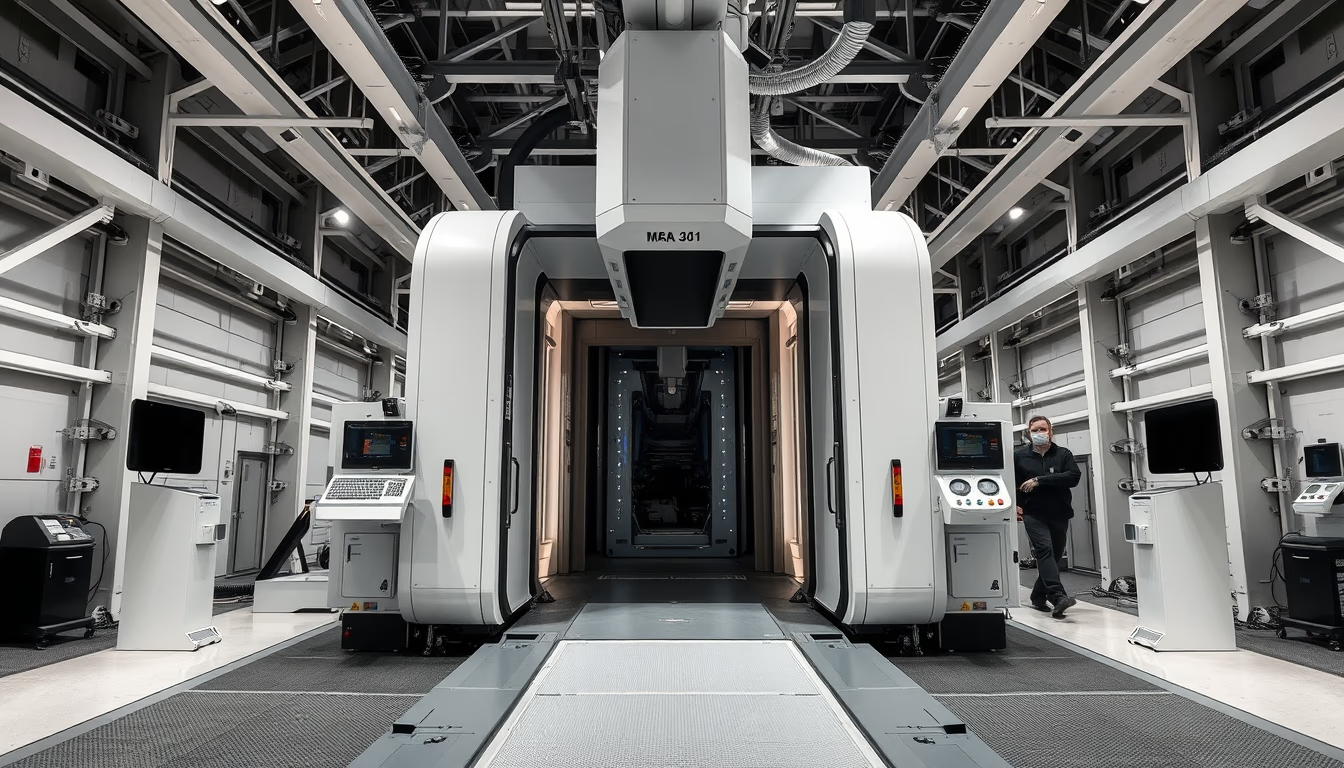
The gantry of an MRI machine is the central and most recognizable part of the equipment, where the patient is positioned for the scan.
About this subject
The gantry of an MRI machine is a large ring that houses the core components for image production: a powerful superconducting magnet, gradient coils, and a radiofrequency coil. The magnet generates a static, intense magnetic field, typically between 1.5 and 3 Tesla (T) in clinical machines, though 7T models exist for research. This field aligns the body's protons, which are then excited by radiofrequency pulses, emitting signals that are captured and transformed into detailed images of organs and tissues.
The opening of the gantry, through which the patient slides on a motorized table, has a variable diameter, usually between 60 and 70 cm. Older models were narrower and caused discomfort for claustrophobic individuals; thus, manufacturers developed open bore designs (larger bore) or open systems that reduce the feeling of confinement. Image acquisition can last from 15 minutes to over an hour, depending on the type of exam, and requires the patient to remain still to avoid artifacts.
Historically, the first MRI scanner was built by Raymond Damadian in the 1970s. Since then, technology has evolved rapidly: resistive magnets gave way to superconductors cooled by liquid helium, and pulse sequences became faster and more specific. Today, MRI is considered the gold standard for diagnosing various neurological, musculoskeletal, and abdominal conditions, due to its ability to differentiate soft tissues without using ionizing radiation.
Safety is a critical aspect: ferromagnetic objects can be attracted by the magnet with lethal force, becoming projectiles. Therefore, MRI suites have strict screening protocols, and the gantry is designed with rapid shutdown systems (quench) for emergencies. Moreover, the intense noise from gradient coils during scanning is mitigated by ear protection, and patient communication is maintained via intercom.
Frequently Asked Questions
How long does an MRI scan take?
The duration varies by exam type, typically between 15 and 60 minutes. More complex exams, such as those with contrast or multiple sequences, may take longer.
What causes the loud noise during an MRI?
The noise is generated by the gradient coils, which rapidly switch on and off, creating mechanical forces that vibrate the gantry structure. Ear protection is provided to reduce discomfort.
Why can't people with pacemakers have an MRI?
The magnetic field can interfere with implanted electronic devices like pacemakers, posing health risks. Exceptions exist for MR-conditional devices, but medical evaluation is required.
Direct URL
https://pub-c7d6a6ea828543ac903a74a341ccb2e1.r2.dev/imagens/mri-machine-gantry-travel-photography-p3.avifHow to credit
Include a visible link back to UtilizAí. Copy one of the snippets below:
<a href="https://xn--utiliza-eza.com/en/midia/imagens/mri-machine-gantry-travel-photography-p3">Mri machine gantry</a> by <a href="https://xn--utiliza-eza.com">UtilizAí</a>, licensed under <a href="https://creativecommons.org/licenses/by/4.0/">CC BY 4.0</a>.
[Mri machine gantry](https://xn--utiliza-eza.com/en/midia/imagens/mri-machine-gantry-travel-photography-p3) by [UtilizAí](https://xn--utiliza-eza.com), CC BY 4.0
License: CC-BY-4.0