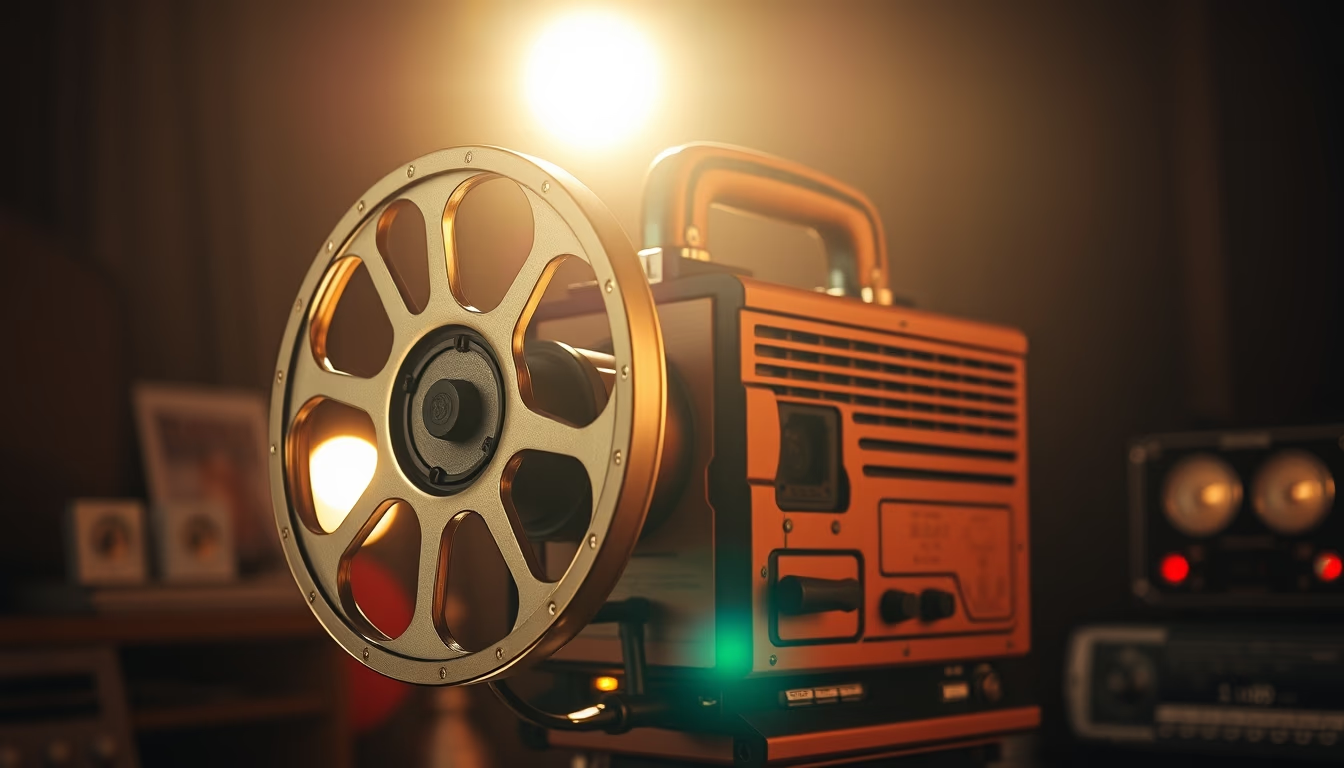
Movie projector running 8mm
1344×768 · AVIF · CC BY 4.0
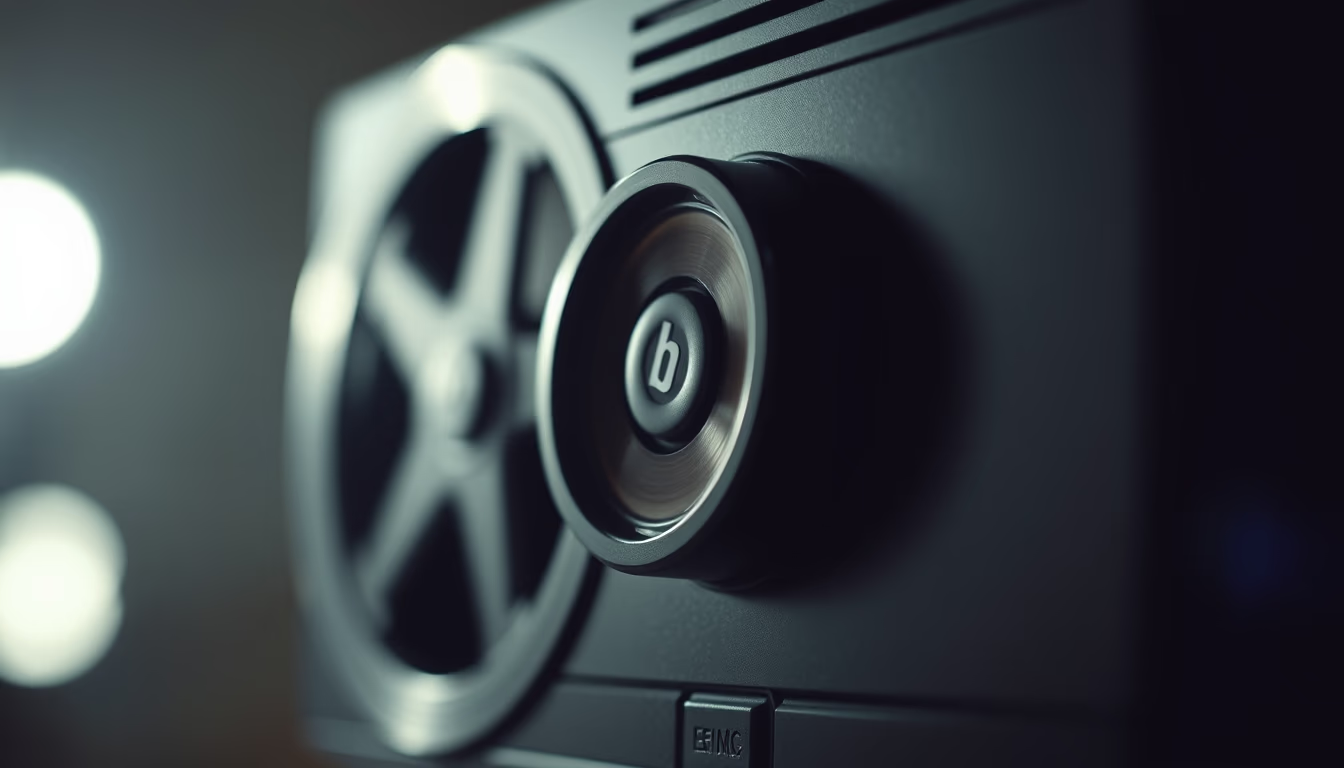
Home movie projector running 8mm film: the device that popularized amateur and home cinema from the 1930s through the 1960s.
About this subject
The 8mm film format was introduced by Kodak in 1932 as a cheaper alternative to the 16mm professional format. Measuring 8 millimeters in width, it used half the film stock of 16mm, enabling smaller and more affordable cameras and projectors. The film had a single set of sprocket holes on each side, leaving a small image area. 8mm projectors became ubiquitous in homes across the United States and Europe, allowing families to document birthdays, weddings, and vacations.
In Brazil, the 8mm format also gained popularity from the 1940s through the 1960s. Middle-class families often owned both cameras and projectors, creating a vast archive of home movies that today serve as precious historical records. The projector operated with incandescent or halogen bulbs, projecting onto a screen or white wall. Standard frame rates were 16 to 18 frames per second for silent film and 24 fps for optical sound, though silent 8mm was most common.
In 1965, Kodak launched Super 8, an improved format with smaller sprocket holes and a larger image frame. Many older projectors were adapted or remained in use. 8mm film is known for its nostalgic look: visible grain, desaturated colors, and a distinct texture that contemporary filmmakers and artists still seek. Although the format became obsolete, specialized labs continue to develop and digitize 8mm footage well into the 21st century.
Frequently Asked Questions
What is 8mm film and what was it used for?
8mm film is a narrow-gauge movie film format introduced in 1932. It was primarily used for amateur and home cinematography, capturing family events and personal memories.
What is the difference between 8mm and Super 8?
Super 8, launched in 1965, has smaller sprocket holes and a 50% larger image area, offering better quality. Super 8 cartridges are easier to load, while standard 8mm required manual reel threading.
How can I digitize 8mm films today?
Professional services transfer the film to digital format. You can also use a projector with a digital camera output or a dedicated 8mm film scanner.
Direct URL
https://pub-c7d6a6ea828543ac903a74a341ccb2e1.r2.dev/imagens/movie-projector-running-8mm-macro-closeup-p4.avifHow to credit
Include a visible link back to UtilizAí. Copy one of the snippets below:
<a href="https://xn--utiliza-eza.com/en/midia/imagens/movie-projector-running-8mm-macro-closeup-p4">Movie projector running 8mm</a> by <a href="https://xn--utiliza-eza.com">UtilizAí</a>, licensed under <a href="https://creativecommons.org/licenses/by/4.0/">CC BY 4.0</a>.
[Movie projector running 8mm](https://xn--utiliza-eza.com/en/midia/imagens/movie-projector-running-8mm-macro-closeup-p4) by [UtilizAí](https://xn--utiliza-eza.com), CC BY 4.0
License: CC-BY-4.0