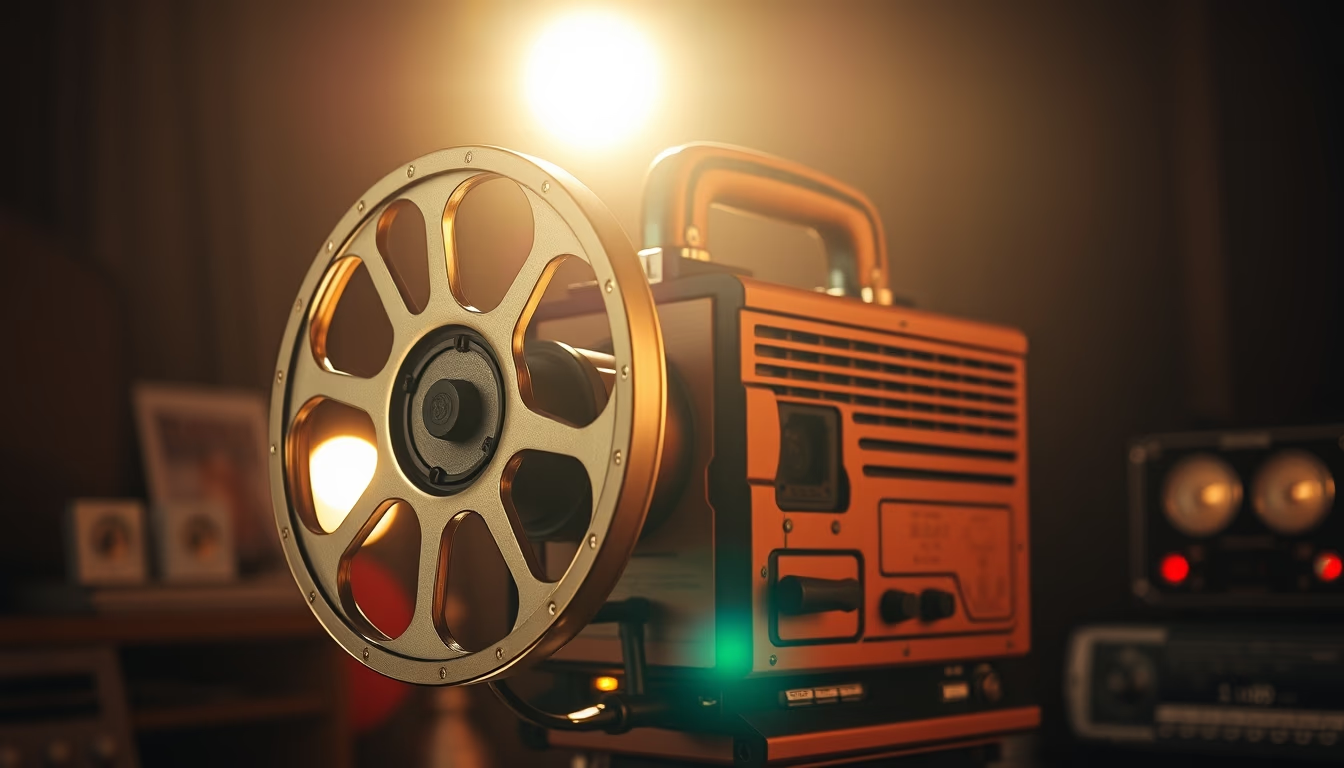
Movie projector running 8mm
1344×768 · AVIF · CC BY 4.0
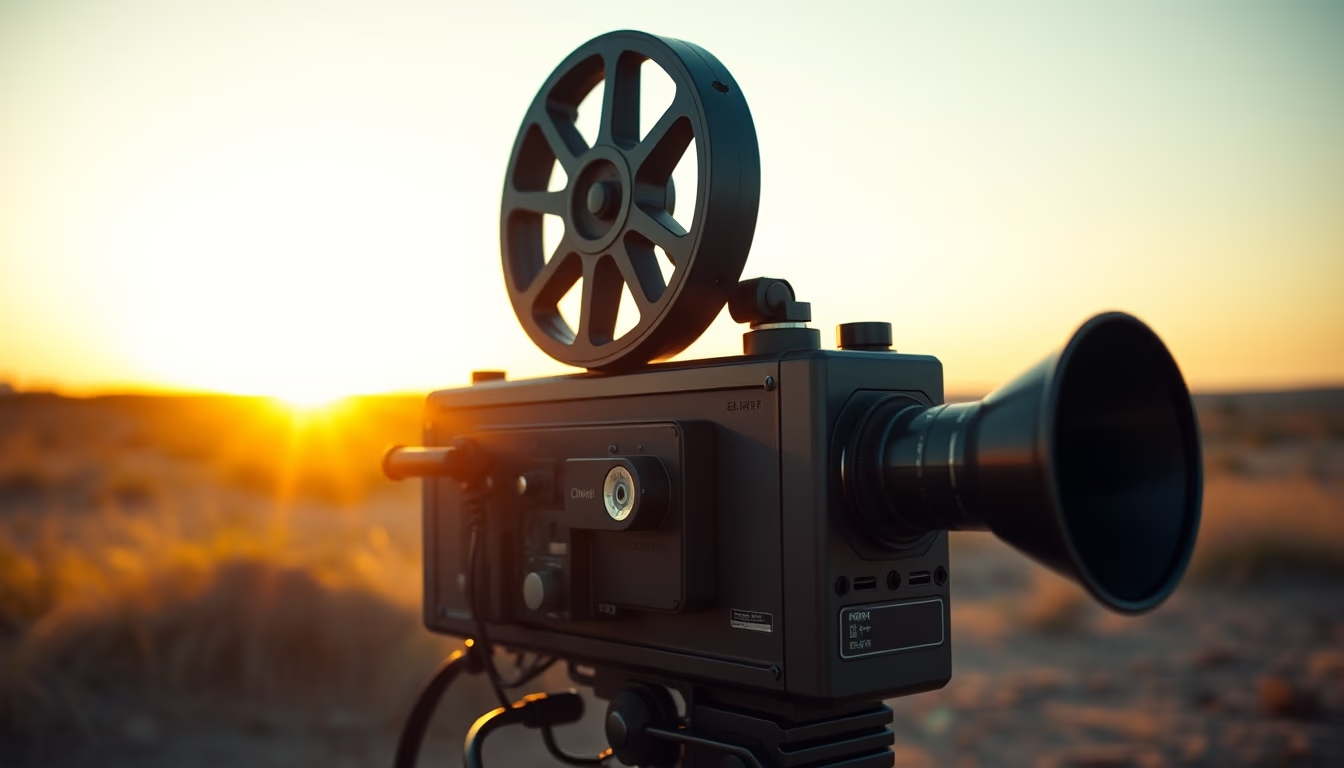
8mm movie projector, a classic device that screened home movies and educational films in mid-20th century homes and schools.
About this subject
The 8mm movie projector was a key innovation in bringing cinema into the home. Introduced by Eastman Kodak in 1932, the 8mm format reduced film cost and made home projection affordable for middle-class families. Unlike the 16mm used professionally, 8mm used narrower film and smaller reels, allowing anyone to record birthdays, vacations and family events with portable cameras like the Kodak Brownie. In the 1950s, Super 8 (with a larger image and magnetic sound) succeeded standard 8mm, but the operating principle remained: light from a lamp passes through intermittently moving film frames, projecting an enlarged image onto a wall or screen, with sound reproduced by a magnetic head for sound films.
Culturally, the 8mm projector shaped generations. In the United States and Brazil, families gathered to watch travel or party footage, creating a typical ritual of the 1960s and 1970s. Schools and churches also used projectors for educational or religious films, a role later taken over by VHS. Maintenance required regular bulb replacement (bulbs overheated) and gear cleaning, tasks that were part of the technical know-how of enthusiasts. Although 8mm film is fragile and flammable (cellulose acetate), many reels survive today, preserving unique visual memories.
Today, the 8mm projector is a collector's item and a tool for amateur filmmakers who cherish the grainy aesthetic and characteristic motion (24 frames per second). Experimental cinema events and vintage screenings often use original projectors from brands like Eumig, Bell & Howell and Keystone. Digitization of 8mm films is common, but analog projection offers a sensory experience digital cannot replicate: the sound of the mechanism and the warmth of the lamp.
Frequently Asked Questions
What is the difference between standard 8mm and Super 8 film?
Standard 8mm has a smaller frame (4.5 x 3.3 mm) and double perforation, while Super 8 enlarged the frame to 5.8 x 4.1 mm with single perforation, allowing more emulsion and better image quality. Super 8 also introduced magnetic sound recording on the film itself.
Can I still find working 8mm projectors today?
Yes, many are available on auction sites or antique stores. Common brands include Eumig, Bell & Howell and Elmo. Check the condition of belts, bulbs and gears, and clean thoroughly before use to avoid scratching the film.
How can I digitize 8mm film?
You can use professional telecine services (projecting onto a digital sensor) or buy a dedicated scanner (like Wolverine or Reflecta). A DIY method involves projecting onto a screen and recording with a digital camera. Final resolution depends on source quality and technique.
Direct URL
https://pub-c7d6a6ea828543ac903a74a341ccb2e1.r2.dev/imagens/movie-projector-running-8mm-cinematic-wide-shot-p1.avifHow to credit
Include a visible link back to UtilizAí. Copy one of the snippets below:
<a href="https://xn--utiliza-eza.com/en/midia/imagens/movie-projector-running-8mm-cinematic-wide-shot-p1">Movie projector running 8mm</a> by <a href="https://xn--utiliza-eza.com">UtilizAí</a>, licensed under <a href="https://creativecommons.org/licenses/by/4.0/">CC BY 4.0</a>.
[Movie projector running 8mm](https://xn--utiliza-eza.com/en/midia/imagens/movie-projector-running-8mm-cinematic-wide-shot-p1) by [UtilizAí](https://xn--utiliza-eza.com), CC BY 4.0
License: CC-BY-4.0