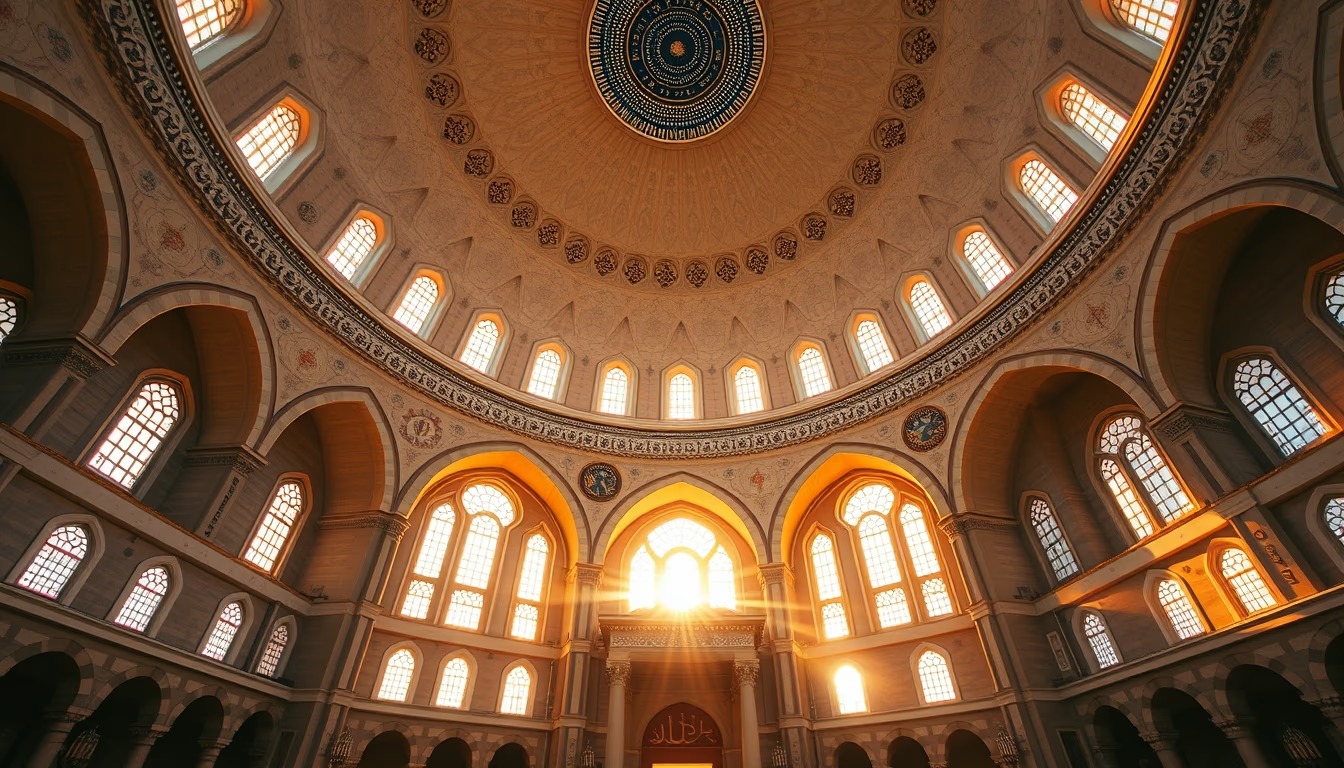
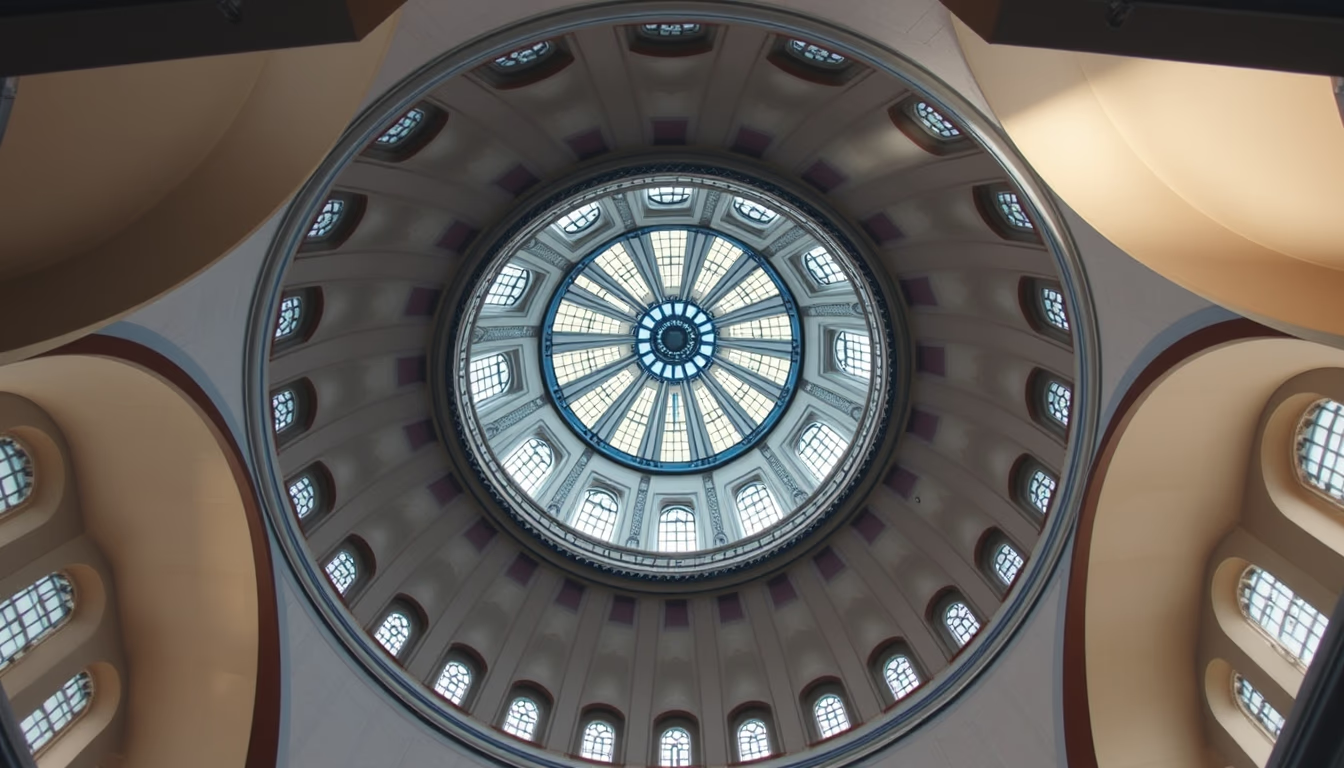
Mosque dome interior
1344×768 · AVIF · CC BY 4.0
Mosque domes blend Islamic engineering, celestial symbolism, and unique acoustics. Explore their history and purpose.
About this subject
The dome is one of the most striking architectural elements of mosques worldwide. Its origin traces back to early Islamic structures like the Dome of the Rock in Jerusalem (7th century), which served as a model for later buildings. The dome symbolizes the firmament and the celestial vault, representing the infinity of God. Its interior decoration features Arabic calligraphy, arabesques, and geometric mosaics, avoiding human or animal figures to respect Islamic aniconism.
Structurally, Islamic domes evolved to distribute weight efficiently, often supported by pendentives or squinches. A notable example is the Selimiye Mosque in Turkey, designed by the Ottoman genius Mimar Sinan in the 16th century. Its central dome spans over 30 meters in diameter, flanked by semi-domes, creating a vast, light-filled interior through windows at the base. This technique allowed natural light to enter gradually, enhancing the spiritual atmosphere.
Acoustics also play a crucial role. Many domes are designed to amplify the call to prayer (adhan) and Quranic recitation. In the Great Mosque of Córdoba, for instance, the mihrab dome has a resonance that makes the imam's voice clearer and more enveloping. Another curiosity: the use of tiles (as in Iran and Morocco) is not merely decorative; they help reflect light and reduce internal heat, a sustainable engineering feat.
Globally, each region developed its own style: bulbous domes in India (like the Taj Mahal), onion-shaped domes in Russia (Islamic influence on Orthodox architecture), and reinforced concrete domes in contemporary mosques. The interior design, regardless of location, aims to create an atmosphere of introspection and reverence, guiding the eye toward the center of the space, where a grand chandelier often hangs. These features make the mosque dome a timeless icon of religious architecture.
Frequently Asked Questions
What is the symbolic meaning of the dome in a mosque?
The dome symbolizes the firmament and the celestial vault, representing the infinity of God and the connection between the earthly and divine. It also directs worshippers' gaze upward, encouraging introspection.
How is natural light used inside mosque domes?
Domes often feature a ring of windows at the base (tambour) that allows gradual natural light entry. This creates a soft illumination that enhances the spiritual atmosphere and highlights interior decorations.
What are the main styles of mosque domes around the world?
Styles vary: bulbous domes in India and Southeast Asia, onion-shaped domes in Russia, and Ottoman influences with semi-domes. Modern architecture uses reinforced concrete domes and geodesic structures.
Direct URL
https://pub-c7d6a6ea828543ac903a74a341ccb2e1.r2.dev/imagens/mosque-dome-interior-documentary-photography-p4.avifHow to credit
Include a visible link back to UtilizAí. Copy one of the snippets below:
<a href="https://xn--utiliza-eza.com/en/midia/imagens/mosque-dome-interior-documentary-photography-p4">Mosque dome interior</a> by <a href="https://xn--utiliza-eza.com">UtilizAí</a>, licensed under <a href="https://creativecommons.org/licenses/by/4.0/">CC BY 4.0</a>.
[Mosque dome interior](https://xn--utiliza-eza.com/en/midia/imagens/mosque-dome-interior-documentary-photography-p4) by [UtilizAí](https://xn--utiliza-eza.com), CC BY 4.0
License: CC-BY-4.0