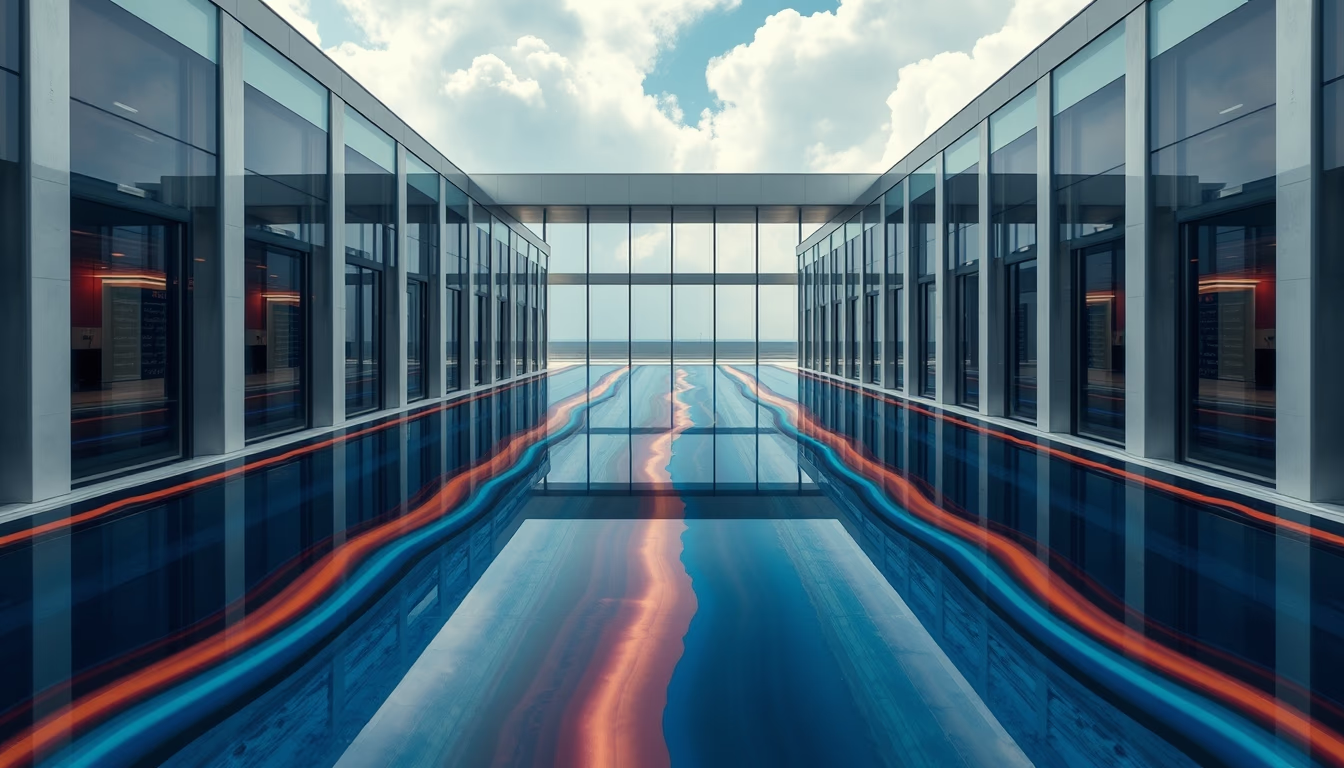
Minimalist white space
1344×768 · AVIF · CC BY 4.0

Minimalist white space in documentary photography directs the viewer's focus to the main subject, eliminating distractions and amplifying the image's meaning.
About this subject
Minimalist white space, or negative space, is a fundamental element in documentary photography. Its roots lie in modernism, with photographers like Henri Cartier-Bresson seeking the 'decisive moment' through clean compositions. Large empty areas such as skies, walls, or shadows isolate the subject and create narrative tension, allowing every detail to stand out.
In practice, minimalism demands rigorous framing. Street photographers often use flat facades or wet asphalt to highlight a character, turning emptiness into an active storytelling tool. This approach contrasts with contemporary visual saturation, offering pause and clarity amid an overload of stimuli.
Culturally, the concept resonates with the Japanese aesthetic of Ma, which views the space between objects as charged with meaning. In documentary work, emptiness can convey solitude, isolation, or contemplation, as seen in Alex Majoli's series on conflict zones or Trent Parke's high-contrast images that use dark voids for dramatic effect.
The 'trending-2026' tag underlines the growing adoption of minimalism in documentary photography, driven by editors and platforms favoring strong visual impact and direct messaging. Agencies like Magnum Photos have featured works that prioritize economy of elements, proving that less can be more in visual storytelling.
Frequently Asked Questions
What is white space in documentary photography?
It is the empty area around the main subject, used to direct attention, simplify composition, and reinforce the image's meaning. In documentary photography, it helps eliminate distractions and emphasize the moment.
How can I apply minimalism in street photography?
Look for clean backgrounds such as plain walls, open skies, or uniform surfaces. Frame carefully to isolate your subject, use light for contrast, and remove elements that don't contribute to the story.
Which photographers use negative space in their documentary work?
Henri Cartier-Bresson, Alex Majoli, Trent Parke, and many Magnum Photos members often use empty areas with narrative purpose. Their work shows how emptiness can convey emotions like solitude or contemplation.
Direct URL
https://pub-c7d6a6ea828543ac903a74a341ccb2e1.r2.dev/imagens/minimalist-white-space-documentary-photography-p2.avifHow to credit
Include a visible link back to UtilizAí. Copy one of the snippets below:
<a href="https://xn--utiliza-eza.com/en/midia/imagens/minimalist-white-space-documentary-photography-p2">Minimalist white space</a> by <a href="https://xn--utiliza-eza.com">UtilizAí</a>, licensed under <a href="https://creativecommons.org/licenses/by/4.0/">CC BY 4.0</a>.
[Minimalist white space](https://xn--utiliza-eza.com/en/midia/imagens/minimalist-white-space-documentary-photography-p2) by [UtilizAí](https://xn--utiliza-eza.com), CC BY 4.0
License: CC-BY-4.0