Minimalist japanese house
1344×768 · AVIF · CC BY 4.0
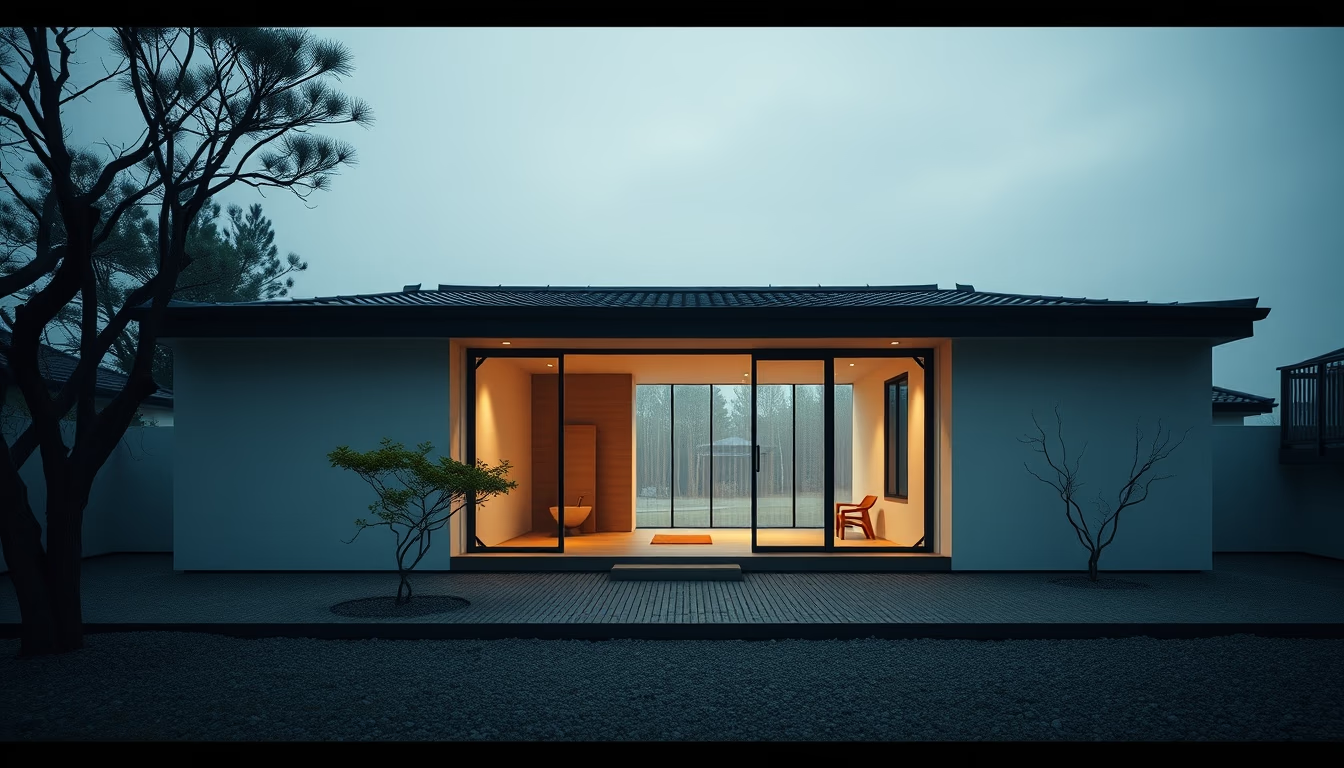
Minimalist Japanese houses blend simplicity, natural materials, and indoor-outdoor integration, embodying aesthetic traditions like wabi-sabi.
About this subject
Japanese minimalist architecture emerged as a response to limited space and a culture that values simplicity. Unlike Western minimalism, which often focuses on the absence of objects, Japanese minimalism seeks essence through natural materials such as wood, paper, and stone. A classic example is the concept of ma, or negative space, which values emptiness as much as fullness.
Houses like Tadao Ando's Tree House or Kengo Kuma's 4x4 House demonstrate how exposed concrete, large windows, and lack of ornamentation create serene environments. The style also incorporates the engawa, a covered veranda that transitions between interior and garden, common in traditional residences. This integration with nature is central: the garden is not just decoration but part of daily experience.
The aesthetic of wabi-sabi, which celebrates imperfection and transience, directly influences these constructions. Materials that age gracefully, such as untreated wood and raw stone, are preferred. Additionally, interior organization prioritizes functionality: low furniture, built-in closets, and sliding partitions (fusuma) optimize space. These principles have gained global relevance in contemporary design, especially in projects seeking sustainability and well-being.
Frequently Asked Questions
What defines a minimalist Japanese house?
It is characterized by natural materials, clean lines, open spaces, and integration with nature. It relies on concepts of ma (negative space) and wabi-sabi (beauty in imperfection).
What materials are common in this architectural style?
Wood, exposed concrete, glass, paper (as in shoji), stone, and bamboo. These materials are chosen for their natural texture and ability to age gracefully.
How does Japanese minimalism differ from Western minimalism?
Japanese minimalism emphasizes essence through reduction and connection with nature, while Western often prioritizes visual absence. Japanese also incorporates traditions like engawa and fusuma partitions.
Direct URL
https://pub-c7d6a6ea828543ac903a74a341ccb2e1.r2.dev/imagens/minimalist-japanese-house-high-fashion-editorial-p5.avifHow to credit
Include a visible link back to UtilizAí. Copy one of the snippets below:
<a href="https://xn--utiliza-eza.com/en/midia/imagens/minimalist-japanese-house-high-fashion-editorial-p5">Minimalist japanese house</a> by <a href="https://xn--utiliza-eza.com">UtilizAí</a>, licensed under <a href="https://creativecommons.org/licenses/by/4.0/">CC BY 4.0</a>.
[Minimalist japanese house](https://xn--utiliza-eza.com/en/midia/imagens/minimalist-japanese-house-high-fashion-editorial-p5) by [UtilizAí](https://xn--utiliza-eza.com), CC BY 4.0
License: CC-BY-4.0