Minimalist japanese house
1344×768 · AVIF · CC BY 4.0
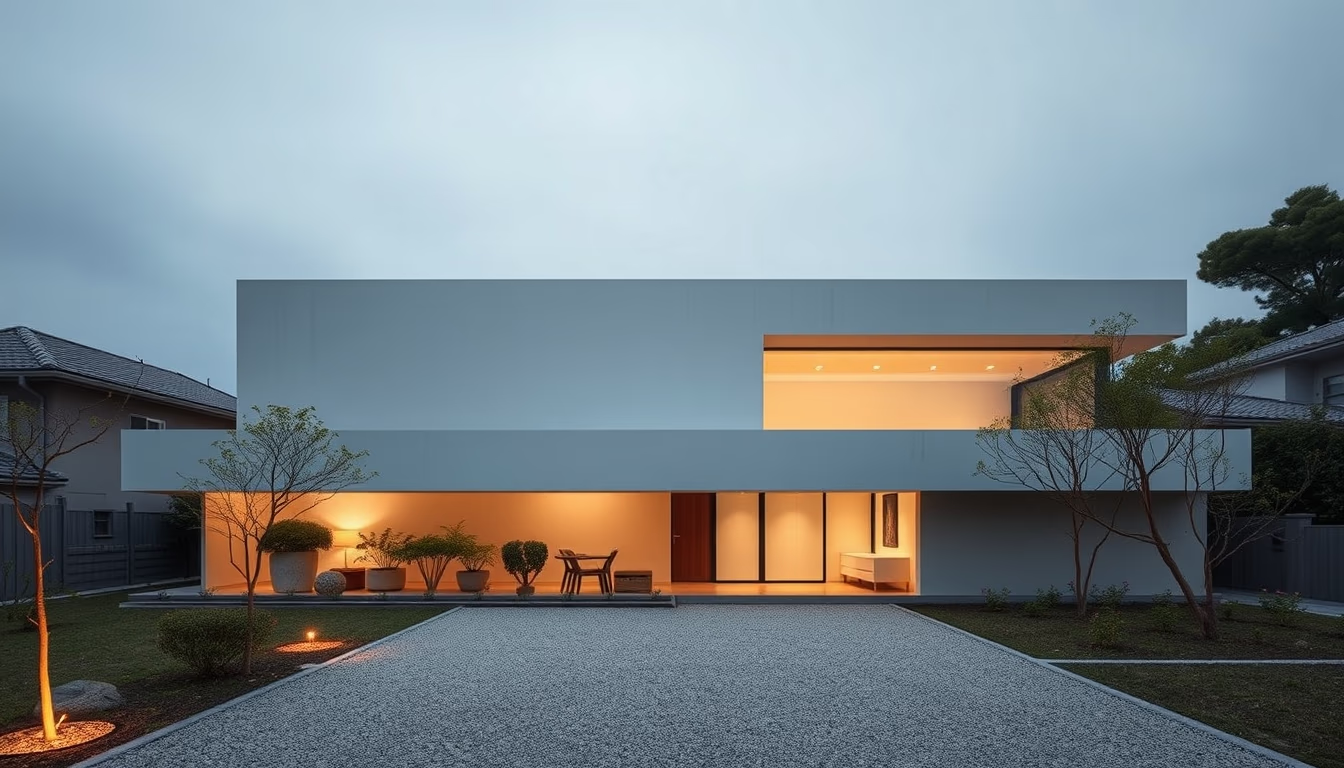
Minimalist Japanese residential architecture: design principles, natural materials, and the pursuit of harmony with space and nature.
About this subject
Japanese minimalist architecture is deeply rooted in traditional aesthetics, influenced by Zen Buddhism and the concept of "ma" (negative space). This approach emphasizes simplicity, functionality, and a connection to the natural environment. Common elements include sliding shoji screens, tatami mat flooring, and covered verandas (engawa), creating a seamless transition between indoors and outdoors.
Natural materials are essential: wood, bamboo, washi paper, and stone. The color palette is neutral, with tones of brown, beige, and gray, avoiding unnecessary ornamentation. Natural light is carefully controlled through openings and shadows, highlighting the texture of materials. The modular room layout allows flexibility, with spaces that open to a garden or an inner courtyard.
Contemporary architects like Tadao Ando are leading figures in this style, using exposed concrete and pure geometric forms while maintaining minimalist essence. Houses such as "House in Oyamazaki" exemplify the integration of straight lines and nature. Japanese minimalism is not merely aesthetic but a life philosophy that prioritizes essence over excess, seeking serenity and contemplation.
Interestingly, the concept of "wabi-sabi", the beauty of imperfection and transience, also reflects in minimalist homes, where aged materials are valued. This style gained global prominence in the 20th century, inspiring Western architects like John Pawson and influencing interior design worldwide.
Frequently Asked Questions
What characterizes a minimalist Japanese house?
Clean lines, use of natural materials (wood, bamboo, washi paper), neutral palette, integration with nature, and absence of unnecessary ornamentation. The design prioritizes functionality and serenity.
What is the influence of Zen Buddhism on this architectural style?
Zen Buddhism values simplicity, meditation, and harmony with the environment. In architecture, this translates into uncluttered spaces that promote contemplation, with emphasis on emptiness (ma) and natural light.
Who are the most famous architects of Japanese minimalism?
Tadao Ando is the most renowned, with works like the Church of the Light. Others include Kengo Kuma, Shigeru Ban, and Toyo Ito, who combine tradition and innovation.
Direct URL
https://pub-c7d6a6ea828543ac903a74a341ccb2e1.r2.dev/imagens/minimalist-japanese-house-fine-art-photography-p0.avifHow to credit
Include a visible link back to UtilizAí. Copy one of the snippets below:
<a href="https://xn--utiliza-eza.com/en/midia/imagens/minimalist-japanese-house-fine-art-photography-p0">Minimalist japanese house</a> by <a href="https://xn--utiliza-eza.com">UtilizAí</a>, licensed under <a href="https://creativecommons.org/licenses/by/4.0/">CC BY 4.0</a>.
[Minimalist japanese house](https://xn--utiliza-eza.com/en/midia/imagens/minimalist-japanese-house-fine-art-photography-p0) by [UtilizAí](https://xn--utiliza-eza.com), CC BY 4.0
License: CC-BY-4.0