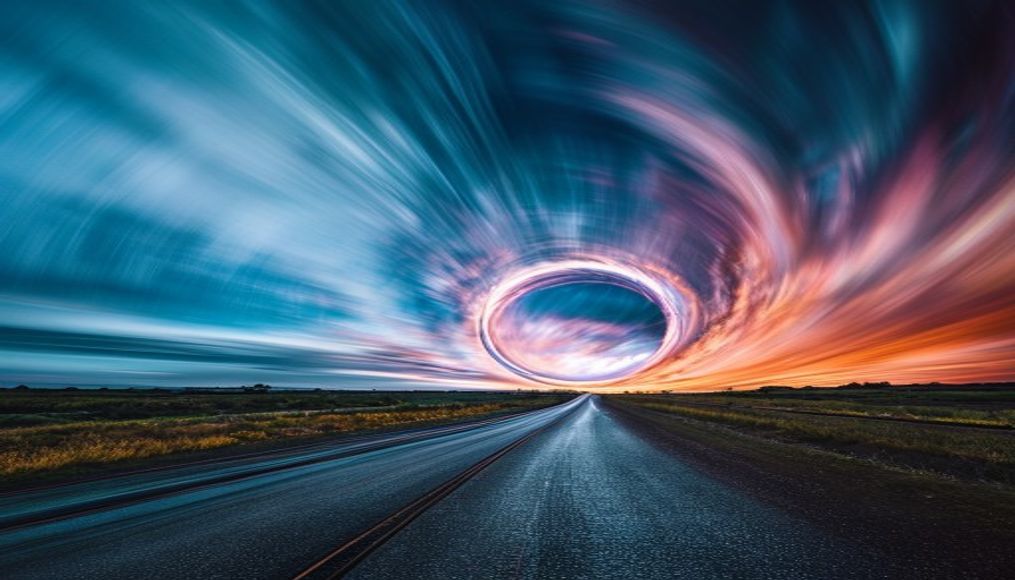
Milky way over mountain
1344×768 · AVIF · CC BY 4.0
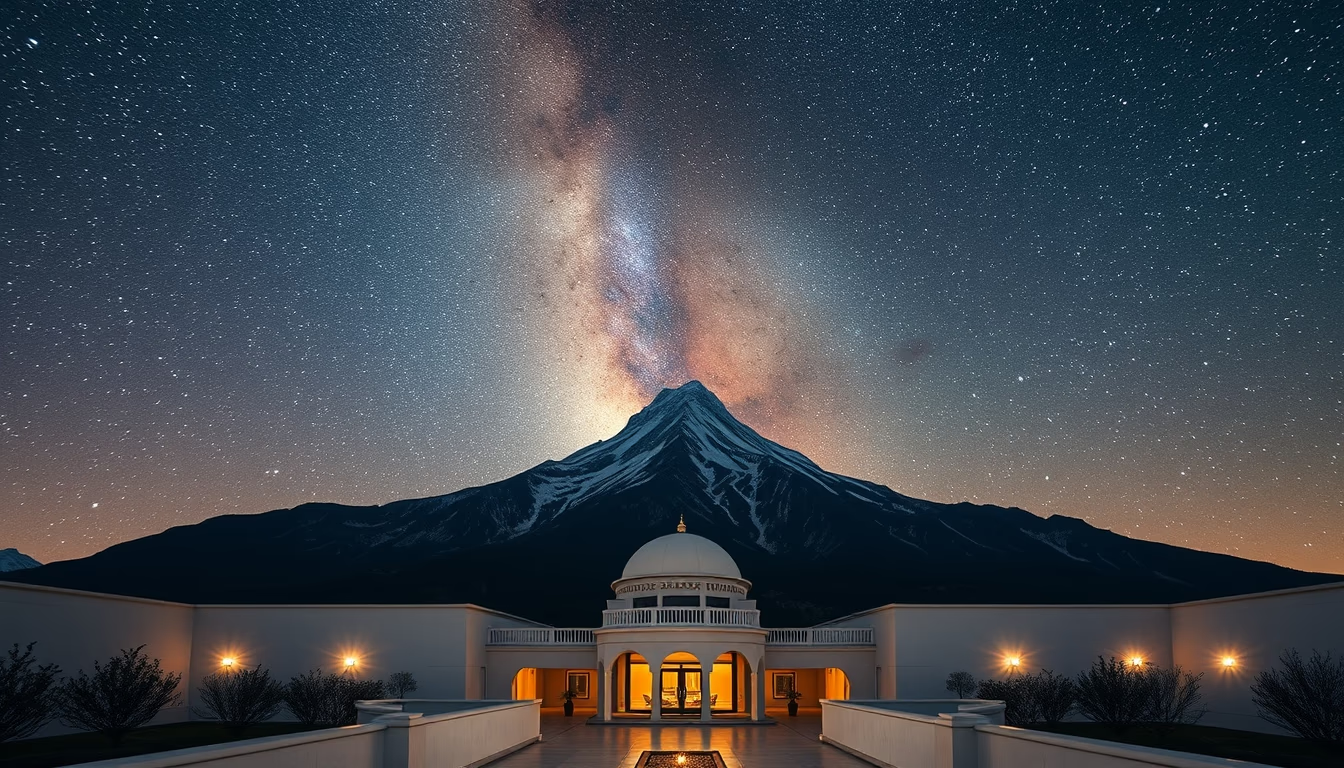
The Milky Way over mountains is one of the most breathtaking night sky spectacles, combining astrophotography and natural landscapes.
About this subject
The Milky Way, our spiral galaxy, hosts between 100 and 400 billion stars and a disk of gas and dust spanning about 100,000 light-years. On moonless nights with low light pollution, its milky glow is visible to the naked eye, especially in mountainous regions.
Mountains such as the Andes, the Himalayas, the Alps, and Brazil's Serra da Mantiqueira provide exceptional conditions for astronomical observation. Altitude reduces atmospheric interference, while isolation minimizes light pollution. This is why many observatories are built in these locations, like the Very Large Telescope (VLT) in Chile's Atacama Desert and Mauna Kea in Hawaii.
The architecture of these observatories is a specialized branch of engineering, designed to reduce thermal turbulence and vibrations. Domes and rotating structures allow telescopes to operate with millimeter precision. In 2026, astrophotography is expected to gain even more traction, fueled by events like meteor showers and planetary alignments.
To capture the Milky Way over mountains, planning is essential: use apps like PhotoPills to predict the galaxy's position, choose nights near the new moon, and use wide-angle lenses with f/2.8 aperture or larger. Stacking multiple exposures can reveal details invisible to the naked eye.
Frequently Asked Questions
What is the best time to see the Milky Way?
In the Southern Hemisphere, the Milky Way is most visible from February to October, peaking in June and July. In the Northern Hemisphere, the best period is April to September. Choose moonless nights away from city lights.
How to photograph the Milky Way over mountains?
Use a camera with manual controls, a wide-angle lens (14-24mm) with a wide aperture (f/2.8 or faster). Set ISO between 1600 and 6400, exposure from 15 to 30 seconds, and focus manually on a bright star. A sturdy tripod is essential.
Why are mountains good for astrophotography?
Altitude reduces atmospheric turbulence and light pollution, providing darker and more stable skies. Drier air also minimizes water vapor interference, improving image sharpness.
Direct URL
https://pub-c7d6a6ea828543ac903a74a341ccb2e1.r2.dev/imagens/milky-way-over-mountain-architectural-photography-p2.avifHow to credit
Include a visible link back to UtilizAí. Copy one of the snippets below:
<a href="https://xn--utiliza-eza.com/en/midia/imagens/milky-way-over-mountain-architectural-photography-p2">Milky way over mountain</a> by <a href="https://xn--utiliza-eza.com">UtilizAí</a>, licensed under <a href="https://creativecommons.org/licenses/by/4.0/">CC BY 4.0</a>.
[Milky way over mountain](https://xn--utiliza-eza.com/en/midia/imagens/milky-way-over-mountain-architectural-photography-p2) by [UtilizAí](https://xn--utiliza-eza.com), CC BY 4.0
License: CC-BY-4.0