Memory foam pillow
1344×768 · AVIF · CC BY 4.0
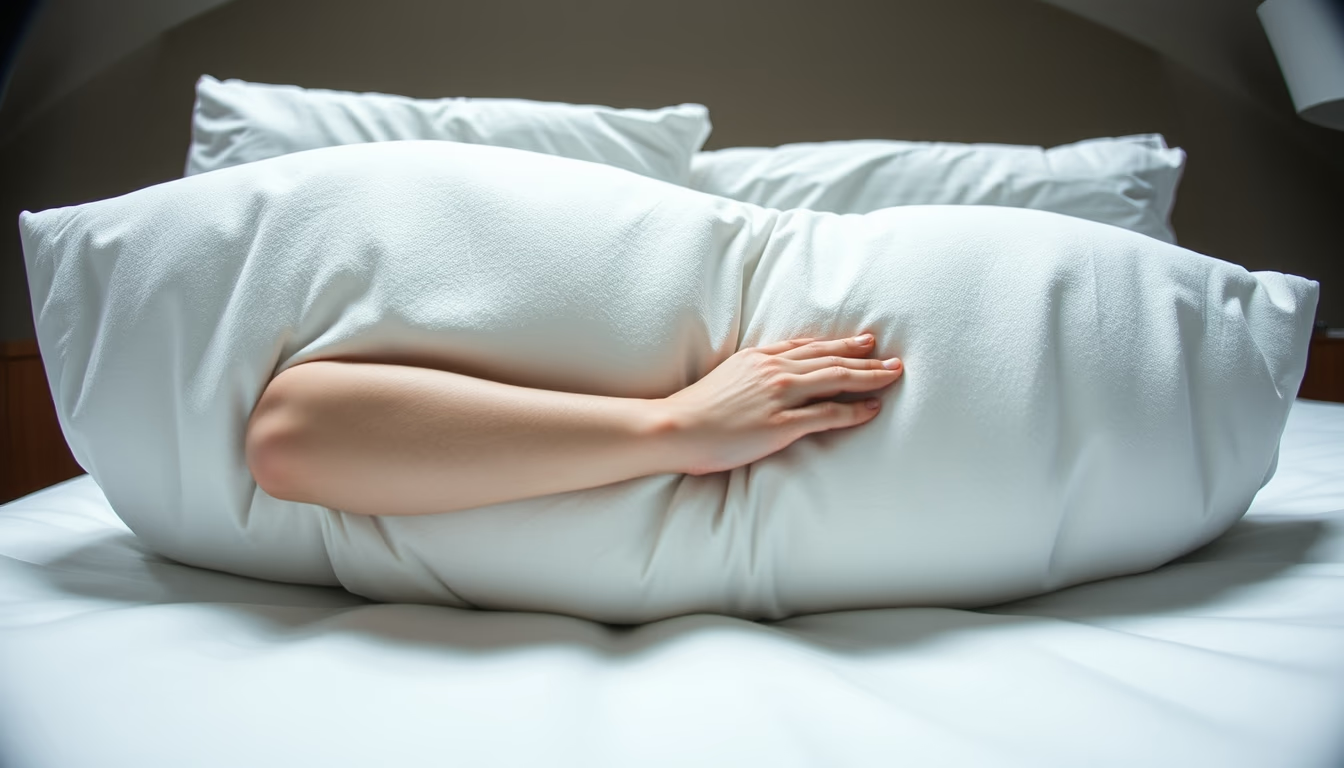
Memory foam pillow provides personalized support by aligning the spine during sleep, reducing pressure points and improving rest.
About this subject
The memory foam pillow, made from viscoelastic polyurethane foam, was originally developed by NASA in the 1960s to cushion and protect astronauts during liftoff. It entered the consumer sleep market in the 1990s and became known for its ability to conform to the sleeper's head and neck, providing customized support. Unlike ordinary foam, memory foam softens in response to body heat and weight, evenly distributing pressure and reducing stress on the cervical spine. This alignment can help prevent neck pain, snoring, and sleep disruptions.
Research has shown that memory foam pillows can improve sleep quality for individuals with chronic neck pain by minimizing overnight awakenings. The foam's density typically ranges from 30 to 150 kg/m³; higher density pillows offer firmer support and longer lifespan. However, the best choice depends on sleeping position: side sleepers need a higher, firmer pillow, while back sleepers benefit from a thinner, softer profile. A notable trait is temperature sensitivity, the foam becomes stiffer in cooler rooms, which may be a concern for some users.
Globally, memory foam pillows compete with latex, down, and polyester alternatives. Since NASA's patent expired, countless manufacturers have introduced variations with cooling gels, activated charcoal, or infused graphite to mitigate heat retention. Proper care involves periodic airing and a washable cover, as the foam is a haven for dust mites if not protected. Average lifespan is three to five years, after which the foam may not fully rebound. A fun fact: the term 'memory foam' refers to its ability to 'remember' and return to its original shape once pressure is removed.
Frequently Asked Questions
Do memory foam pillows retain too much heat?
Traditional memory foam is known for heat retention. Many modern pillows incorporate cooling gel, copper, or graphite to regulate temperature. Choosing a breathable cover and a lower density can also help if you sleep hot.
What is the difference between memory foam and latex pillows?
Memory foam contours closely and relieves pressure points, but tends to trap heat. Latex is more resilient, naturally cooler, and hypoallergenic, but often pricier and has a distinct smell. The choice depends on your preferred feel: sinking in versus firm pushback.
How should I clean a memory foam pillow?
Do not machine wash the foam. Use a removable, washable cover. Spot clean with a damp cloth and mild detergent, then air dry in the shade. Avoid soaking as foam dries slowly and may develop mildew. Sun-dry briefly every few months to freshen it.
Direct URL
https://pub-c7d6a6ea828543ac903a74a341ccb2e1.r2.dev/imagens/memory-foam-pillow-fish-eye-wide-angle-fresh6.avifHow to credit
Include a visible link back to UtilizAí. Copy one of the snippets below:
<a href="https://xn--utiliza-eza.com/en/midia/imagens/memory-foam-pillow-fish-eye-wide-angle-fresh6">Memory foam pillow</a> by <a href="https://xn--utiliza-eza.com">UtilizAí</a>, licensed under <a href="https://creativecommons.org/licenses/by/4.0/">CC BY 4.0</a>.
[Memory foam pillow](https://xn--utiliza-eza.com/en/midia/imagens/memory-foam-pillow-fish-eye-wide-angle-fresh6) by [UtilizAí](https://xn--utiliza-eza.com), CC BY 4.0
License: CC-BY-4.0