Memory foam pillow
1344×768 · AVIF · CC BY 4.0
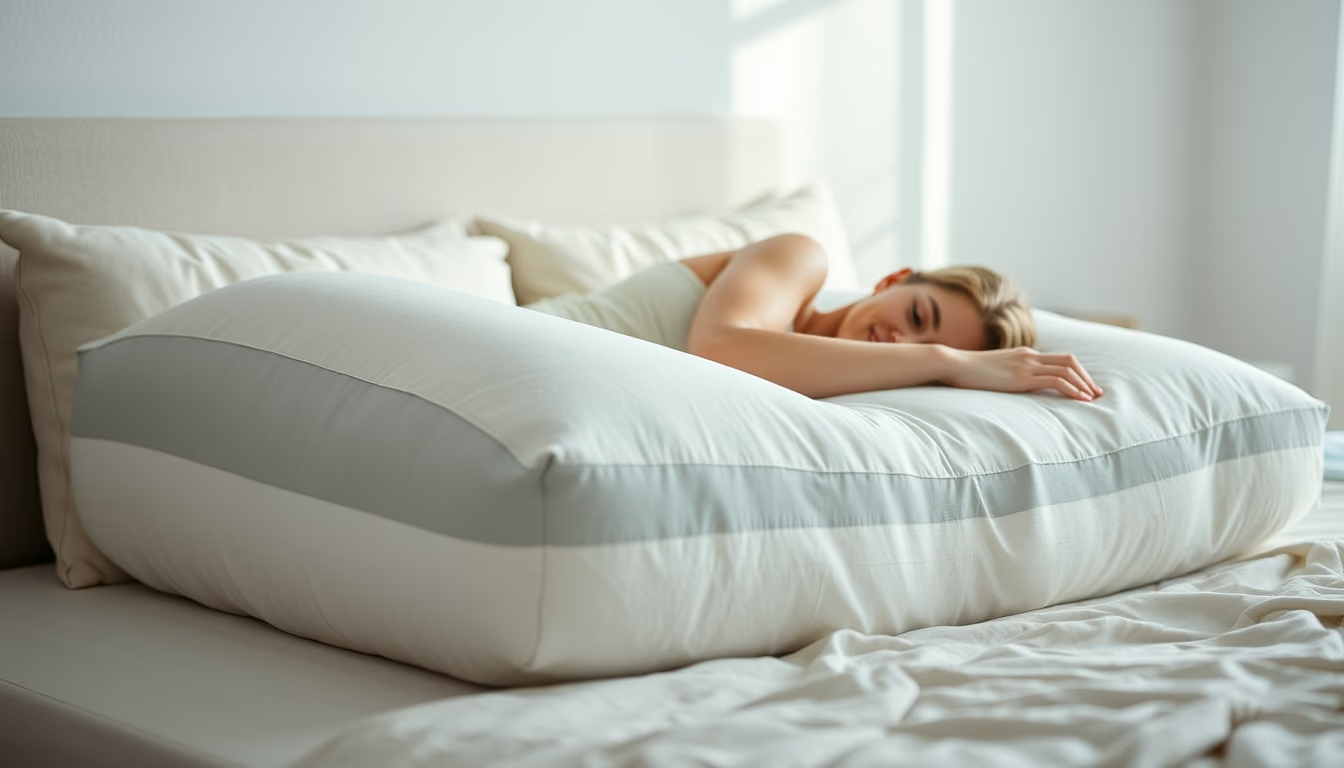
Memory foam pillows, also known as viscoelastic pillows, revolutionized rest by conforming to the body and relieving pressure points during sleep.
About this subject
The memory foam pillow has its origins in space technology. It was developed by NASA in the 1960s to cushion pilots during aircraft launches and landings. The viscoelastic foam, as it is technically called, has shock-absorbing and conforming properties, making it ideal for orthopedic cushions. It was only in the 1990s that the technology was adapted for the consumer market, giving rise to the first memory foam pillows.
The benefits of this type of pillow are widely recognized. The foam reacts to body heat, softening and perfectly molding to the contours of the head and neck. This provides proper cervical spine alignment and reduces pressure points, relieving pain and tension. Side sleepers often benefit the most, as the pillow fills the gap between the shoulder and head. Compared to down or fiber pillows, memory foam offers more consistent and lasting support.
However, some characteristics need consideration. Traditional models can retain heat, which bothers those who sweat a lot. To address this, manufacturers add gel infusion, open-cell foam, or ventilation channels. Average durability is 18 to 36 months, depending on density and care. Only washing the outer cover is recommended; the foam itself should not be wet, as it loses its properties.
In Brazil, the orthopedic pillow market has grown significantly in the last decade. National and international brands offer options with different densities and shapes, such as the contour model with a shoulder recess. A curiosity: the name "memory foam" derives from the foam's ability to slowly return to its original shape after pressure is removed. Studies indicate that about 70% of users report improved sleep quality after replacing conventional pillows with memory foam models.
Frequently Asked Questions
How to choose the ideal memory foam pillow?
Consider your sleeping position. Side sleepers need a higher pillow, while back sleepers prefer a lower one. Density also matters: common densities range from 50 to 85 kg/m³. Testing for a few nights is recommended.
Do memory foam pillows retain heat?
Traditional models can retain heat due to their density. However, versions with gel infusion or open-cell foam dissipate heat better. Always check if the model has ventilation.
How long does a memory foam pillow last?
On average, 18 to 36 months. Signs for replacement include loss of firmness, permanent deformation, or discomfort. Following care instructions extends its lifespan.
Direct URL
https://pub-c7d6a6ea828543ac903a74a341ccb2e1.r2.dev/imagens/memory-foam-pillow-documentary-photography-fresh9.avifHow to credit
Include a visible link back to UtilizAí. Copy one of the snippets below:
<a href="https://xn--utiliza-eza.com/en/midia/imagens/memory-foam-pillow-documentary-photography-fresh9">Memory foam pillow</a> by <a href="https://xn--utiliza-eza.com">UtilizAí</a>, licensed under <a href="https://creativecommons.org/licenses/by/4.0/">CC BY 4.0</a>.
[Memory foam pillow](https://xn--utiliza-eza.com/en/midia/imagens/memory-foam-pillow-documentary-photography-fresh9) by [UtilizAí](https://xn--utiliza-eza.com), CC BY 4.0
License: CC-BY-4.0